 Photo: Quiet Pixels / Pexels
Multan shrines walk
Multan's old city holds a dense cluster of Sufi shrines within walking distance. A loop on foot links the fort mound, the blue-tiled tombs and the bazaars that surround them.
The walk covers about three kilometres through the walled city, with stops at the shrines of Bahauddin Zakariya, Shah Rukn-e-Alam and Musa Pak Shaheed, among others. Paths are narrow and uneven in places. Most travellers set aside half a day, including rest stops.
How the walk goes
- MorningStart at the fortBegin at the Qasim Bagh fort mound, where the shrine of Bahauddin Zakariya stands. The climb is short but steep.
- Mid-morningBlue-tiled tombWalk south to the shrine of Shah Rukn-e-Alam, one of the city's most recognisable buildings. The tilework on the exterior is the main draw.
- Late morningThrough the bazaarFollow the lanes north through the old bazaar, passing shops selling cloth and metalwork. The route is not signposted, so ask locally.
- MiddayMusa Pak ShaheedThe shrine of Musa Pak Shaheed lies further east. The courtyard offers shade and a place to sit before returning.
- AfternoonReturn to fortLoop back to the fort mound via the same lanes or a parallel street. Allow extra time for the crowds on Fridays.
What to bring
- Comfortable walking shoes for uneven lanes
- Head covering for shrine courtyards
- Water bottle, especially in summer
- Modest clothing covering arms and legs
Know before you go
- The walk is self-guided; local guides can be hired near the fort.
- Shoes must be removed before entering shrine courtyards.
- Fridays are busiest; mornings are quieter on other days.
- Some shrines close briefly during prayer times.
- The route is not fully accessible for wheelchairs.
Where it starts
The walk starts at the Qasim Bagh fort mound in the centre of Multan. Most visitors reach it by rickshaw or taxi from anywhere in the city. The main gate is off the circular road around the fort.
The route in detail
The walk begins at the fort mound, where the shrine of Bahauddin Zakariya sits on the highest point. From there, a lane leads south to the shrine of Shah Rukn-e-Alam, whose blue and turquoise tiles are visible from a distance. The route then turns north into the old bazaar, a maze of narrow streets lined with shops. The shrine of Musa Pak Shaheed lies to the east, reached by a lane that passes a small market. The loop returns to the fort via a parallel street.
Distances are short, but the lanes are congested and the ground uneven. Allow three hours for the full circuit, including stops. The walk can be shortened by skipping the eastern shrine and returning directly from the bazaar.
Shrine of Bahauddin Zakariya
The shrine stands on the fort mound and is reached by a flight of steps. The tomb is plain compared with others in the city, but the position gives views over the old city rooftops. Visitors remove shoes at the entrance.
Shrine of Shah Rukn-e-Alam
This is the most photographed shrine in Multan, known for its blue tilework and octagonal shape. The interior is cool and dim. Non-Muslims are generally welcome in the courtyard but should dress modestly and avoid prayer times.
Etiquette and timing
The shrines are active places of worship, not museums. Dress modestly, covering arms and legs, and carry a scarf for women to cover the head. Remove shoes before entering courtyards. Photography is usually allowed but ask before photographing people at prayer. Fridays are the busiest day, with large crowds and qawwali sessions in the evening at some shrines.
The walk is best done from October to March, when daytime temperatures are moderate. Summers are very hot, and the narrow lanes offer little shade. Mornings are quieter and cooler. During Ramadan, the shrines are busy after sunset.
Getting there and around
Multan is well connected by road and rail. The old city is compact, and the walk can be done without a vehicle once at the fort. Rickshaws are available for the return if the heat or crowds become tiring. Local guides can be hired near the fort entrance, though the route is easy to follow with a map or by asking directions.
The area around the shrines has small shops selling food and drinks. There are no formal cafes within the shrine complexes. Carry water, especially outside winter. The walk is not suitable for wheelchairs due to steps and uneven paving.
Frequently asked questions
How long does the Multan shrines walk take?
The full loop takes about three hours at a relaxed pace, including stops at five shrines. The distance is roughly three kilometres, but narrow lanes and crowds can slow progress. Allow extra time on Fridays.
Do I need a guide for the Multan shrines walk?
No guide is required. The route is through public lanes and the shrines are open to visitors. Local guides can be hired near the fort if you want context on the history and architecture. A map or offline directions help in the bazaar.
What should I wear for the Multan shrines walk?
Wear modest clothing that covers arms and legs. Women should carry a scarf to cover the head inside shrine courtyards. Shoes are removed at the entrance to each shrine, so slip-on footwear is practical. Comfortable shoes are recommended for the uneven lanes.
When is the best time to do the Multan shrines walk?
October to March offers the most comfortable weather. Mornings are quieter and cooler. Avoid Fridays if you prefer fewer crowds, as the shrines are busy with worshippers. Summers are very hot, and the walk is best done early in the day.
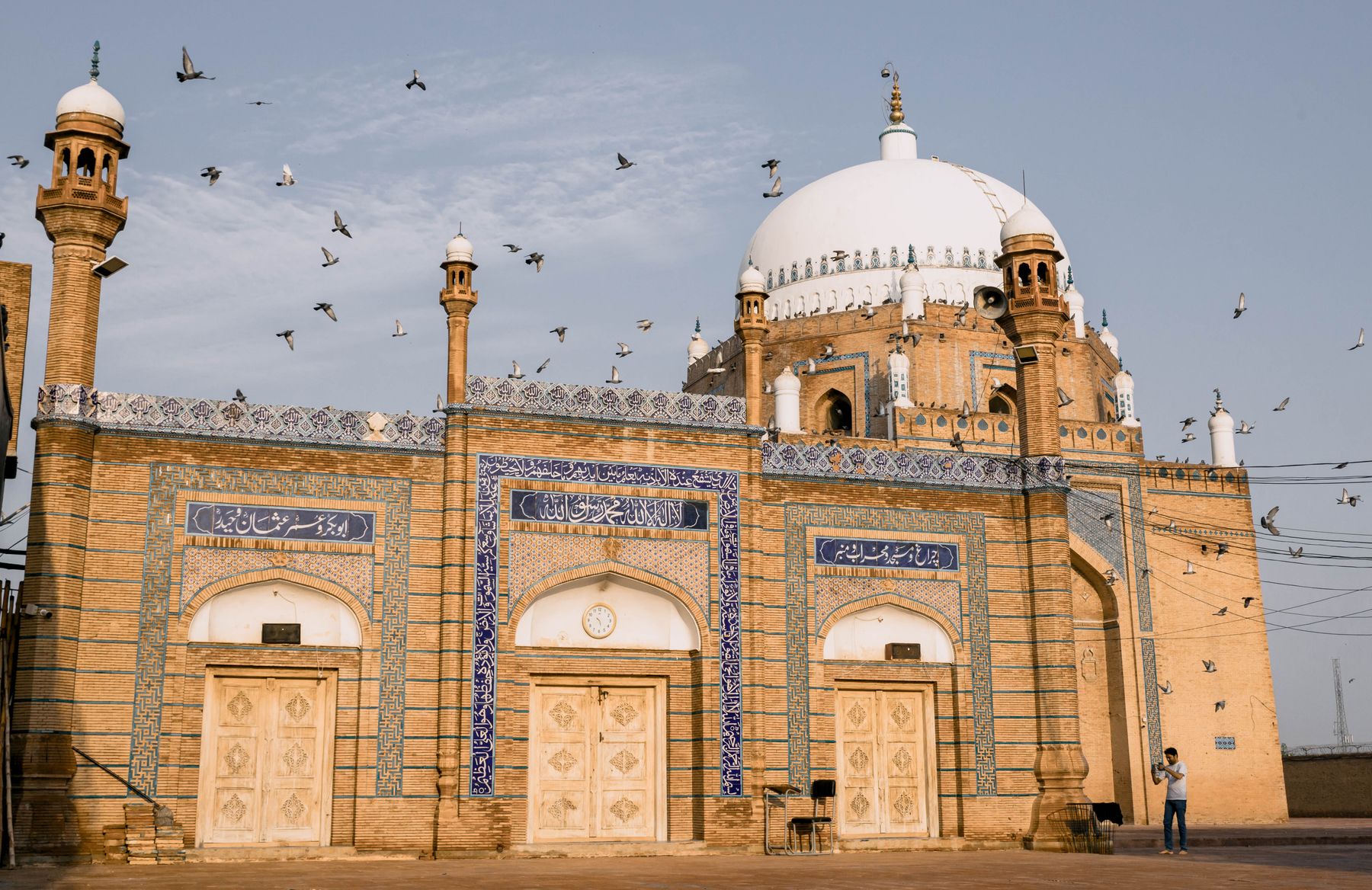 Photo: Aa Dil / Pexels
Where to stay in Multan
Hotels cluster along Abdali Road and the cantonment area, a short ride from the old city.