Carbon credits
One tonne with every booking
Every hotel booking made through impt.pk is completed on IMPT and funds one tonne of verified CO₂ offset. The offset is part of the price you already see: there is nothing extra to pay, and what was offset is reported for each trip.
- 39projects on the IMPT register
- 10countries those projects are in
- 1 tonneof verified CO₂ per confirmed booking
- 0added to your bill for carbon
Carbon credits, explained
What is a carbon credit?
A carbon credit is a certificate for one tonne of carbon dioxide (CO₂) that a climate project has kept out of the atmosphere, or taken back out of it.
Before a credit exists, the project's savings are measured against what would have happened without it and checked by an independent registry. When a credit is used to balance emissions it is retired: cancelled on the registry for good, so nobody can sell or count that tonne again.
1 carbon credit
= 1 tonne of CO₂ avoided or removed
- Measured against a baseline
- Verified by an independent registry
- Retired once, never resold
Avoid
Wind, hydro, solar and biomass power replace fossil fuels, so less CO₂ is released in the first place.
Remove
New forests, biochar and timber building materials pull CO₂ out of the air and store it for decades.
Protect
REDD+ projects keep standing forests standing, protecting the carbon they already hold and the communities who live in them.
Pakistan
Climate change in Pakistan
Pakistan carries a heavy climate burden. Floods, melting glaciers, extreme heat and a shrinking delta all touch the places travellers come to see. Understanding these pressures helps visitors travel with care.
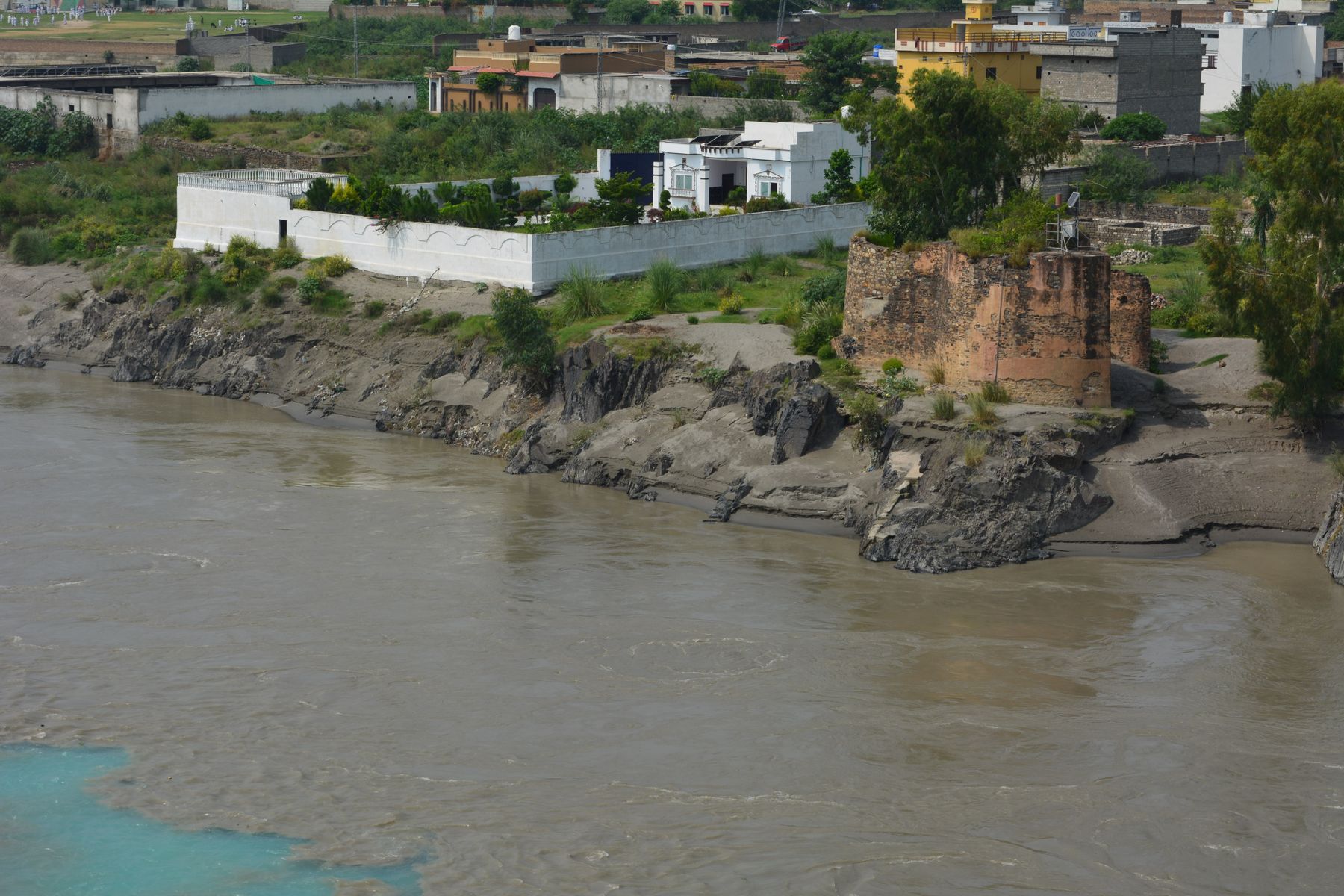
The 2022 floods
In 2022 floods covered large parts of Sindh and Balochistan, and rivers rose far beyond their usual channels. Roads, bridges and fields were damaged, and many communities were displaced for months. Some areas recover slowly. Travellers may still see repair work and changed routes in the south. Booking directly with local hosts and staying longer helps money reach the places that need it.
Melting glaciers and GLOF
Pakistan has thousands of glaciers in the north, in the Karakoram, Himalaya and Hindu Kush ranges. As they melt, lakes can form behind loose rock and ice. A glacial lake outburst flood, or GLOF, can send water and debris down a valley with little warning. Some valleys in Gilgit-Baltistan and Chitral are monitored for this risk. Travellers should ask locally about conditions before walking or driving through narrow valleys.
Heat in Sindh and Punjab
Summers in Sindh and Punjab can bring long spells of extreme heat, especially in the plains around Karachi, Hyderabad, Multan and Lahore. Heat affects older people, outdoor workers and anyone unused to it. Plan sightseeing for early morning and evening, carry water, and take rest days. Hotels with reliable cooling and shade make a real difference in May and June.
The Indus delta and mangroves
The Indus delta south of Thatta and Hyderabad depends on fresh water reaching the sea. Reduced river flow lets seawater move inland, which stresses farmland and the mangrove forests that shelter the coast. Mangroves protect shorelines and support fish and birds. Visitors to the delta can keep to marked routes, avoid disturbing wildlife, and support local boat operators who know the creeks.
Where to see it
Places shaped by climate effort
Across Pakistan, parks, forests and coastal projects show what protection looks like on the ground. These are good places to visit and to learn from.
Indus delta mangroves
The mangrove creeks south of Karachi and around Keti Bandar form one of the largest arid mangrove systems in the world. Local communities replant and protect them, and the forests shelter fish nurseries and migratory birds. Boat trips run from coastal villages. Go with a local guide, keep noise low and avoid cutting or collecting wood. The best months are cooler ones outside the summer heat.
Read about KarachiNational afforestation drive
The Ten Billion Tree Tsunami programme has supported tree planting and forest protection across the country, from northern valleys to the plains. Some sites welcome visitors and volunteers. Where planting is under way, paths and young trees are fragile. Stay on tracks, do not trample saplings, and ask before joining any planting activity. Nurseries and community forests are often glad to explain their work.
Khunjerab National Park
High on the Karakoram Highway near the Chinese border, Khunjerab National Park protects alpine pasture and wildlife including the Himalayan ibex and the snow leopard. The altitude is serious, so allow time to acclimatise. The park is a place to drive slowly, watch from a distance and carry out all rubbish. Conditions and access change with season and snow.
Read about PassuDeosai National Park
Deosai is a high plateau of rolling grassland and lakes, reached from Skardu and Astore. It is known for the Himalayan brown bear and for wildflowers in summer. The season is short, and snow can close access outside it. Campers should use established sites, store food safely and keep well away from bears. Weather changes fast at this altitude.
Read about DeosaiMargalla Hills National Park
The Margalla Hills rise directly above Islamabad and are crossed by walking trails from several trailheads. The park protects scrub forest, birds and small mammals on the edge of a fast-growing city. Walk in the morning, carry water and take a companion. Litter and fires are a real problem, so leave no trace. Trail conditions vary with rain.
Read about Margalla HillsHingol National Park
Hingol is a vast coastal park in Balochistan with rocky gorges, mud volcanoes and desert wildlife, crossed by the coastal road between Karachi and Gwadar. It is remote and very hot for much of the year. Travel with a local driver, carry plenty of water and fuel, and avoid the midday sun. Do not disturb wildlife or remove rocks and plants.
Read about Hingol
Travel with a lighter footprint
Travel with a lighter footprint
How you move, where you stay and when you go all shape your impact. Small choices add up over a trip.
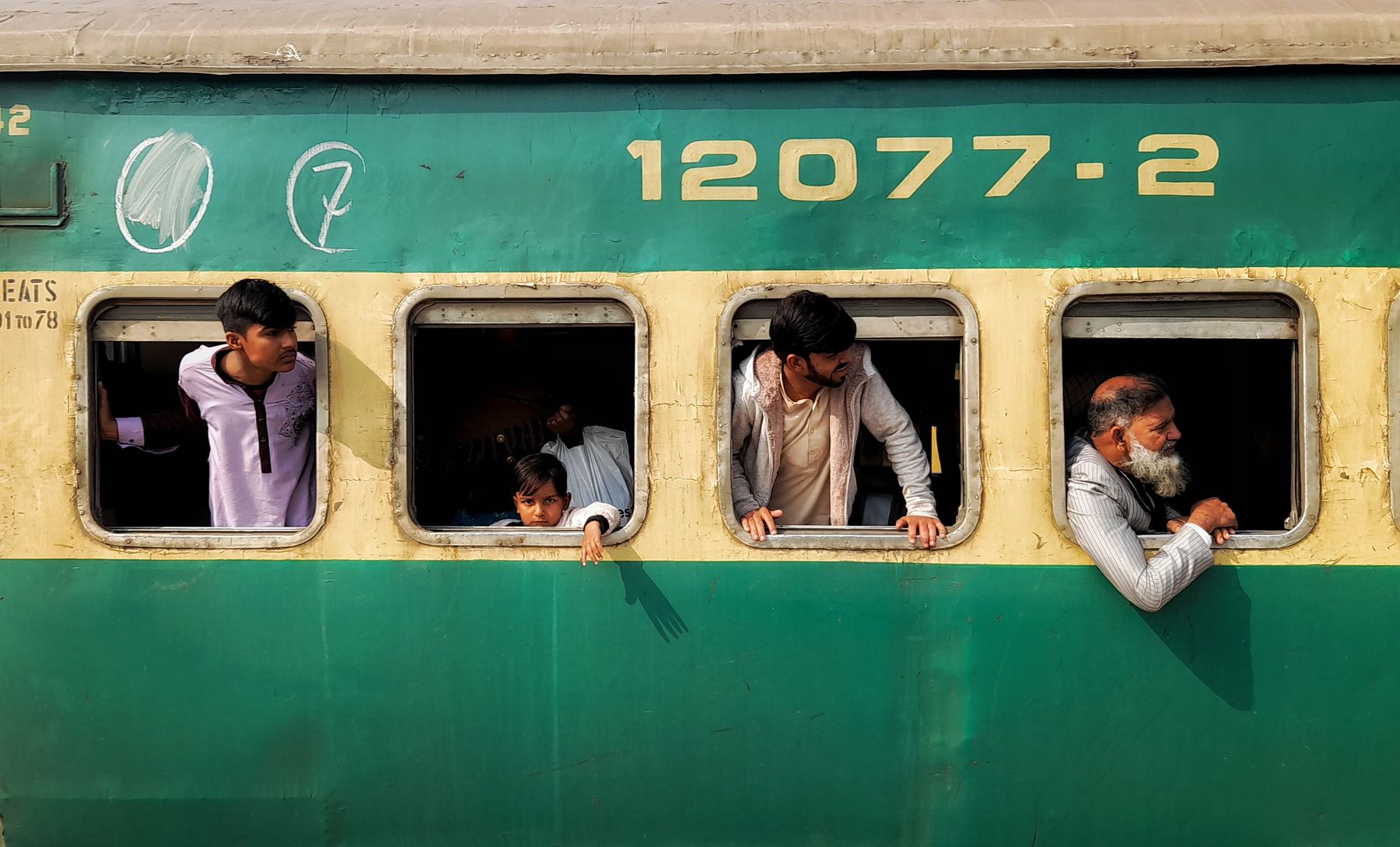
Trains where possible
Pakistan Railways links many of the main cities, including Karachi, Lahore, Rawalpindi and Peshawar. A train journey carries far more people per unit of fuel than a private car. Book a seat in advance, travel in daylight where you can, and treat the slower pace as part of the trip rather than a delay.
Shared road transport
Coasters, vans and buses run on most intercity routes and into the northern valleys. Sharing a vehicle reduces fuel per passenger and puts money into local transport. Services vary in comfort, so ask at the stand about departure times and luggage. For mountain roads, choose operators with experienced drivers.
Stay locally and longer
A longer stay in one place usually means less driving and more spending in the local economy. Family-run guesthouses in Hunza, Skardu, Chitral and the Kalash Valleys benefit from direct bookings. Eating local food, hiring local guides and buying from nearby shops keeps money in the community and reduces long supply chains.
Avoid peak strain
Northern valleys are busiest in summer, when water and waste systems feel the pressure. Spring and autumn can be quieter and cooler. In the plains, avoid the hottest weeks and plan indoor or shaded activities. In coastal areas, check monsoon timing. Travelling outside peak periods spreads the load on fragile places.
Staying well, staying lightly
Where you sleep affects your trip's footprint. Smaller guesthouses often heat rooms with local wood or gas, so ask about it and use blankets rather than extra heating. In summer, fans and shade beat air conditioning where the climate allows. Reuse towels, refuse single-use plastic and refill water bottles where safe filtered water is offered.
In mountain areas, water and waste are handled locally and capacity is limited. Keep showers short, avoid leaving food out, and carry out what you bring in. Ask hosts about recycling and about any community projects nearby. A respectful, curious guest is welcome back, and repeat visits support the people who look after these places.
Our mission
Carbon-neutral travel, by default
Tourism is responsible for around 8% of the world's greenhouse gas emissions, and most of it happens without the traveller ever seeing it. IMPT's mission is to make every stay carbon neutral by default: the climate action is built into the booking, so travelling responsibly takes no extra effort and no extra money.
Built into every booking
One verified tonne on every confirmed stay. No box to tick, no add-on at checkout.
Real, registered projects
Every credit comes from a registered climate project with a public registry reference.
Counted once
Credits are retired against the project, so a tonne is never sold or claimed twice.
Open about it
The projects, where they are and what they do are listed here and on IMPT, for anyone to check.
Carbon credits
How it works
Four steps, in this order. None of them needs anything from you beyond the booking itself.
- Step 1
You book a room at the live rate
The price on the page is the live rate for your dates. Nothing is added to it for carbon, at checkout or afterwards.
- Step 2
One tonne of verified CO₂ is funded
Every confirmed booking funds one tonne, booking by booking, rather than an average spread over a year.
- Step 3
The credit is retired against a registered project
The tonne is matched to a registered climate project and retired there, so the same tonne cannot be counted twice.
- Step 4
The offset is reported on your trip
What was offset is attached to that journey in your IMPT account, not to a year-end total.
39 projects across 10 countries
The projects behind the credits
The credits are retired against registered climate projects: forest restoration and REDD+, sustainable agriculture and biochar, wind, solar, hydro and bio-based construction. The cards below come straight from the IMPT project register.
The IMPT register has no project in Pakistan at the moment. The credits from bookings on impt.pk are retired against registered projects in 10 other countries, shown below.
 Hydro
1.2 MW Vetamamidi Mini Hydel
This 1.2 MW hydroelectric project by AP Tribal Power in Vetamamidi, Andhra Pradesh, continuously reduces GHG emissions and is registered…
 Forest Restoration
CRIMA REDD+
The CRIMA Predio Putumayo y Andoque de Aduche REDD+ Project seeks the conservation of forests located in the indigenous territories of…
 Eco-construction
Igloo Cellulose
Igloo France Cellulose implements all available means towards a sustainable development and energy transition.
 Plant a tree
Green Galicia I
Trees: 112.735 Planting area: 98,89 Ha.
 Eco-construction
Hasslacher bio-based construction
NORITEC Holzindustrie GmbH is a subsidiary of the HASSLACHER Group, one of Europe's leading timber groups.
 Sustainable Agriculture
Aperam Bioenergia
Aperam BioEnergia is a brazilian player of the forest and renewable energy sector, that runs a ~420.000 kton/year charcoal operation with…
 Sustainable Agriculture
Bella Biochar
Bella Biochar Corporation produces certified organic, premium quality biochar from landfill diverted biomass, including forest debris and…
 Sustainable Agriculture
Jeffries Biochar
Jeffries Biochar has commissioned one of the largest biochar plants in Southern Hemisphere.
 Eco-construction
ARE bio-based construction
ARE is a company that specializes in producing bio-based construction materials from sustainably managed local forests.
 Sustainable Agriculture
Wakefield Biochar
Wakefield BioChar’s wood-based biochar captures carbon through a pyrolysis production method that creates a stable carbon storage solution.
 Wind Energy
1.4 MW Wind by Ravikiran Ceramics
This 1.4 MW bundled small-scale wind power project by Ravikiran Ceramics is expected to generate approximately 2,452 MWh annually,…
 Forest Restoration
Delfines Cupica REDD+
The DELFINES CUPICA Conservation Project seeks the conservation of the forests located in recognition of the Afro-Colombian communities…
 Eco-construction
JAMES bio-based construction
James is a designer and manufacturer of large-span glulam timber buildings for many sectors (agricultural, horse riding, industry,…
 Plant a tree
Green Galicia II
Trees: 52.431 Planting area: 55,19 Ha.
 Hydro
10 MW Hydro by Mohite Industries
This 10 MW grid-connected small-scale hydro power project by Mohite Industries utilizes water reservoir potential to generate clean…
 Forest Restoration
Forestal Mavalle
The Mavalle Project is an AFOLU mitigation project of the reforestation type (ARR).
 Sustainable Agriculture
18 MW Biomass at GM Sugars
GM Sugars has established an 18 MW cogeneration power plant.
 Forest Restoration
Galilea - Amé REDD+
The Galilea Forest Conservation REDD+ Project Amé, has the main objective to preserve the region's native forests by reducing Greenhouse…
39 projects across 10 countries
See all projects on IMPTCommon questions
Common questions
How does a booking fund a carbon offset?
Every confirmed booking made through the site completes on IMPT and funds one tonne of verified CO2 offset, retired against a registered project. There is no extra cost to the guest. The offset is arranged as part of the booking, not as an add-on you must request.
Do the offsets fund projects in Pakistan?
Not at present. The project register currently has no projects in Pakistan, so credits are retired against registered projects in other countries. The climate pressures described on this page are local, but the verified tonnes come from elsewhere until projects are added.
What is a glacial lake outburst flood?
It is a sudden release of water from a lake held back by ice or loose rock in a mountain valley. Pakistan has thousands of glaciers in the north, and some valleys in Gilgit-Baltistan and Chitral carry this risk. Ask locally about conditions before travelling through narrow valleys.
When is the best time to visit the northern valleys?
Late spring to early autumn is usual for Hunza, Skardu, Chitral and the Kalash Valleys, when passes and tracks are clearer. Snow can close high routes outside this window. Summer is busiest, so spring and autumn can be quieter and easier on local water and waste systems.
How can I travel more lightly in Pakistan?
Use trains and shared transport where practical, stay longer in fewer places, and book locally run guesthouses. Carry water, avoid single-use plastic, keep to trails in parks, and travel outside peak heat and peak season where you can. These choices reduce fuel use and pressure on fragile sites.
Is extreme heat a concern for travellers?
Yes, in Sindh and Punjab in summer. Plan sightseeing for early morning and evening, carry water, and take rest days. Coastal and mountain areas are cooler but bring their own hazards, from monsoon rain to altitude. Check forecasts and local advice before setting out.
Is the offset included in the price?
Yes. It is funded by the booking itself, so there is nothing to add at checkout and nothing extra to pay.
How much is offset per booking?
One tonne of verified CO₂ on every confirmed booking, whichever IMPT site the booking was made from.
Find a stay
Book a room, fund a tonne
The tonne comes with the booking. The only thing to do is make it.
Find a hotel