 Photo:
Visiting Multan
What the place is like
Multan is a large, crowded city with a hot, dry climate. The old city is a maze of narrow lanes, bazaars and shrines, while newer areas have wider roads and more modern buildings. The city is known for its blue pottery and tilework, and for the many Sufi shrines that give it the nickname 'City of Saints'.
The pace is busy, with traffic and commerce in the bazaars. The shrines are quieter places, especially in the early morning or evening. Multan is not a resort town, but a working city with a long history and a strong religious character.
Climate and seasons
Summers are extremely hot, with daytime temperatures often above 40°C from May to September. Winters are mild, with cool nights and pleasant days. The best time to visit is from November to March. Dust storms can occur in summer, and the monsoon in July and August may bring some rain.
What to see
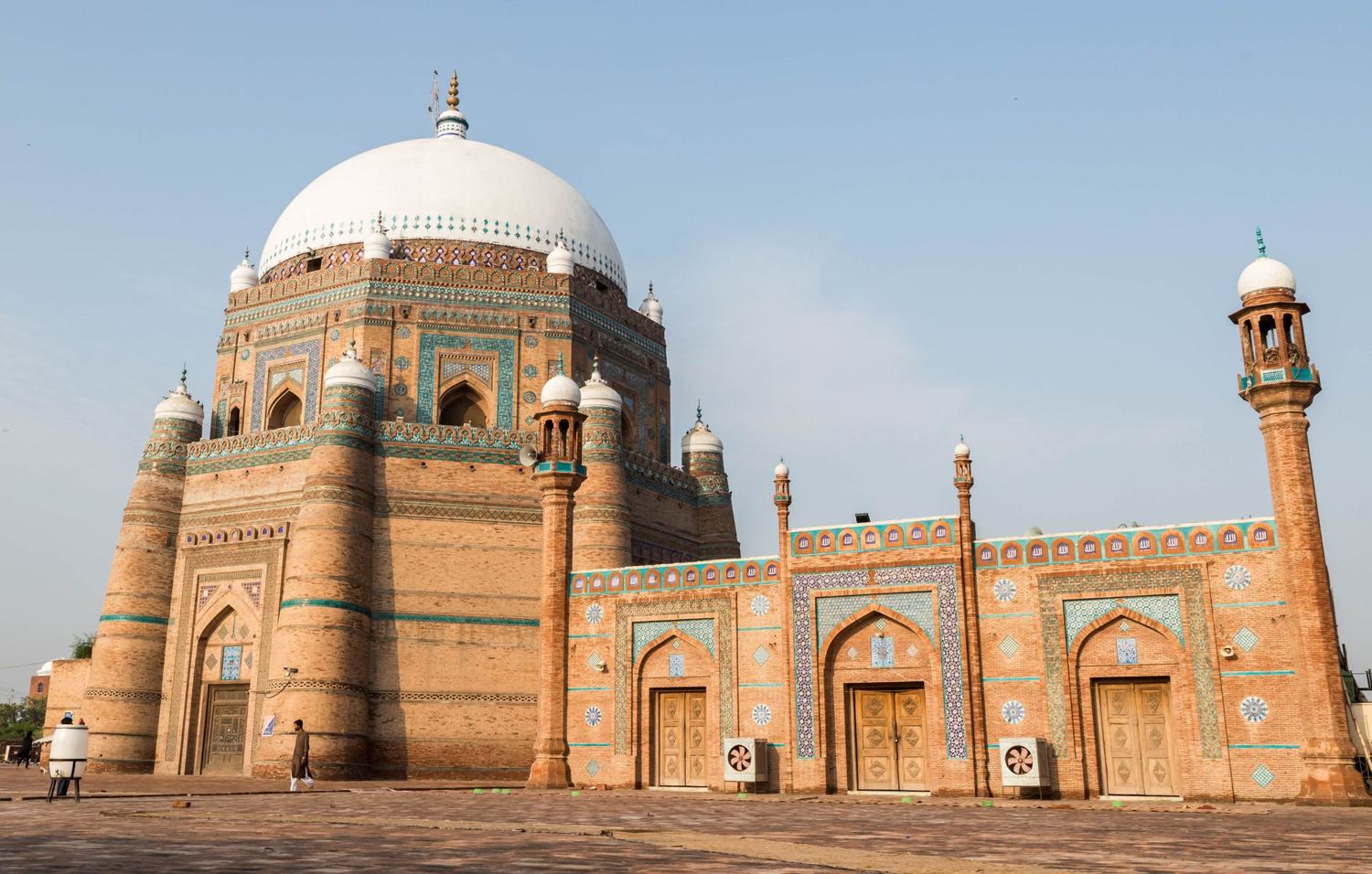
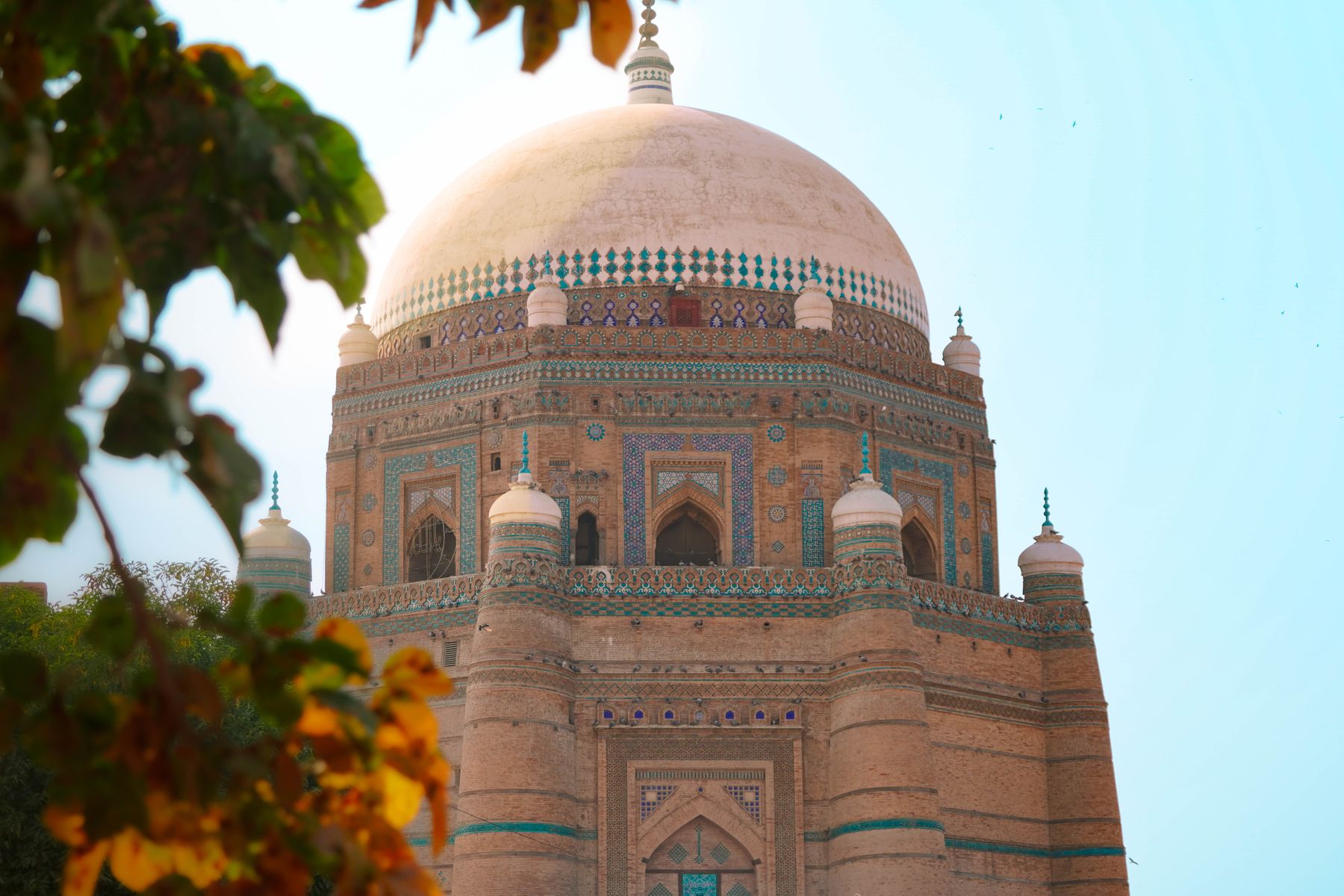
The main sights are the Sufi shrines. The Shrine of Shah Rukn-e-Alam is a large octagonal tomb with a domed roof and blue tilework, standing on a raised platform. The Shrine of Bahauddin Zakariya is nearby and includes a mosque. Both are active places of worship, so dress modestly and remove shoes before entering.
The old city has several bazaars, including Hussain Agahi, where you can buy cloth, jewellery and local crafts. The Multan Museum has a small collection of archaeological finds and manuscripts. The remains of Multan Fort are also worth a look, though much of the original structure is gone.
Shrine etiquette
When visiting shrines, cover your head and shoulders, and remove your shoes. Women may need to cover their hair. Photography may be restricted in some areas. It is best to ask before taking pictures of people or religious ceremonies.
A day or two there
A full day is enough to see the main shrines and the old city. Start early with the Shrine of Bahauddin Zakariya, then walk to the Shrine of Shah Rukn-e-Alam. Both are close together. In the afternoon, explore Hussain Agahi Bazaar and the surrounding lanes. The Multan Museum can fill an hour if you want more context.
With a second day, you can visit the fort remains and take a slower walk through the old city. The area around the shrines is lively in the evening, when pilgrims gather. If you are interested in crafts, look for blue pottery workshops in the city.
Getting there and around
Multan has an airport with domestic flights from major cities, including Lahore and Karachi. By rail, Multan is on the main line and has connections to Lahore, Karachi and other cities. By road, the M4 motorway links Multan to Lahore and other parts of Punjab. The journey from Lahore takes several hours by car or bus.
Within the city, taxis and auto-rickshaws are common. For the old city, walking is often the best way to get around, as many lanes are too narrow for cars. Traffic can be heavy, so allow extra time for journeys.
Local transport
Auto-rickshaws are widely available and metered taxis can be booked by phone or app. For the old city, it is best to be dropped at a main gate and walk. Some areas may be closed to traffic at peak times.
Practical notes
Multan is generally a safe city for visitors, but take normal precautions with belongings in crowded bazaars. Dress modestly, especially when visiting shrines. The summer heat can be dangerous, so carry water and avoid midday sun. Medical facilities are available in the city.
Check current official advice before travelling, as conditions can change. Some areas of Pakistan require a No Objection Certificate (NOC) for travel, but Multan itself does not normally require one. Rules can change, so confirm before you go.
Frequently asked questions
What is Multan known for?
Multan is known for its Sufi shrines, especially those of Shah Rukn-e-Alam and Bahauddin Zakariya, and for blue pottery and tilework. It is one of the oldest cities in Pakistan and has a busy old city with bazaars and historic sites.
When is the best time to visit Multan?
The best time is from November to March, when days are mild and nights are cool. Summers are extremely hot, with temperatures often above 40°C, so avoid May to September if possible. Winters are dry and comfortable for walking.
How do you get to Multan?
Multan has an airport with domestic flights, and it is connected by rail and road to Lahore and other cities. The M4 motorway links it to Lahore. Within the city, taxis and auto-rickshaws are available, and walking is best in the old city.
Are there any permits needed for Multan?
Multan does not normally require a No Objection Certificate (NOC) for visitors. However, rules can change, and some other areas of Pakistan do require permits. Check current official advice before travelling, especially if you plan to visit border regions.