 Photo:
Visiting Muzaffarabad
What the town is like
Muzaffarabad is a working town, not a resort. It has government offices, schools, a university and busy bazaars. The streets are steep in places and traffic is heavy on the main roads. The rivers are never far away, and the hills rise on both sides of the valley.
The town was badly damaged in the 2005 earthquake, and some of the older buildings are still in ruins. New construction is common. The centre is compact enough to walk in parts, but the hills make some areas hard to reach on foot.
The two rivers
The Neelum comes down from the north and meets the Jhelum in the middle of the town. The Neelum is faster and clearer, the Jhelum wider and slower. The meeting point is a landmark, and the bridges over both rivers are busy with traffic and pedestrians.
What to see
The two old forts are the main historic sights. The Red Fort stands on the west bank of the Neelum, close to the centre. It is partly ruined but the walls and gateways remain. The Black Fort is on the opposite bank and is smaller. Both are free to enter, though a fee may be charged at some times.
The river banks are the other main draw. The road along the Neelum has places to walk and sit in the evening. The Jhelum bridge gives a view of the wider valley. The bazaars in the centre are worth an hour for anyone interested in local life.
A day or two there
One day is enough to see the forts, the river banks and the bazaars. Start at the Red Fort in the morning, cross to the Black Fort, then walk along the Neelum in the late afternoon. The light on the hills is best in the early evening.
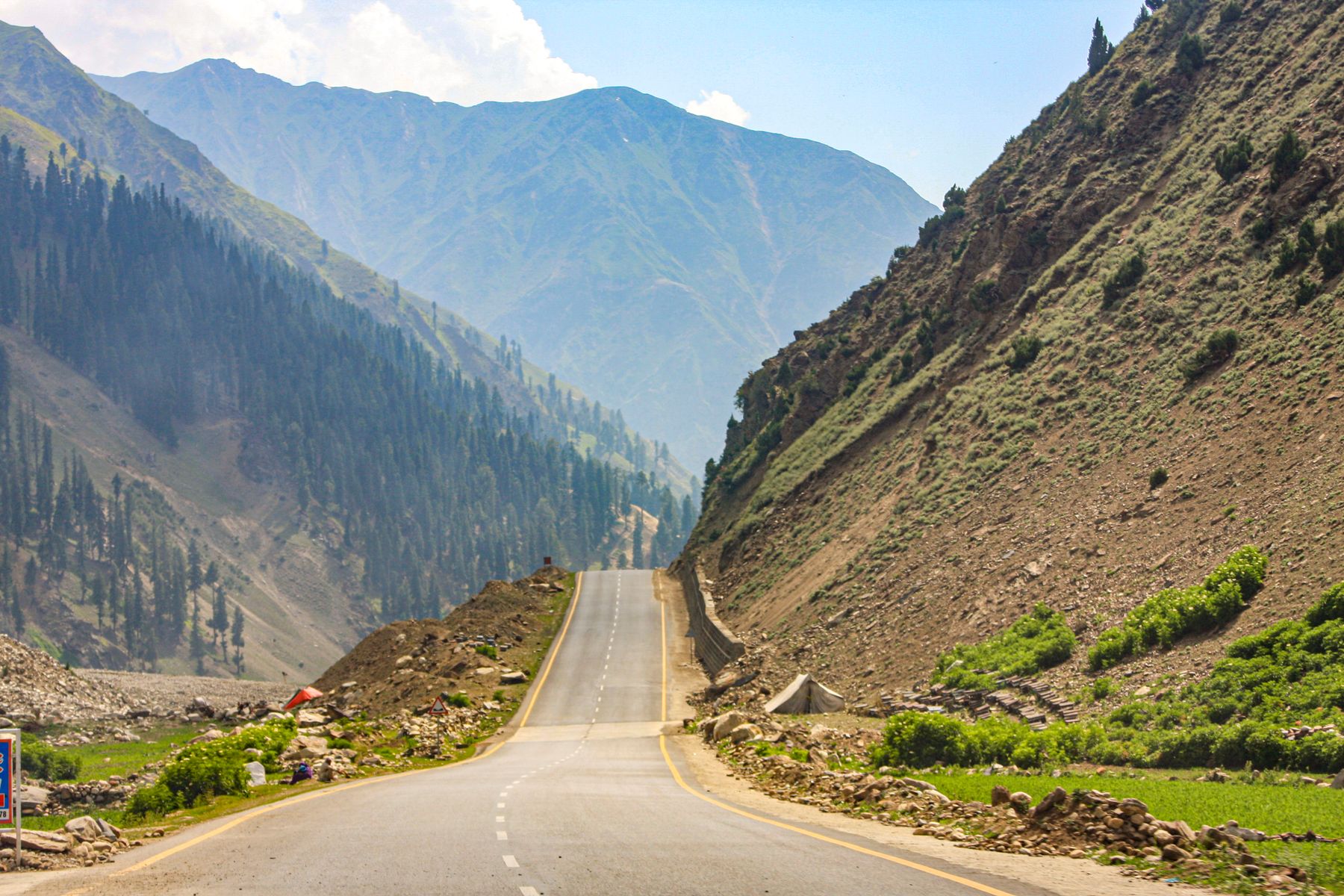
A second day can be used for a trip up the Neelum Valley road. The road follows the river north towards Athmuqam and beyond. Even a short drive gives a sense of the valley. The road is narrow in places and can be slow.
Side trips
The Neelum Valley road is the main side trip. It leads north to villages such as Keran and Athmuqam. The road to Rawalakot goes south over the hills. Both are slow journeys, and conditions change with the weather.
Getting there and around
Muzaffarabad is reached by road from Islamabad, a journey of about four hours in good conditions. The road crosses the hills and can be busy. There is no railway and no commercial airport in the town. Buses and shared vans run from Islamabad and other cities.
Within the town, walking is possible in the centre, but the hills make some areas hard to reach on foot. Local buses and taxis are available. The roads along the rivers are the main routes out of town.
Permits and advice
Parts of Azad Kashmir near the Line of Control need a No Objection Certificate (NOC) for travel. Rules change, so check current official advice before going. Some areas may have travel advisories. The Neelum Valley road north of a certain point may require a permit.
Practical notes
Spring and autumn are the best seasons. Summers are hot in the valley, and the monsoon can bring heavy rain and landslides. Winters are cold, with snow on the higher roads. The town itself rarely sees snow.
The town has a range of accommodation and places to eat, but names are not listed here. A fee is charged at some sights. Mobile coverage is good in the town but patchy in the valleys. Carry cash, as card payments are not common outside the main centres.
Frequently asked questions
Where is Muzaffarabad?
Muzaffarabad is in Azad Kashmir, Pakistan, at the meeting of the Jhelum and Neelum rivers. It lies at about 737 m and is the capital of Azad Kashmir. It is about four hours by road from Islamabad.
What is there to see in Muzaffarabad?
The main sights are the Red Fort and the Black Fort, both historic and partly ruined. The river banks along the Neelum and Jhelum are good for walks. The central bazaars are busy and give a sense of the town.
Do you need a permit to visit Muzaffarabad?
Muzaffarabad itself does not usually need a permit for visitors. Travel to some areas near the Line of Control, including parts of the Neelum Valley, may need a No Objection Certificate (NOC). Rules change, so check current official advice before going.
When is the best time to visit Muzaffarabad?
Spring, from March to May, and autumn, from September to November, are the most comfortable seasons. Summers are hot and the monsoon can bring landslides. Winters are cold, with snow on the higher roads.