Where to Stay in Multan: A Base for Shrines and Bazaars
Multan's shrines and bazaars are spread across the old city and cantonment, so where you sleep determines how much walking you do in the heat.

The Cantonment, laid out under British rule and still the city's calmest quarter, has wide tree-lined roads and a cluster of hotels along Abdali Road and the Mall. From here the distance to the old city is about 4–6 km — roughly 15–20 minutes by rickshaw outside rush hour, when traffic on Chungi No. 6 can double that. This is where I would book first: international-standard rooms, reliable power backup, and easy parking.
Cantonment: The Practical Base for a First Visit
Hotels here fall into two bands: upper-mid properties with pools and buffets, and simpler guesthouses on quieter side streets. Neither is steps from a shrine, but both let you retreat from the noise and dust at the end of the day. Book a room facing away from Abdali Road — front-facing rooms pick up traffic until late. For families and first-time visitors, this area's predictability outweighs the loss of atmosphere.
You are also close to the Multan Cantt railway station (a short ride) and about 20–25 minutes from Multan International Airport on the southern bypass. If your trip includes a day trip to Bahawalpur or Uch Sharif, the cantonment's road access saves time.
The Old City: Shrines on Foot, Noise at Night
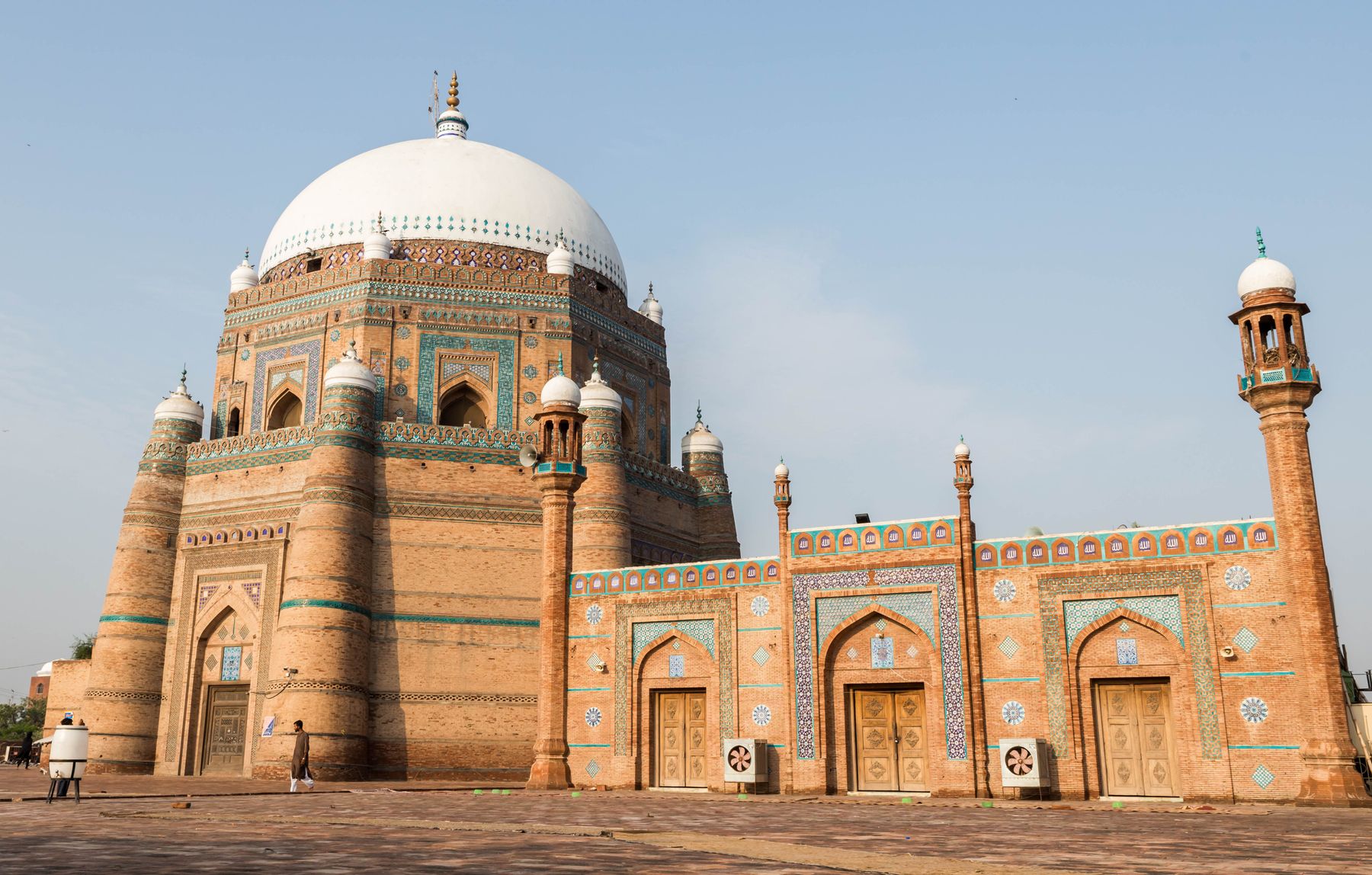
Staying inside the walled city puts you within walking distance of the Shrine of Bahauddin Zakariya, the Shrine of Shah Rukn-e-Alam, and the bazaars around Husain Agahi. The trade-off is real: narrow lanes, constant traffic noise, and limited parking. Hotels here are mostly simple, family-run places rather than polished ones. Light sleepers should look elsewhere.
Husain Agahi Bazaar is the place to buy Multan's famous blue pottery and camel-skin lamps; the surrounding streets are also where you will find the city's best halwa puri breakfasts. If you want to photograph the shrines at dawn without a rickshaw ride, a night or two in the old city is worth it — but I would not make it my only base. Choose one or two nights here, then move to the cantonment for comfort.
The old city is also where you feel the heat most: in June the temperature can exceed 45°C, and the lanes hold it. Plan shrine visits for early morning or after 5 pm.
Near the Shrines: Quiet Corners South of the Fort
South of Multan Fort, around the Qasim Bagh and the road toward Suraj Miani, a handful of guesthouses sit close to the shrine complex without the crush of the bazaar. This area is quieter at night than the walled city and still walkable to the main shrines — perhaps 10–15 minutes on foot to Shah Rukn-e-Alam. Rooms tend to be basic but clean, often with rooftop access.
I would book here if your priority is early-morning darshan and you do not mind simple facilities. Ask about hot water and generator backup before you commit — power cuts are common in summer. There are few restaurants within walking distance after dark, so plan dinner before returning or arrange a rickshaw to the cantonment. The trade-off is tranquillity versus convenience.
This pocket also puts you near the Multan Museum and the fort's Qasim Bagh stadium, useful if you are in town for a cricket match or a morning walk.
Practicalities: When to Go, How to Get Around, What to Skip
The best months are November to March, when daytime temperatures sit in the low 20s to high 20s Celsius. Avoid May to July unless you can handle extreme heat; December and January mornings can be foggy enough to delay flights. Multan is well connected by road and rail: the M5 motorway runs north to Lahore (about 4–5 hours by car) and south toward Sukkur. Daewoo and Faisal Movers run daily coaches from Lahore and Islamabad.
For getting around, ride-hailing apps work in the cantonment and on main roads but are unreliable in the old city's lanes; short rickshaw rides are the norm — agree the fare first. Skip the horse-drawn tonga tours offered near the fort unless you have checked the animal's condition. For shrine visits, dress modestly and remove shoes; women should carry a scarf. I would book cantonment accommodation for most nights and add one old-city night only if you value atmosphere over sleep.
Frequently asked questions
Is it safe to stay in Multan's old city?
The old city is busy and chaotic but not unsafe for travellers who take normal precautions. Petty theft is rare, but keep valuables close in crowded bazaars. Women may prefer the cantonment for its quieter streets and more secure hotels, especially at night.
How far is Multan airport from the main hotels?
Multan International Airport is about 20–25 minutes by car from the Cantonment hotels, depending on traffic on the southern bypass. Airport taxis are available, and many hotels arrange pickups if you ask in advance. Allow extra time during morning rush hour.
Which area is best for visiting the shrines of Bahauddin Zakariya and Shah Rukn-e-Alam?
The old city and the area just south of the fort put you within walking distance of both shrines. Staying near Qasim Bagh gives you a quieter base while still being 10–15 minutes on foot from the main shrine complex. The cantonment requires a short rickshaw ride.
What is the best time of year to visit Multan?
November to March offers the most comfortable weather, with mild days and cool evenings. December and January can bring morning fog that may delay flights. Avoid May to July, when temperatures regularly exceed 45°C and sightseeing becomes exhausting even in the early morning.
Are there good restaurants near the Cantonment hotels?
Yes, the Cantonment has a decent choice of restaurants along Abdali Road and the Mall, serving Pakistani and some continental dishes. Most hotels also have their own dining rooms. In the old city, options are limited to basic local eateries, and many close early.
How do I get from Multan to Bahawalpur or Uch Sharif?
Both are day trips by car: Bahawalpur is about 2 hours south on the N5, and Uch Sharif is a similar distance southwest. Hiring a car with a driver for the day is the simplest option; your hotel can arrange it. Buses also run, but a private car gives more flexibility.
Do hotels in Multan have reliable electricity and hot water?
Mid-range and upper hotels in the Cantonment usually have generator or inverter backup and hot water. Budget guesthouses in the old city may not. It is worth asking directly when you book, especially if you are travelling in summer when power cuts are more frequent.
What should I buy in Multan's bazaars, and where?
Multan is known for blue pottery, camel-skin lamps and embroidered fabrics. Husain Agahi Bazaar is the main shopping area, with pottery stalls clustered in the lanes around it. Bargaining is expected; start well below the asking price and be prepared to walk away.
Find a stay in Multan
Live prices and availability open in the IMPT app, in a new tab.