Multan’s blue pottery and kashi tiles
The city’s kilns and workshops keep a craft alive that has decorated shrines and tombs for centuries. Here is where to see blue pottery and kashi tiles being made.
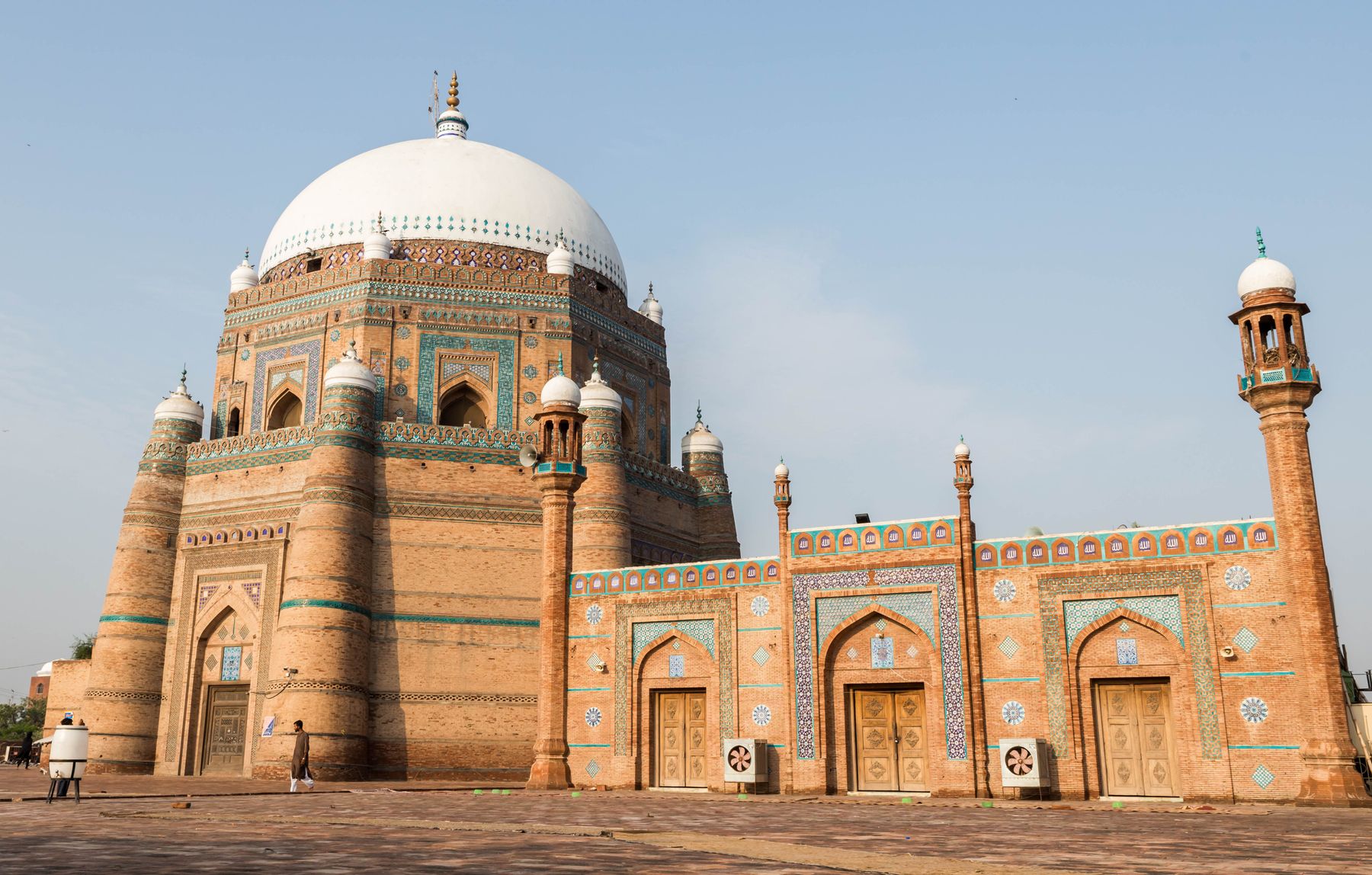 Photo: Aa Dil / Pexels
Multan’s old city is a maze of lanes where the smell of clay dust mixes with wood smoke. In small workshops, potters shape bowls and tile makers cut geometric pieces by hand. The finished work, in deep cobalt and turquoise, covers shrines and tombs across the city. A visit to the workshops and bazaars shows how the craft survives.
A craft of clay and fire
Blue pottery in Multan begins with local clay, which is mixed with water and kneaded by foot or hand. Potters shape vessels on a wheel, then leave them to dry in the sun. The dried pieces are fired once in a kiln, a small brick furnace often dug into the ground. After cooling, the surface is painted with oxides that turn blue and turquoise in a second firing. The process is slow and depends on dry weather.
Kashi tiles are made in a similar way but are flat. Clay is rolled into sheets, cut into squares or shapes, and pressed into moulds. The tiles are then glazed and fired. The blue colour comes from cobalt oxide, while copper gives green and turquoise. The craft has been passed down through families for generations, though the number of workshops has fallen.
The finished pottery is sold as bowls, plates, vases and decorative pieces. Kashi tiles are used on walls, floors and roofs, especially on shrines and tombs. In Multan, the craft is not just decorative. It is part of the city’s identity, and the blue tiles on its monuments are a reminder of its history as a centre of trade and learning.
Shrines and tombs to see
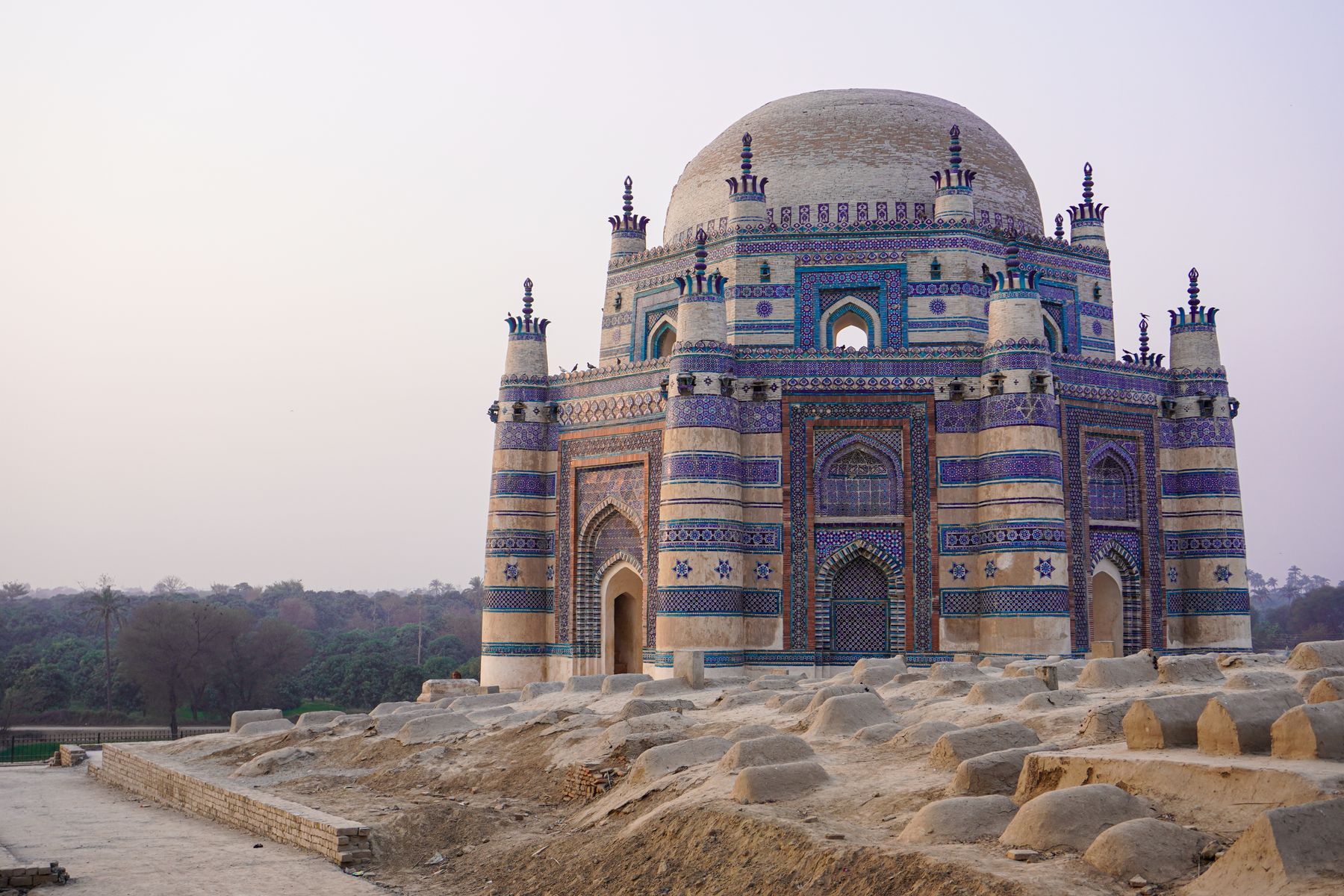
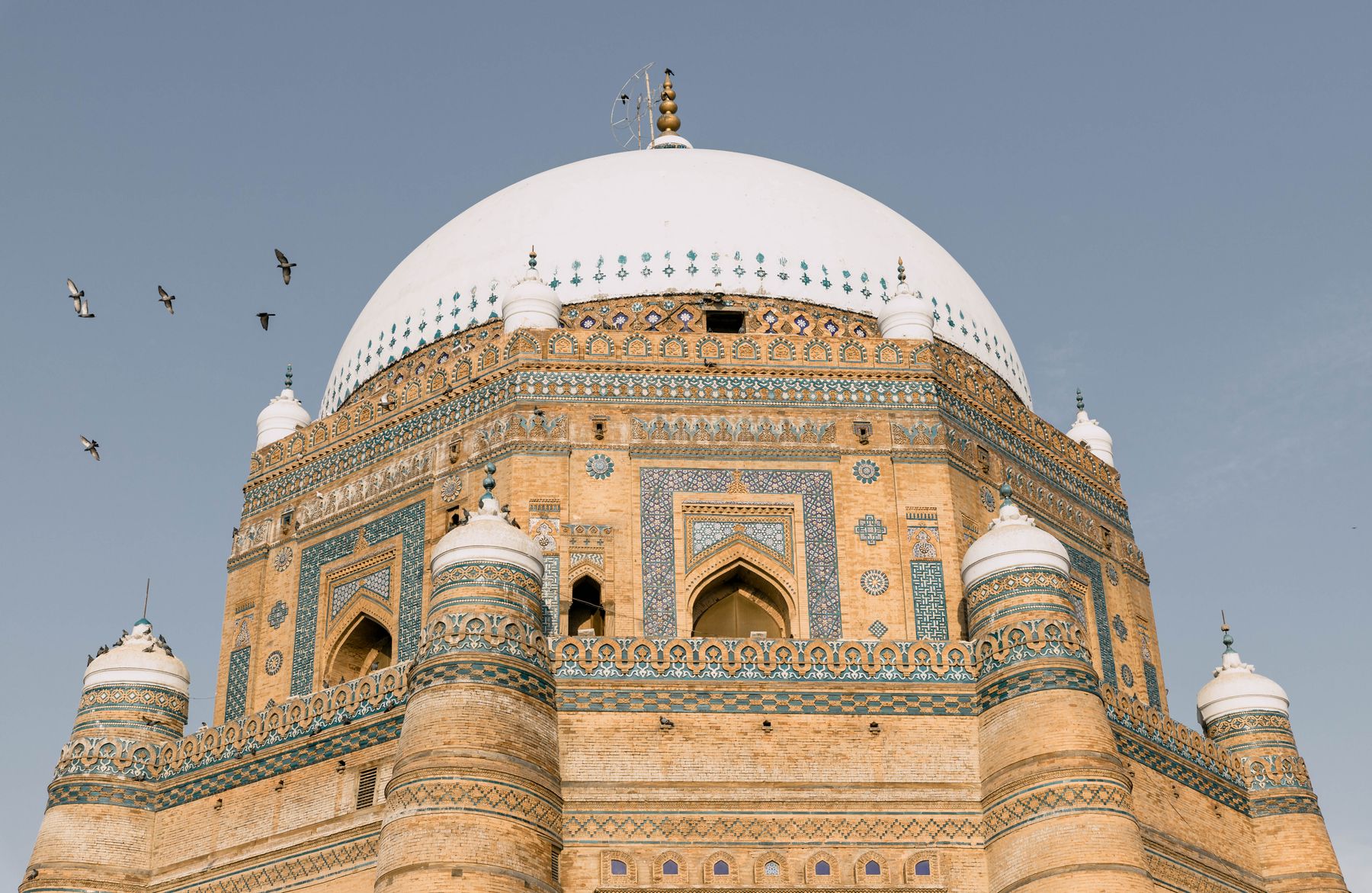
The most famous example of kashi work in Multan is the shrine of Shah Rukn-e-Alam, a massive domed tomb on a hill in the old city. Its walls are covered in blue and turquoise tiles arranged in geometric patterns. The shrine is a major pilgrimage site and a fine place to study the craft up close. Non-Muslims can usually visit the outer courtyard, but should dress modestly and check local customs.
Another important site is the shrine of Bahauddin Zakariya, near the fort. Its dome and minarets carry tilework that has weathered centuries. The nearby mausoleum of Shams Sabzwari also has kashi decoration. These monuments show how tiles were used not only for beauty but also to protect walls from rain and sun. The colours have faded in places, but the patterns remain clear.
For a broader view, walk through the old city around the fort. Many older houses have blue tile panels above doorways or on courtyards. Some are worn, but they show the craft in everyday use. The area is busy, so go early in the morning or late afternoon. Photography is possible, but always ask before pointing a camera at people or private homes.
نیلے رنگ کی مٹیBlue clay, a reference to the pottery’s distinctive colour and local material.
Workshops and bazaars
Blue pottery workshops are scattered in the old city and in newer parts of Multan. Many are small family businesses where you can watch the potter at work. The best way to find them is to ask at a local craft shop or walk through lanes near the fort. Some workshops welcome visitors, but it is polite to ask first. Avoid touching wet clay or finished pieces unless invited.
The main bazaar for pottery is in the old city, near the fort. Shops sell a range of blue pottery, from small bowls to large vases. Prices vary, and bargaining is common. Check pieces for cracks or uneven glaze. Kashi tiles are also sold, often as single pieces or panels. Some shops can arrange visits to workshops if asked in advance.
For a wider selection, try the shops around the shrine of Shah Rukn-e-Alam. Vendors there cater to pilgrims and tourists. Quality varies, so compare a few pieces before buying. The bazaar is also a good place to see how the pottery is displayed and used. Remember that many items are fragile, so ask for careful packing if you are travelling onward.
What to look for in the work
When buying blue pottery, look at the glaze. A good piece has an even, glossy surface without bubbles or dull patches. The blue should be deep and consistent. Check the base for cracks or rough edges. Hand-painted pieces may show slight variations in pattern, which is normal. Avoid pieces with sharp chips or hairline cracks, as they may break easily.
Kashi tiles should have clean edges and a flat back. The glaze should cover the entire surface, including the sides. Traditional patterns use geometric shapes, floral motifs and calligraphy. Some tiles are made in moulds, while others are cut by hand. Hand-cut tiles may be slightly irregular, which is part of their character. Ask the seller about the firing process if you are unsure.
The colours in kashi work are mineral-based and can fade over time if exposed to strong sun. For indoor use, they retain their brightness. If you plan to install tiles, seek advice on sealing and cleaning. Blue pottery is generally for decoration rather than daily use, as it can chip. Handle pieces carefully and wash by hand if needed.
When to go and what to eat
Multan is hot for much of the year. The best time to visit is from November to March, when days are mild and evenings cool. Summer temperatures can exceed 40°C, making walking in the old city uncomfortable. The craft workshops are often open year-round, but potters may work less in the rainy season because drying takes longer. Check the weather before planning a visit.
While in Multan, try local food. The city is known for its mangoes in summer, and for dishes like saag and makki ki roti in winter. In the old city, small eateries serve haleem and kebabs. Sohan halwa, a dense sweet made with ghee and sugar, is a local speciality. Tea stalls are everywhere, and a cup of doodh patti is a good way to take a break.
Combine a craft visit with a walk through the old city. Start at the fort, then move to the shrines and bazaars. Allow a full day to see the main sites and talk to craftspeople. Multan is connected by road and rail to other cities in Punjab. The airport is a short drive from the centre. Book accommodation in advance if visiting during a festival or pilgrimage season.
Where to find it
- Shrine of Shah Rukn-e-AlamA major monument with extensive kashi tilework on its walls and dome. The outer courtyard is usually open to visitors.
- Old city bazaars near the fortLanes lined with shops selling blue pottery and tiles. Good for comparing pieces and watching craftspeople at work.
- Shrine of Bahauddin ZakariyaAnother historic shrine with tile decoration. The site is near the fort and can be combined with a walk.
- Workshops in the old citySmall family-run workshops where pottery is shaped and fired. Ask permission before entering or taking photographs.
Frequently asked questions
Where can I see kashi tiles in Multan?
The shrines of Shah Rukn-e-Alam and Bahauddin Zakariya have fine examples of kashi tilework. The old city bazaars also have shops selling tiles, and some older houses have tile panels. Always ask before entering private property or photographing people.
Can I visit blue pottery workshops in Multan?
Many workshops are small family businesses and may welcome visitors if asked politely. The best way to arrange a visit is through a local craft shop or by asking at your accommodation. Avoid touching wet clay or finished pieces unless invited, and check whether a fee is charged.
What is the best time to visit Multan for the craft?
The cooler months from November to March are best for walking in the old city and visiting workshops. Summer heat can be extreme. The craft is made year-round, but drying times are longer in the rainy season, so fewer pieces may be in production.
Find a stay in Multan
Live prices and availability open in the IMPT app, in a new tab.