Who paints the trucks? Inside a Rawalpindi workshop
Rawalpindi's workshops turn lorries into moving galleries. Here is how the painters work, where to watch them and what to look for on the road.
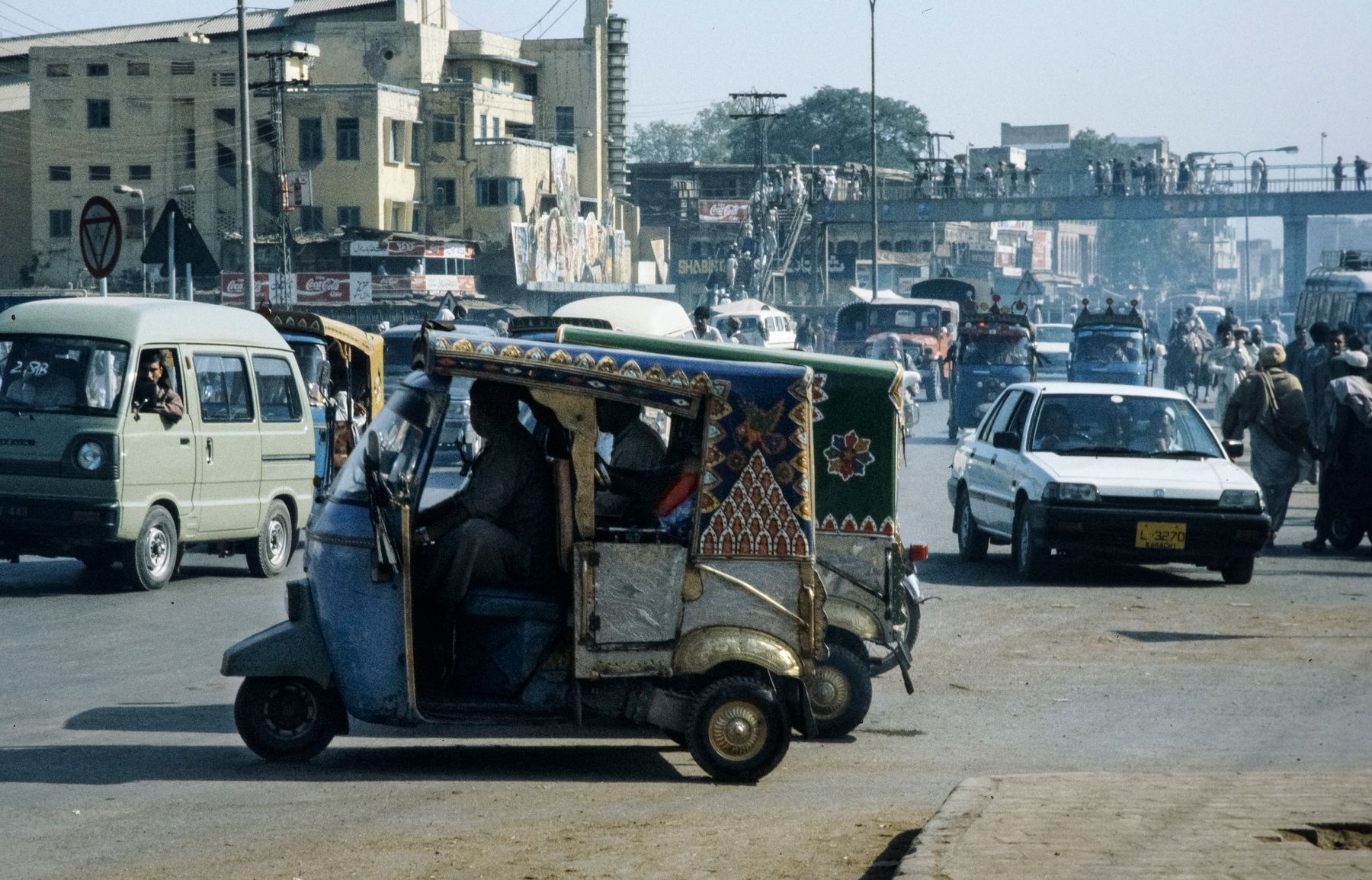
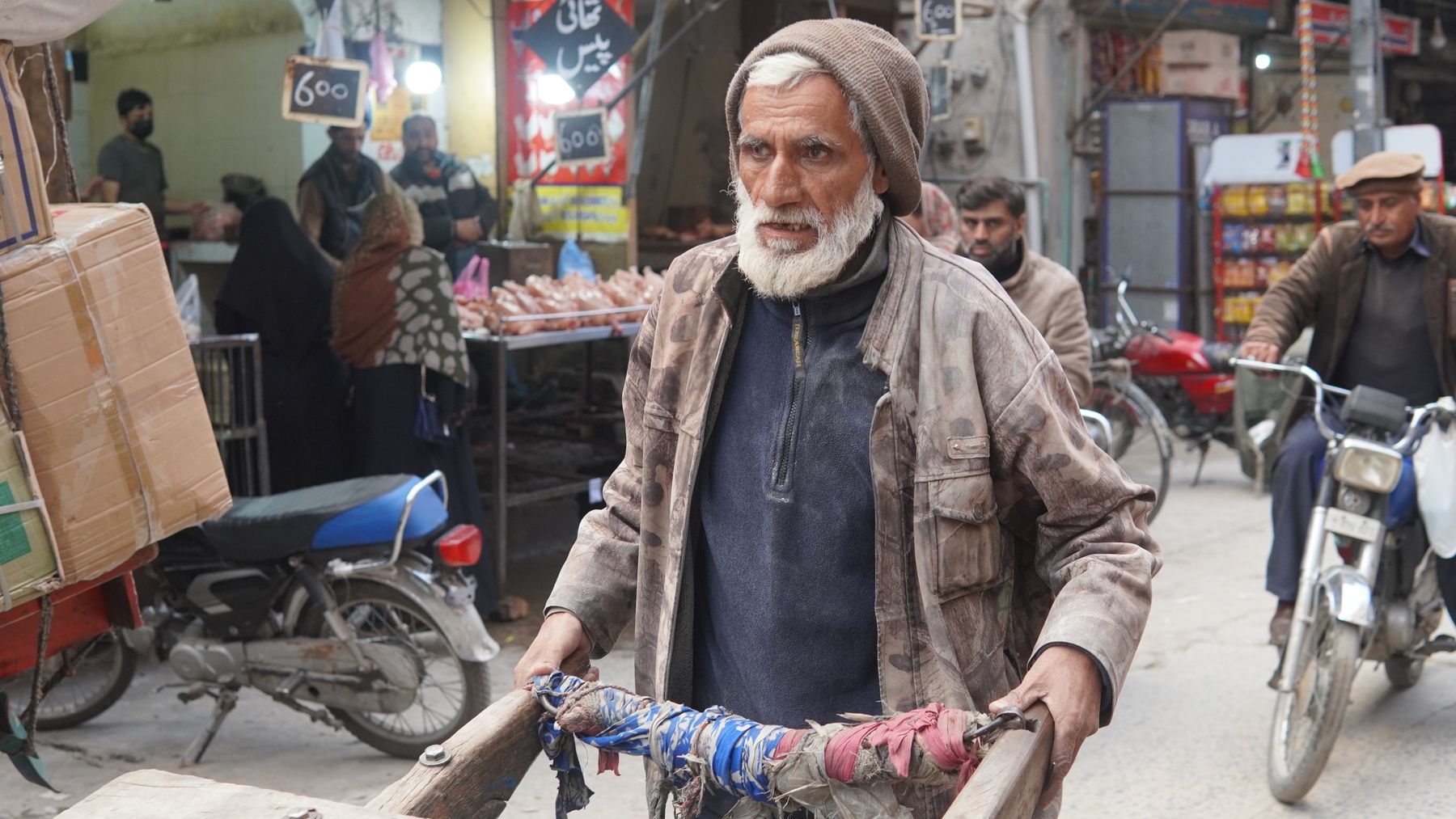 Photo: Kashif Ajmal Malik / Pexels
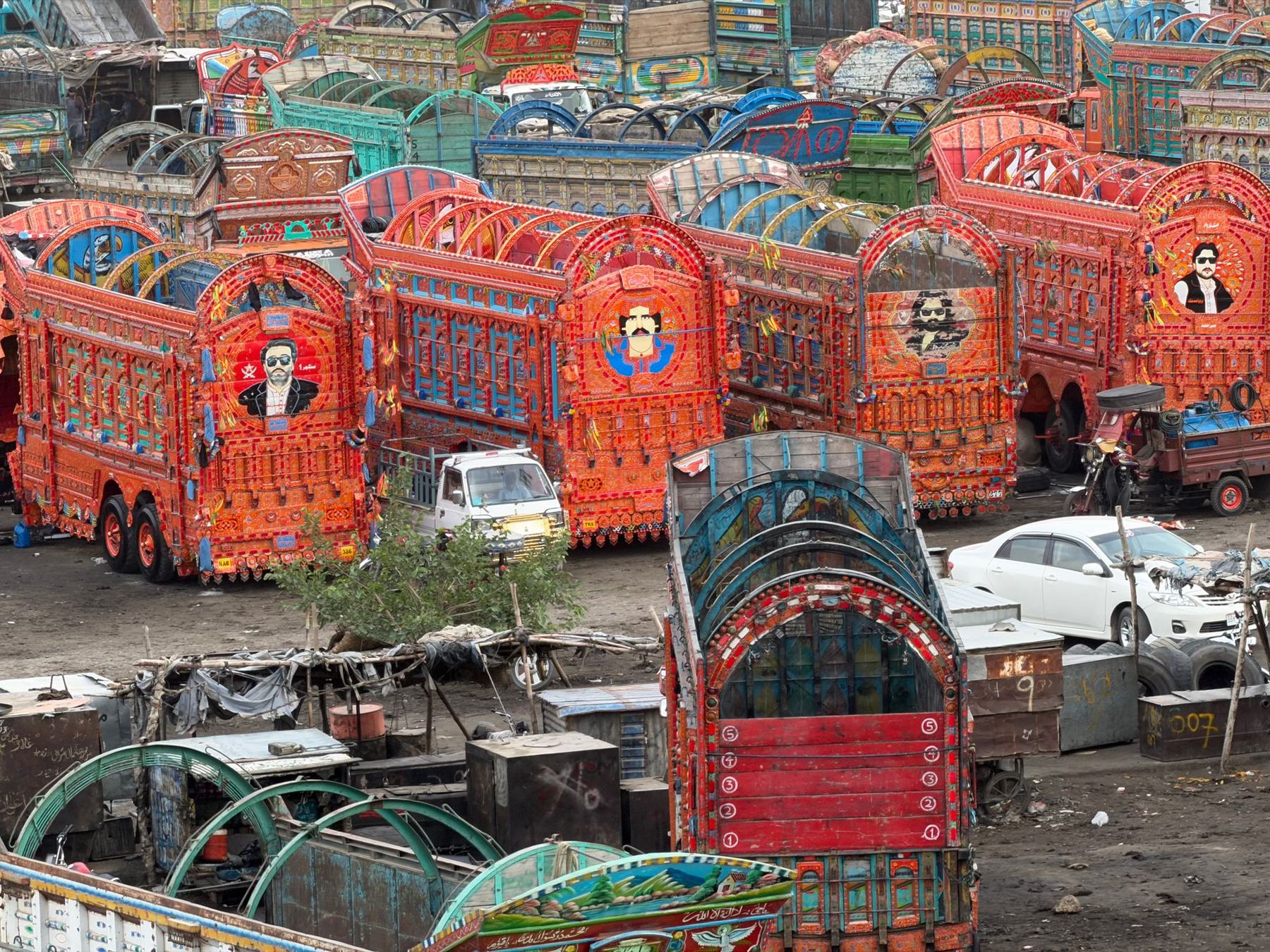
Truck art begins in workshops, not on the highway. In Rawalpindi, painters and panel beaters share yards where lorries arrive plain and leave covered in colour. The work is practical and decorative at once: a vehicle needs a sturdy body, a bright finish and a few lines of verse. Visitors can watch the process in the city's industrial quarters.
Where the workshops sit
Most truck art workshops in Rawalpindi cluster in the older industrial and transport quarters, near the bus stands and goods depots that feed the city. Addresses are rarely fixed. A yard may hold three or four lorries in different stages, from bare chassis to finished body. Ask locally for the paint and body shops, and expect to find them down lanes rather than on main roads.
The work follows the seasons. Paint dries slowly in the humid weeks before the monsoon and quickly in the dry spring. Many workshops are busiest before Eid and before the wedding season, when families order decorated vehicles for transport and display. A weekday morning usually offers the clearest view of the full process.
Rawalpindi sits next to Islamabad, and the two cities share a transport network. Lorries from Khyber Pakhtunkhwa and Punjab pass through the region, and some stop for repairs and repainting. The workshops serve this traffic, so the vehicles on view change from week to week.
The painters and their tools
A truck is painted by a team, not one person. The body is built and repaired first. Then a painter lays down the base colour, often a bright enamel. Detail work follows: flowers, arches, birds, calligraphy and portraits. Some painters specialise in lettering, others in borders and panels. The most experienced hands work on the front panel and the tailgate, where the design is most visible.
Tools are simple. Brushes of different widths, tins of enamel, masking tape and a steady hand. Many workshops still mix colours by eye. A painter may sketch a design in chalk before committing to paint. The work is done outdoors or under a loose roof, so light and weather shape the day.
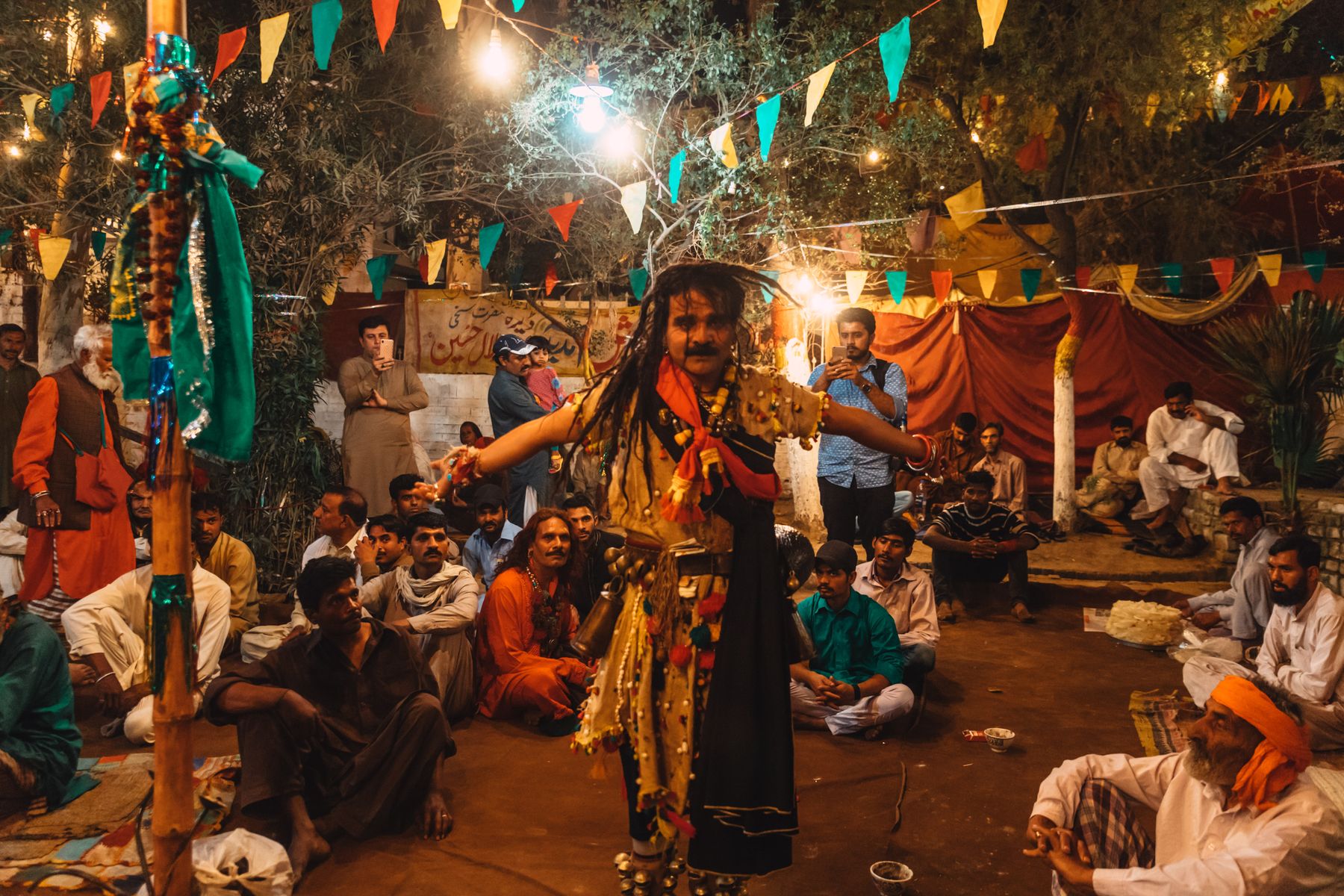
The finished lorry carries more than decoration. Owners choose verses, names and symbols that reflect region, family or trade. A painter may be asked to copy a design from a photograph or to adapt a pattern seen on another vehicle. The result is a shared visual language that changes slowly.
رنگ ہی رنگColours upon colours, a phrase often painted on lorries to describe the layered decoration.
What a visitor can see
A morning in a workshop shows the whole sequence. A chassis may be stripped and welded. Nearby, a painter applies a base coat. In another bay, a nearly finished lorry receives its final flourishes. Visitors can watch without interrupting, though the yards are working spaces with moving vehicles and wet paint.
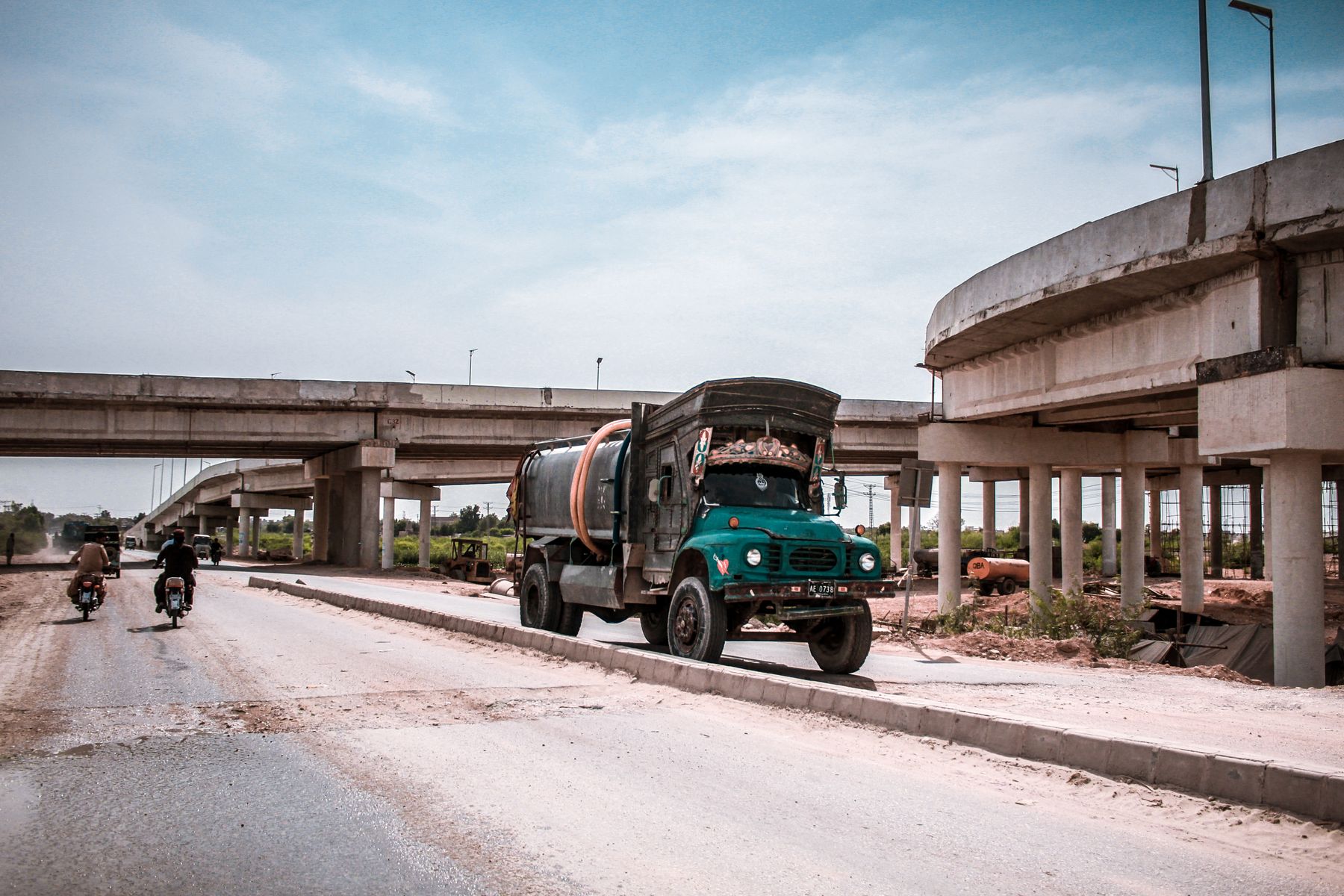
Look for the details: the decorated mudguards, the hanging chains and the painted bumpers. Many lorries carry small bells or metal ornaments. The front panel often holds a phrase in Urdu or a portrait. The rear carries warnings and blessings. These elements are not random. They follow conventions that painters learn over years.
Photography is usually acceptable if you ask first. Avoid blocking the painters or stepping into the work area. A workshop is not a museum, and the people there are on a schedule. A short visit with a polite request is more welcome than a long unannounced tour.
Tastes of the workshop quarter
The areas around the transport yards have their own food. Roadside dhabas serve tea, parathas and daal through the working day. Chai arrives in small glasses, strong and sweet. A plate of halwa puri is a common breakfast for workers starting early. These are simple places, not aimed at visitors, and the food is fresh because the customers are local.
Rawalpindi's older bazaars are a short ride away. There, food stalls sell kebabs, naan and seasonal fruit. In summer, look for lassi and sugar cane juice. In winter, carrot halwa and warm milk appear. The city's food follows the working calendar: early breakfast, a solid lunch and tea through the afternoon.
Eating near the workshops is part of seeing how the trade works. The same tea stall may serve the painter, the welder and the driver. Conversation is often about the vehicle, the road and the next job. A visitor who eats here gets a sense of the rhythm behind the finished lorry.
Getting there and timing a visit
Rawalpindi is reached by road and rail from Lahore, Peshawar and Islamabad. The workshops are best reached by local transport or a short taxi ride from the main bazaars. Ask for the truck body shops or the paint workshops near the goods depots. A local guide can help find active yards, as locations shift with demand.
Spring and autumn are the most comfortable seasons for walking between yards. Summer heat is intense by midday, and the monsoon brings rain that stops outdoor painting. Winter mornings are cool but clear. Ramzan changes the working day, with activity shifting to the morning and resuming after iftar.
Check current official advice before travelling, as access rules and advisories can change. Some industrial areas are busy with heavy vehicles, so take care on foot. The workshops are working businesses, and a request to watch is always best made in person. The reward is a close view of a craft that travels the country's highways.
Where to find it
- RawalpindiThe main city for truck art workshops, with yards near the bus stands and goods depots.
- IslamabadThe capital next door, useful as a base and a short drive from Rawalpindi's workshops.
- TaxilaAn ancient site west of Rawalpindi, on the road to Peshawar, with its own transport traffic.
- MurreeA hill station north of Rawalpindi, reached by a winding road, with cooler air in summer.
Frequently asked questions
Can visitors watch truck art being painted in Rawalpindi?
Yes, in many workshops. Ask politely at the yard entrance and keep to the edges of the work area. Mornings are usually best, as the full team is present. Photography is often allowed if you ask first. The yards are working spaces, so avoid touching wet paint or blocking vehicles.
What is the best season to visit Rawalpindi for truck art?
Spring and autumn are the most comfortable for walking between workshops. Summer heat is intense by midday, and monsoon rain can stop outdoor painting. Winter mornings are cool and clear. The weeks before Eid are often busy, with more vehicles in the yards.
Do I need a permit to visit Rawalpindi's workshops?
Rawalpindi is a major city with open access to its bazaars and industrial areas. Some nearby districts and border regions can require a No Objection Certificate, and rules change. Check current official advice before travelling. For the city's workshops, a polite request at the yard is usually enough.
Find a stay in Rawalpindi
Live prices and availability open in the IMPT app, in a new tab.