The sound of a jingle truck
Painted lorries, bells and roadside chai: a guide to the moving folk art that fills Rawalpindi's roads.
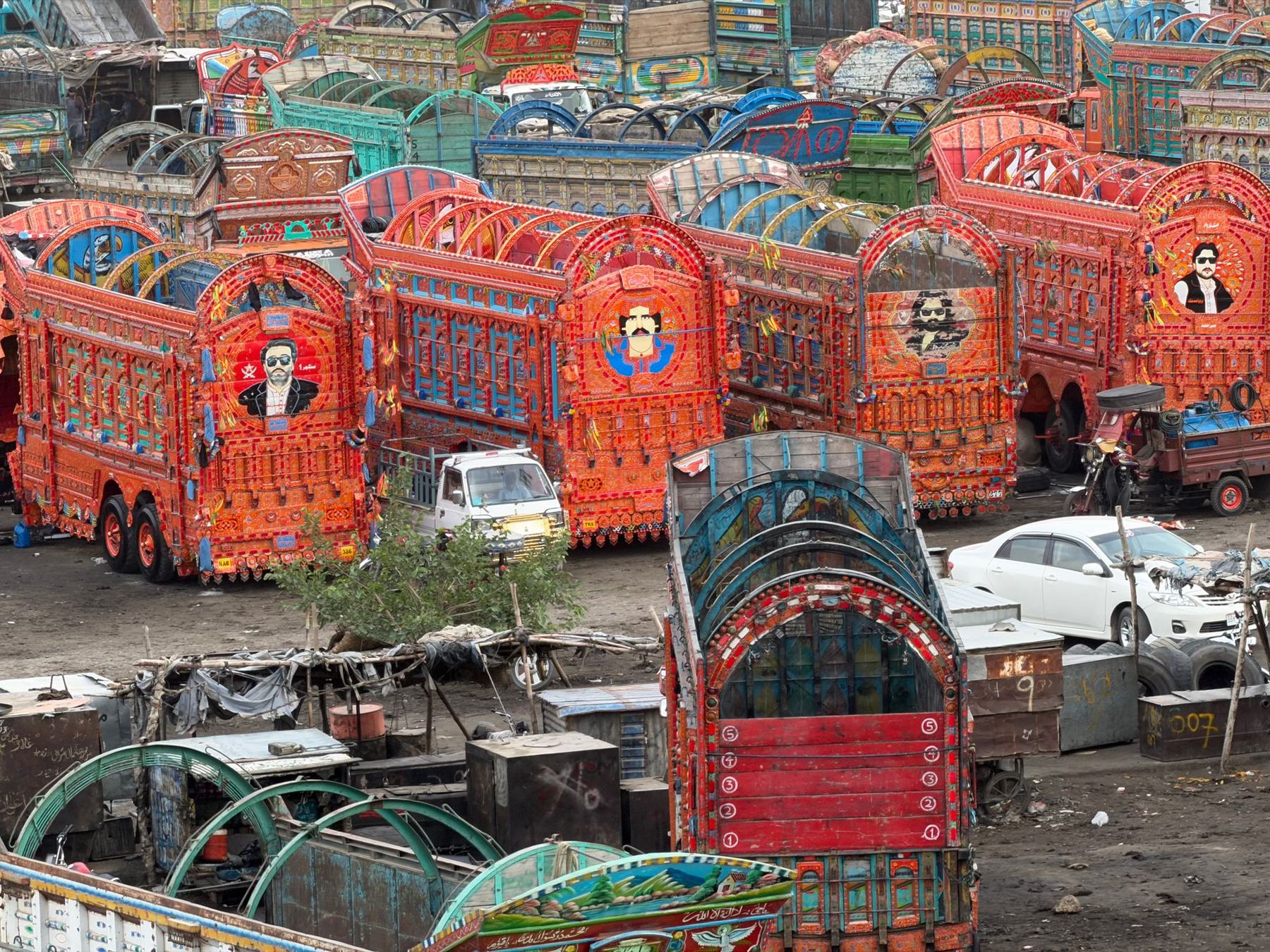 Photo: Kamal Hyder / Pexels
A low chime, then a clatter of bells, comes before the lorry appears. In Rawalpindi the decorated truck is both transport and display. The painted panels, hanging chains and metal fans are made to be seen and heard. The city's bus stands and workshops give a close view of the craft.
A craft on the move
Truck art in Pakistan is a form of decoration applied to goods vehicles, buses and rickshaws. In Rawalpindi the style is dense and colourful. Panels carry floral patterns, calligraphy, portraits and geometric borders. The work is done by hand, often in family workshops, and a full decoration can take weeks. The result travels the country's highways, so the art is seen far beyond the city where it was made.
The sound is part of the design. Chains of bells hang from the rear bumper, and metal fans or tassels swing as the truck moves. Drivers add horns with several tones. The noise is a warning in traffic and a signature on the road. Listen for the bells before the lorry comes into view, especially on the main roads leading out of Rawalpindi towards the Grand Trunk Road.
The tradition has roots in the transport of goods across the region. Over time the decoration became a way for owners and drivers to mark a vehicle as their own. Workshops pass skills from one generation to the next. Designs change with fashion, but the dense, hand-painted panel remains central. In Rawalpindi, the craft sits close to the city's transport hubs, where vehicles wait between journeys.
Where the paint is applied
Workshops cluster near the bus stands and truck terminals. In Rawalpindi, the area around Pir Wadhai bus terminal and the roads towards the Islamabad highway have long been associated with vehicle decoration. A visitor can watch panels being prepared, though workshops are working spaces and access depends on the day. Ask before entering and keep clear of moving vehicles and wet paint.
The work begins with the body of the truck. Panels are removed, cleaned and primed. Painters then apply background colours, often bright blues, greens and reds. Details are added with finer brushes. Calligraphy, portraits and floral motifs are common. Some workshops use stencils for repeated borders, but the main images are painted freehand. The final stage adds varnish and the hanging metalwork.
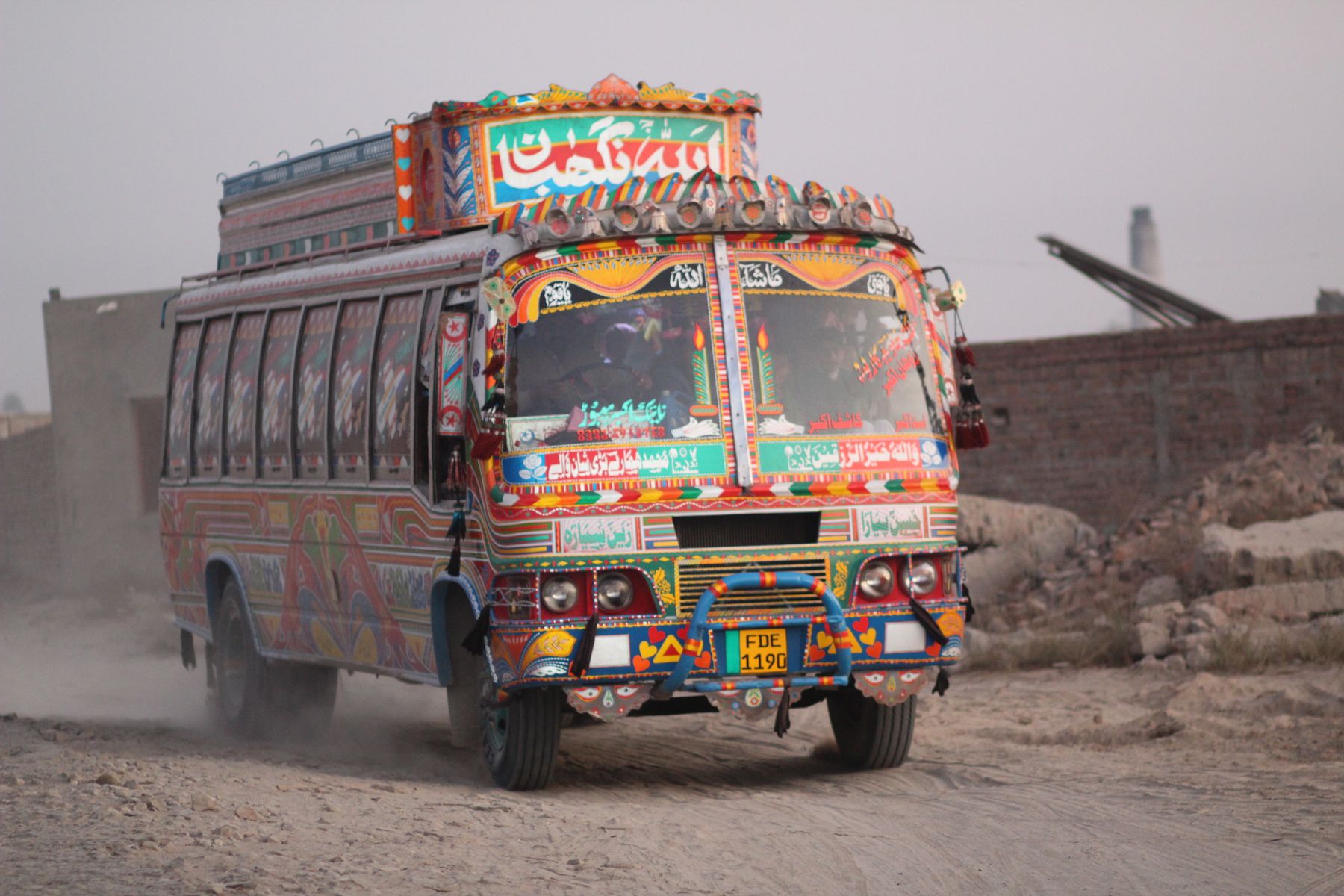
The decoration is not limited to trucks. Buses, rickshaws and even water tankers carry versions of the style. In Rawalpindi, the local bus stands show a range of work, from simple borders to full panels. The craft is visible in the ordinary traffic of the city, not only in workshops. A walk along a main road can turn into a survey of different designs and colour schemes.
ٹرک آرٹTruck art, the decorated vehicle style seen across Pakistan.
Reading the panels
The images on a truck are chosen by the owner and the painter. Common subjects include flowers, birds, horses and portraits of national figures. Calligraphy from Urdu and Persian poetry is also popular. Some panels show landscapes, especially mountains and waterfalls. The borders often use repeating geometric patterns. Each element is fitted to the shape of the vehicle, so the design follows the panels rather than a flat canvas.
Colour is used to separate the parts of the truck. The cab may carry one scheme and the cargo body another. Contrasting borders frame the main images. The hanging chains and bells are usually polished metal, which catches the light. The overall effect is meant to be seen from a distance and at speed. Up close, the brushwork and the layering of colours become visible.
The style has changed with materials. Modern paints and varnishes last longer than older mixtures. Some workshops now use printed elements for repeated patterns, but hand painting remains the core. In Rawalpindi, the mix of old and new is easy to see. A single truck may combine traditional motifs with modern lettering. The craft continues because owners still want their vehicles to stand out.
Roadside tastes
The truck routes are also food routes. Around the bus stands and transport hubs, small kitchens serve tea, parathas and daal. In Rawalpindi, a morning start near Pir Wadhai can include chai from a roadside stall and a plate of halwa puri. The food is simple and quick, suited to drivers and workers. Hygiene varies, so choose busy stalls with high turnover.
Further along the Grand Trunk Road, dhabas serve grilled meat, karahi and naan. The cooking is often done in front of the customer. Tea is brewed strong with milk and sugar. In winter, a bowl of hot soup or a plate of pakoras is common. The food is part of the rhythm of the road, taken between journeys or during a wait for a vehicle to be loaded.
Sweet shops near the main bazaars sell traditional desserts such as gulab jamun and barfi. In Rawalpindi, the older bazaars around Raja Bazaar have long-standing shops. A visitor can buy a small box and eat it with tea. The portions are rich, so a little goes a long way. These stops are not formal restaurants, but they are where the truck trade eats.
Seeing the art safely
Truck art is best seen from the pavement or a safe stopping place. Do not step into traffic to photograph a moving lorry. In Rawalpindi, the bus terminals have areas where vehicles stand still. Ask permission before photographing a driver or a workshop. Some owners are happy to show their vehicles, but others are busy. A polite request in Urdu or English is usually enough.
The city is busiest in the morning and late afternoon, when goods vehicles move in and out. Fridays are quieter for some workshops. The summer heat is intense, so early morning is the best time for a walk. In winter, fog can reduce visibility on the main roads. Check the weather before setting out and carry water.
Rawalpindi is well connected by road and rail. The main bus stands and the railway station are the arrival points. From there, local transport and rickshaws reach the truck areas. The city is next to Islamabad, so a day trip is possible. Rules on access to terminals and workshops can change, so check locally before planning a visit.
Where to find it
- Pir Wadhai bus terminalA major transport hub in Rawalpindi where decorated buses and trucks can be seen waiting.
- Raja BazaarOld bazaar area with sweet shops and nearby workshops, good for a walk and tea.
- Grand Trunk RoadThe historic road passing through Rawalpindi, busy with goods vehicles and roadside dhabas.
- Rawalpindi railway stationColonial-era station and arrival point, with local transport to the truck areas.
Frequently asked questions
What is the sound of a jingle truck?
The sound comes from metal bells and chains hung on the rear of decorated trucks. As the vehicle moves, the bells chime and the chains rattle. Drivers also use multi-tone horns. Together these make a distinctive noise that warns other road users and marks the truck's presence.
Where can I see truck art in Rawalpindi?
The bus terminals and transport hubs are the best places. Pir Wadhai bus terminal and the roads towards the Islamabad highway have many decorated vehicles. Workshops near these areas can sometimes be visited. The Grand Trunk Road also carries a steady flow of painted trucks.
Is it safe to visit truck workshops in Rawalpindi?
Workshops are working spaces with moving vehicles, tools and wet paint. Visit with care and ask permission before entering. Keep clear of machinery and do not touch painted panels. The best approach is to observe from a safe distance and follow the instructions of the workers.
Find a stay in Rawalpindi
Live prices and availability open in the IMPT app, in a new tab.