 Photo:
When to go
Winter in Sindh runs from November to February. Daytime temperatures in the interior are mild, often between 20°C and 25°C, and nights can be cool. This is the most comfortable season for visiting archaeological sites, which have little shade. Summer heat is severe, with temperatures regularly above 40°C, and the monsoon brings humidity and occasional flooding.
The route described here is best from mid-November to mid-February. December and January are the coolest months. Fog can form in the early morning on the plains, reducing visibility on the highways. If you are driving, allow extra time and avoid setting out before the fog lifts.
Weather on the plain
The Indus plain is dry and flat. Winter rain is light but can make unpaved sections muddy. Check the forecast before visiting remote sites such as Brahmanabad.
The route
The trip starts in Karachi and follows the National Highway east to Thatta, then turns north on the Indus Highway to Bhit Shah, Sehwan and Mohenjo-daro. From Mohenjo-daro, a minor road leads east to Brahmanabad. The return to Karachi is by the same highway, passing Hyderabad. Total driving is about 1,200 kilometres over five days.
Roads are mostly two-lane and in reasonable condition. The National Highway between Karachi and Thatta is busy with trucks. The Indus Highway is quieter but has stretches of rough surface. Fuel stations are frequent on the main highways but sparse on the minor road to Brahmanabad. Fill up before leaving the main road.
Driving notes
Drive on the left. Speed limits are posted but not always observed. In towns, watch for motorcycles and animal-drawn carts. Avoid driving after dark outside cities.
Sites along the way
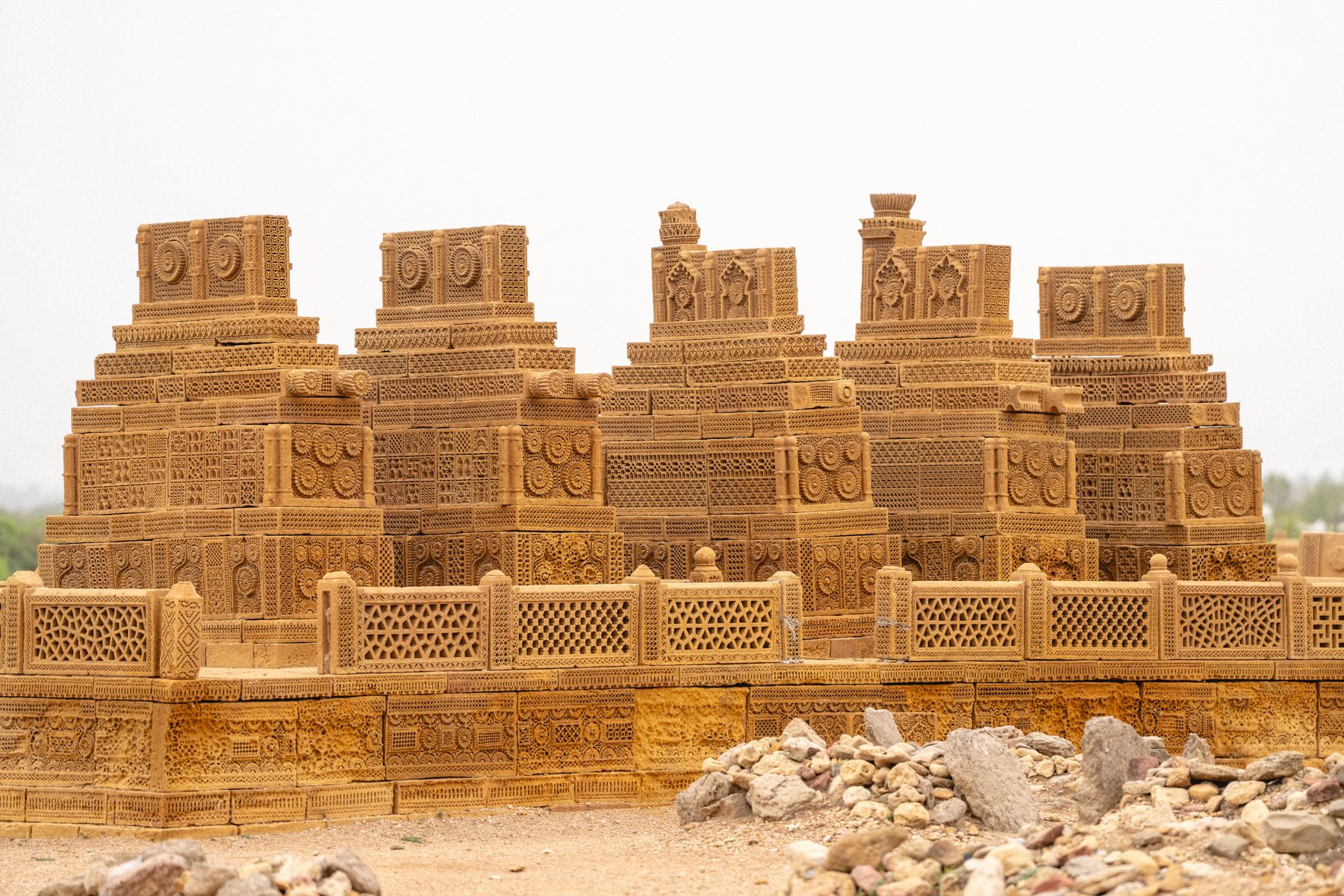
Thatta’s Shah Jahan Mosque dates from the 17th century and is known for its geometric tilework. The Makli Necropolis nearby is one of the largest funerary sites in the world, with tombs and mausoleums spread over a low hill. Bhit Shah is the shrine of the Sindhi poet Shah Abdul Latif Bhittai, and Sehwan is the shrine of Lal Shahbaz Qalandar. Both are active places of worship.
Mohenjo-daro is the best-known site of the Indus Valley Civilisation, with a stupa mound and a lower town of streets and drains. Brahmanabad, also called Mansura, is a large mound of brick ruins that was once a city of the Umayyad and Abbasid periods. It is less visited and has little interpretation. The sites are open during daylight hours; a fee may be charged at Mohenjo-daro.
Makli Necropolis
The necropolis covers several square kilometres. The main monuments are a short drive from the Shah Jahan Mosque. Allow at least an hour to walk among the tombs.
Practical notes
Accommodation is available in Karachi, Hyderabad, Thatta and Sehwan, with simpler options in smaller towns. Book ahead in winter, especially around the Urs at Sehwan, which draws large crowds. Food is widely available; in smaller towns, choose busy places with high turnover.
Mobile coverage is good on the main highways but patchy in rural areas. Carry a power bank and a paper map as backup. Some archaeological sites and border areas may require a No Objection Certificate (NOC). Rules change, so check current official advice before travelling. The route described here stays within commonly visited districts.
Health and safety
Tap water is not safe to drink; use bottled water. Dust can be a problem at archaeological sites. Carry a basic first-aid kit. In case of emergency, hospitals are available in Karachi and Hyderabad.
Frequently asked questions
What is the best time for a winter trip through Sindh?
The best time is from November to February, when daytime temperatures are mild and skies are clear. December and January are the coolest months. Avoid the summer heat from May to September, when temperatures regularly exceed 40°C.
Do I need a permit for a winter trip through Sindh?
Most of the route described here does not require a permit. However, some archaeological sites and areas near borders may need a No Objection Certificate (NOC). Rules change, so check current official advice before travelling.
How long does it take to drive from Karachi to Mohenjo-daro?
The drive from Karachi to Mohenjo-daro is about 450 kilometres and takes around eight hours without stops. Most travellers break the journey at Thatta or Sehwan. The route follows the National Highway and then the Indus Highway.
What should I wear at the shrines in Sindh?
At the shrines of Bhit Shah and Sehwan, dress modestly. Women should cover their heads, and everyone should remove shoes before entering the inner shrine. Photography may be restricted in some areas.