 Photo: Ammar Hameed / Pexels
Derawar Fort and the Cholistan desert
Derawar Fort rises from flat desert south of Bahawalpur, a square of high brick walls with round bastions at each corner. Beyond it lies Cholistan, a dry land of dunes, wells and old fort sites.
The fort is the main reason travellers come this far south in Punjab. It stands on the edge of the Cholistan desert, about two hours from Bahawalpur by road. The walls are visible from a distance across open ground. A visit is usually combined with a short run into the desert, where the dunes begin and old wells still serve herders.
How the day goes
- MorningLeave BahawalpurThe drive south passes villages and canal country before the land opens out. Allow around two hours each way, more if stopping.
- Late morningWalk the fortThe outer walls and bastions are the sight. The interior is largely ruined. Walking the base of the walls takes under an hour.
- MiddayShade and waterThere is little shade at the fort. Rest, drink water and eat what you carried before heading into the desert.
- AfternoonInto CholistanA local jeep and driver can take you a short way onto the dunes and to nearby wells. Agree the route and return time first.
- EveningReturn northLeave enough daylight for the drive back. The road is quiet after dark and navigation is easier in daylight.
What to bring
- Hat, sunglasses and high-factor sun cream
- At least two litres of water per person
- Sturdy shoes for sand and broken brick
- Food, as nothing reliable is sold at the fort
- A scarf or cloth for wind-blown sand
- Cash for a local jeep and driver, agreed beforehand
Know before you go
- The fort lies roughly 100 km south of Bahawalpur, on the edge of Cholistan.
- A fee is charged to enter the fort grounds.
- The interior is ruined; the walls and bastions are the main sight.
- Summer heat is severe from May to September; visit from October to March.
- Mobile signal is patchy beyond the last villages.
- Rules and access can change; check current official advice before setting out.
Where it starts
Most trips start in Bahawalpur, which has road and rail links to Multan and Lahore. From the city, take the road south towards the fort; the drive takes about two hours.
The fort itself
Derawar Fort is a square enclosure of high brick walls, roughly 40 m tall, with round bastions at each corner. It was completed in its present form in the eighteenth century, though the site is older. The walls are built of fired brick and stand on a raised platform of earth. From a distance the fort reads as a single block on flat ground.
The interior is largely ruined. Little of the original buildings survives, and the grounds are open and unshaded. The main experience is walking the outside of the walls and looking along the bastions. The scale is best understood from the ground, where the walls tower overhead.
What to look for
Note the tapering shape of the walls and the way each bastion steps out from the line. Look for the old gateway and the remains of the inner structures. The brickwork shows repair in places, and the fort has been the subject of conservation work in recent years.
The Cholistan desert
Cholistan is the dry country south and east of Bahawalpur, stretching towards the Indian border. It is not empty sand. There are low dunes, scrub, seasonal grazing and a scatter of old fort sites and wells. Herders move through it with camels and goats, following the sparse grazing that appears after rain.
The desert edge near Derawar is the easiest part to reach on a day trip. A local jeep and driver can take you a short way onto the dunes and to nearby wells. Agree the route and the return time before setting off, and do not go far without a driver who knows the tracks.
Wells and old sites
Old wells still serve herders in parts of Cholistan, and several historic fort sites lie within reach of Derawar. These are simple structures in open country, not visitor attractions with facilities. Ask locally what is reachable and safe on the day.
Planning the visit
The best months are October to March, when days are mild and nights cold. Summer heat from May to September is severe, and the fort offers almost no shade. Spring can bring dust and wind. Rain is rare but can briefly close desert tracks, so ask about conditions before leaving Bahawalpur.
There is no reliable food or water at the fort. Carry what you need, including at least two litres of water per person. Fuel up in Bahawalpur. Mobile signal is patchy beyond the last villages, so tell someone your plan and expected return time.
Access rules can change. Parts of the border country and some districts require a No Objection Certificate (NOC) or have travel advisories. Check current official advice before travelling, and ask locally about conditions on the day.
Getting there
The fort lies roughly 100 km south of Bahawalpur. The road is metalled for most of the way, with a final stretch of desert track. Most travellers hire a car and driver in Bahawalpur, or join a local jeep for the desert section.
Frequently asked questions
How far is Derawar Fort from Bahawalpur?
The fort lies roughly 100 km south of Bahawalpur, on the edge of the Cholistan desert. The drive takes about two hours each way by road, with a final stretch of desert track. Most travellers visit as a day trip from the city.
When is the best time to visit Derawar Fort and Cholistan?
October to March is the most comfortable period, with mild days and cold nights. Summer heat from May to September is severe and the fort offers little shade. Spring can bring dust and wind. Check conditions before leaving Bahawalpur.
Can you go inside Derawar Fort?
You can enter the fort grounds, and a fee is charged. The interior is largely ruined, so the walls and bastions are the main sight. Walking the outside of the walls takes under an hour. Opening arrangements can change, so check on arrival.
Do you need a guide or jeep for the Cholistan desert?
For the desert section beyond the fort, travellers usually hire a local jeep and driver who know the tracks. Agree the route and return time first. Do not go far into the dunes without a driver familiar with the area, and carry water.
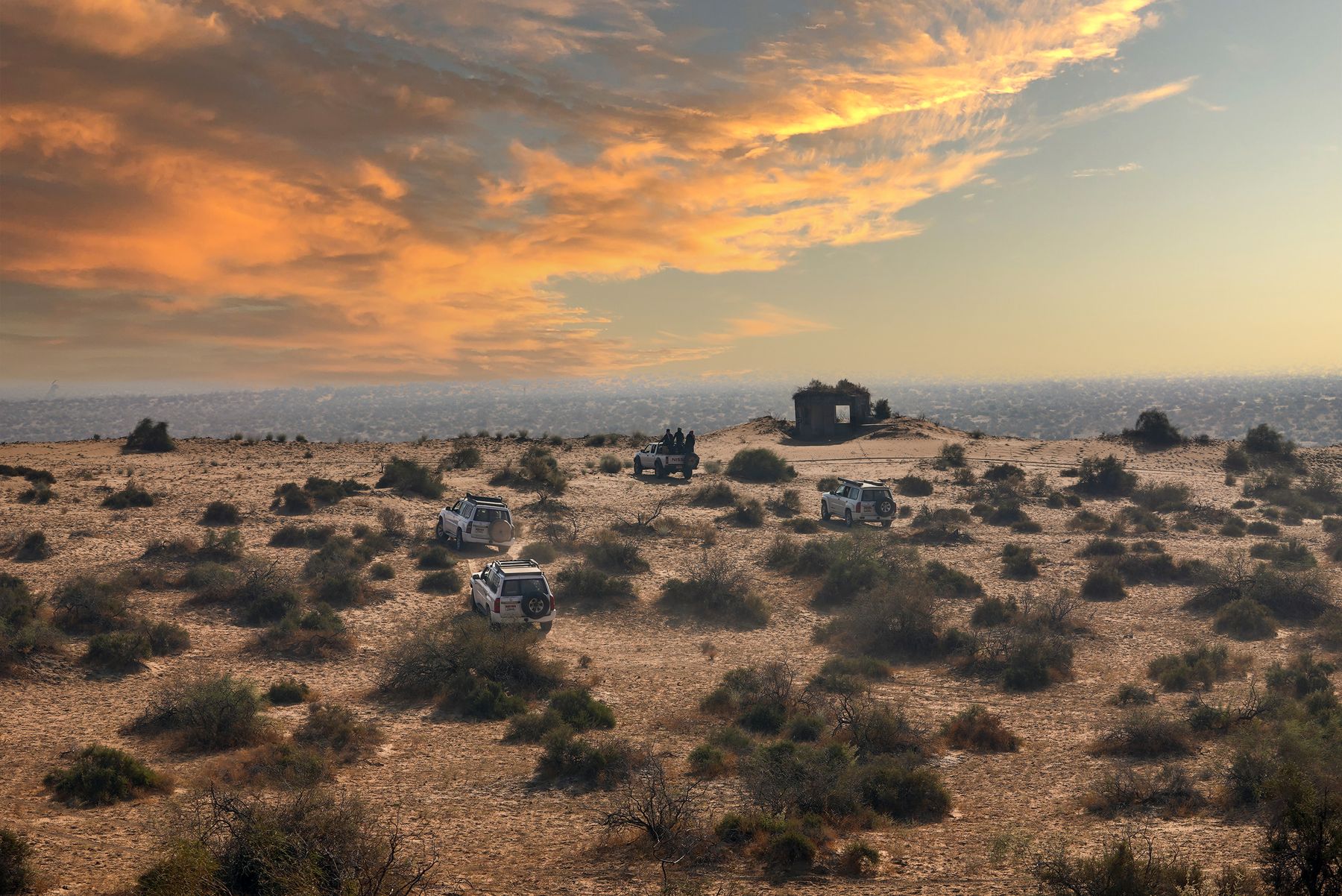 Photo: Tauseef Kazmi / Pexels
Staying near Bahawalpur
Most travellers base themselves in Bahawalpur and visit the fort as a day trip, returning before dark.