 Photo: Wasif Mehmood / Pexels
Shangrila and the Kachura lakes
The Kachura lakes sit in the Indus valley a short drive from Skardu. Lower Kachura holds the Shangrila resort; Upper Kachura is quieter and colder. Both make an easy day out from town.
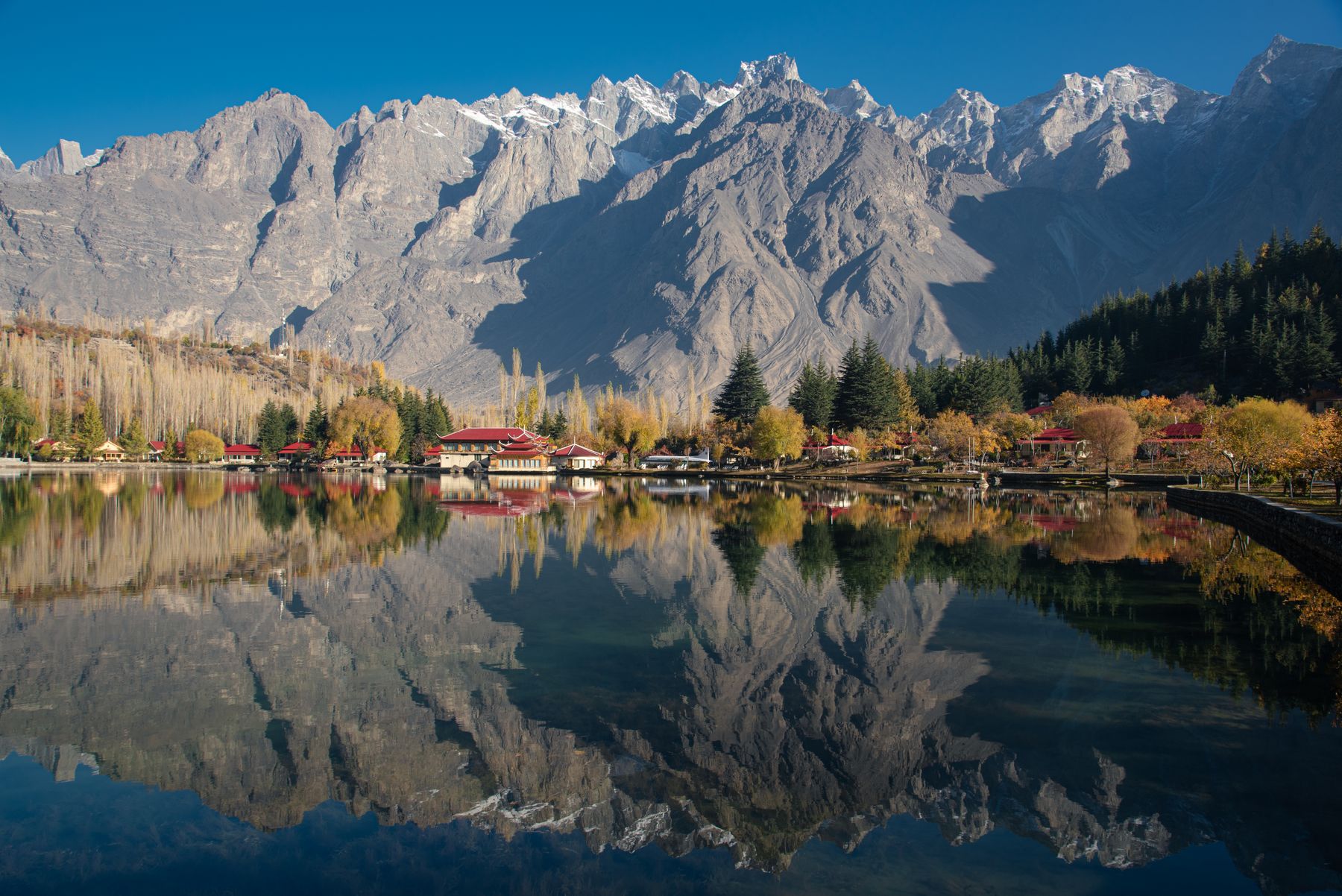
Lower Kachura lake, known as Shangrila, lies below a hillside of terraced gardens and red-roofed buildings. The lake is small and still, fed by springs. Upper Kachura lake is a few kilometres further along the valley, reached by a short walk down from the road. Water comes from snowmelt and stays cold even in summer. The two lakes are usually visited together.
How the day goes
- MorningLeave SkarduDrive south-west from Skardu town. The road crosses the Indus and climbs gently to Lower Kachura. Allow about thirty minutes.
- Late morningLower KachuraWalk the paths around the lake and gardens. The water is calm and reflects the surrounding hills. A short loop takes under an hour.
- MiddayUpper KachuraContinue by road to the upper lake. Park at the road and walk down a steep path for about fifteen minutes. The lake sits in a bowl of rock and pine.
- AfternoonWalk and returnFollow the shoreline or sit by the water. The path back up is short but steep. Return to Skardu before dusk.
What to bring
- Layered clothing for cool mornings and warm afternoons
- Sun protection: hat, sunglasses and sunscreen
- Sturdy shoes for the path down to Upper Kachura
- Drinking water and snacks
- Cash for any entrance fee at Shangrila
Know before you go
- A fee is charged for entry to the Shangrila gardens and lake area.
- The walk down to Upper Kachura is steep; allow more time coming back up.
- The lakes are at about 2,500 metres; take the first day slowly.
- Roads are usually clear from May to September; winter snow can close the upper approach.
- Local guides and jeeps can be hired in Skardu for the day.
Where it starts
The trip starts in Skardu town. From the main bazaar, take the road south-west towards the Indus. Lower Kachura is signposted and about thirty minutes by road. Upper Kachura is a further few kilometres along the same valley road.
Lower Kachura and Shangrila
Lower Kachura lake is the smaller of the two and the more developed. The name Shangrila is used for the resort that occupies the slope above the water, with terraced gardens and red-roofed buildings. The lake itself is fed by springs and stays calm for most of the day. Paths run around part of the shore and through the gardens.
Entry to the Shangrila grounds is controlled and a fee is charged. The gardens are planted with flowers and trees that colour in spring and autumn. From the terraces there are views across the lake to the bare hills beyond. It is a place to walk slowly rather than to swim; the water is cold and the banks are steep in places.
The gardens
The terraced gardens above the lake are the main reason many visitors stop here. Paths wind between flower beds and trees, with benches set at viewpoints. In spring the blossom is out; by autumn the leaves turn. The gardens are on a slope, so expect some steps.
Upper Kachura lake
Upper Kachura lake lies a short drive further along the valley. From the road a steep path drops down through rock and pine to the water. The lake is smaller than Lower Kachura and sits in a hollow, with cliffs on one side. Its water is snowmelt and remains cold even in midsummer.
The walk down takes about fifteen minutes at an easy pace. The path is rough in places and can be slippery after rain. At the lake there is a small area by the shore where you can sit. The return climb is short but steep, so allow more time than for the descent.
Walking and timing
Most people spend an hour at the upper lake, including the walk down and back. The path is not suitable for wheelchairs or pushchairs. Strong shoes are useful. In early summer the path may be muddy from snowmelt; by late autumn it can be icy.
When to go and what to expect
The Kachura lakes are usually visited from May to September, when the road from Skardu is clear and the days are mild. Spring brings blossom in the gardens at Lower Kachura. Autumn is quieter and the light is clear. Winter snow can make the upper approach difficult or closed.
The lakes sit at around 2,500 metres, so the air is thinner than in the plains. Take the first day slowly and drink water. The weather can change quickly in the mountains; carry a warm layer even on sunny mornings. The area is generally calm, but travel advice for Gilgit-Baltistan can change, so check current official guidance before setting out.
Access and guides
The lakes are reached by road from Skardu. Local guides and jeeps can be hired in town for the day. No permit is normally needed for the Kachura lakes, but rules can change; check before travelling. The road to Upper Kachura is narrow in places.
Frequently asked questions
How far are the Kachura lakes from Skardu?
Lower Kachura is about thirty minutes by road from Skardu town, and Upper Kachura is a few kilometres further along the same valley road. The drive crosses the Indus and then climbs gently. Times vary with road conditions and traffic in town.
Do you need a guide to visit Shangrila and the Kachura lakes?
No guide is required. The lakes are reached by road and the paths are short. Travellers often hire a local guide or jeep in Skardu for convenience, especially to combine both lakes in one day. A fee is charged for entry to the Shangrila gardens.
What is the best time to visit the Kachura lakes?
May to September is the usual season, when the road is clear and the weather is mild. Spring brings blossom to the gardens at Lower Kachura, and autumn is quiet with clear light. Winter snow can close the upper approach, so check conditions before going.
Can you swim in Upper Kachura lake?
The water is snowmelt and very cold, even in summer. Swimming is not advisable. The lake sits in a steep hollow with limited access to the shore. Most visitors walk down to the water, sit by the edge and return up the path.
 Photo: Arif Esapzai / Pexels
Staying near the lakes
Skardu town has the widest choice of places to stay. Some accommodation is also available near Lower Kachura.