The shape of the Faisal Mosque
A modern mosque at the foot of the Margalla Hills, designed by a Turkish architect and built as a national landmark. Its tent form, four minarets and tiled interior reward a slow visit.
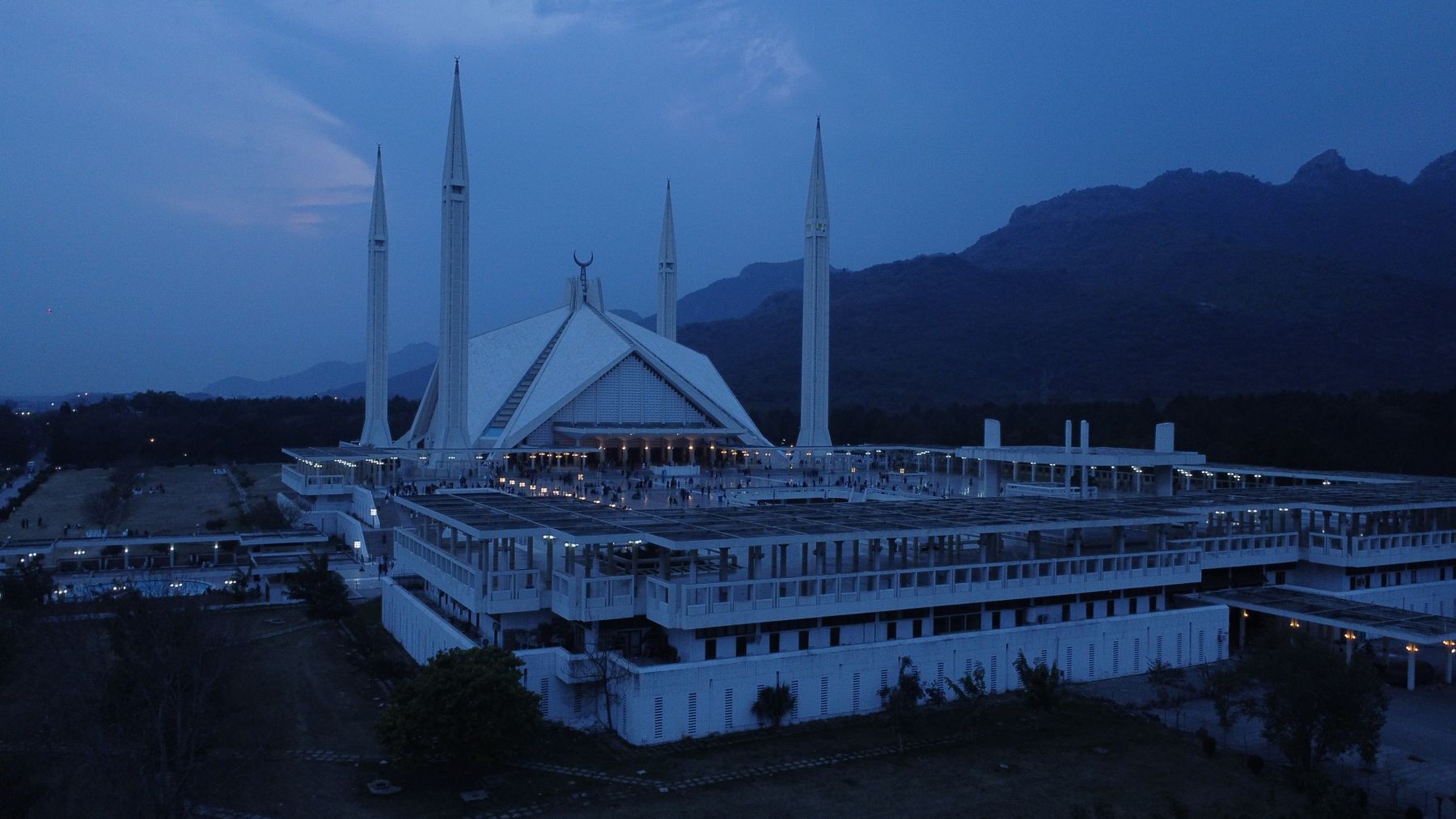 Photo: Bilal / Pexels
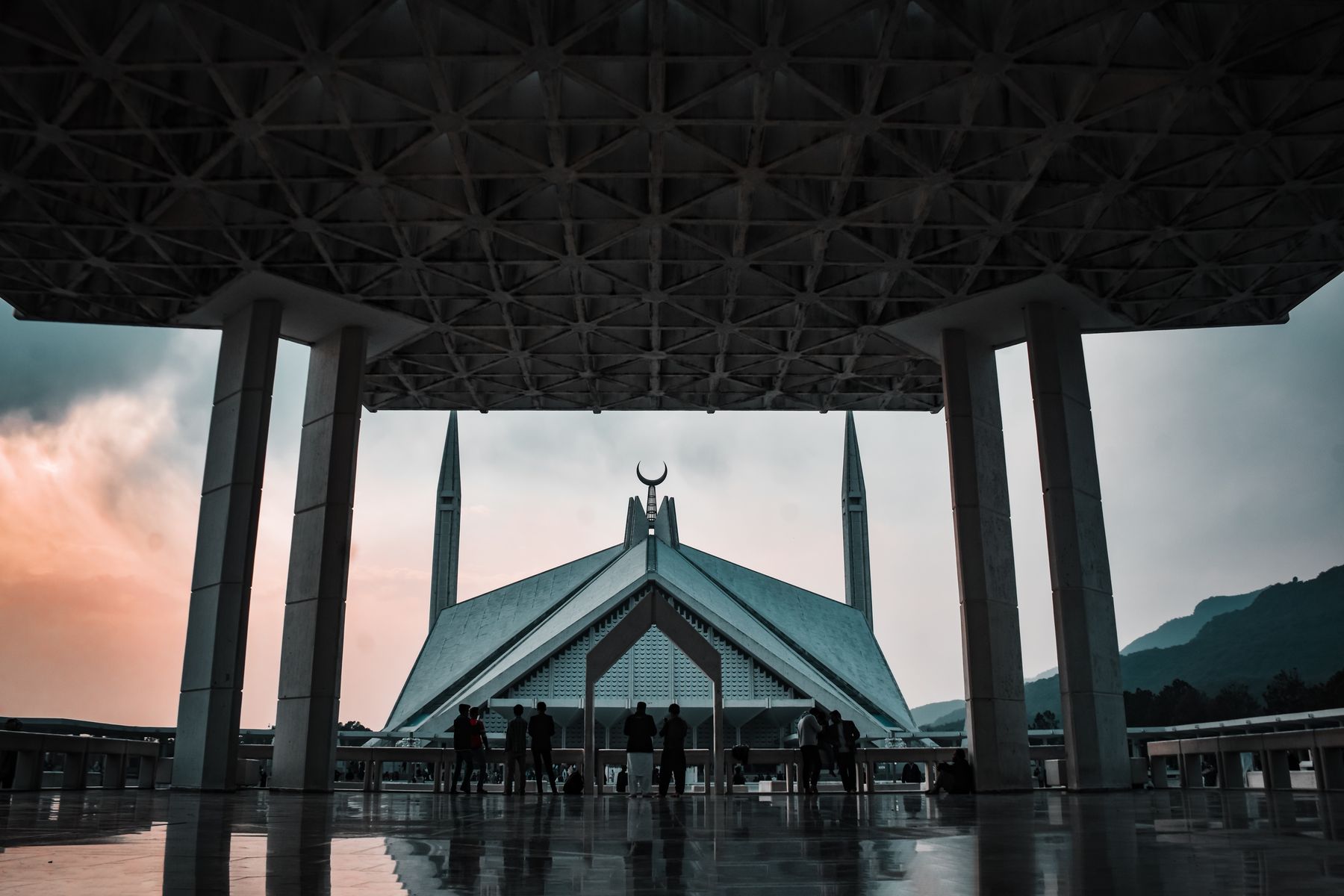
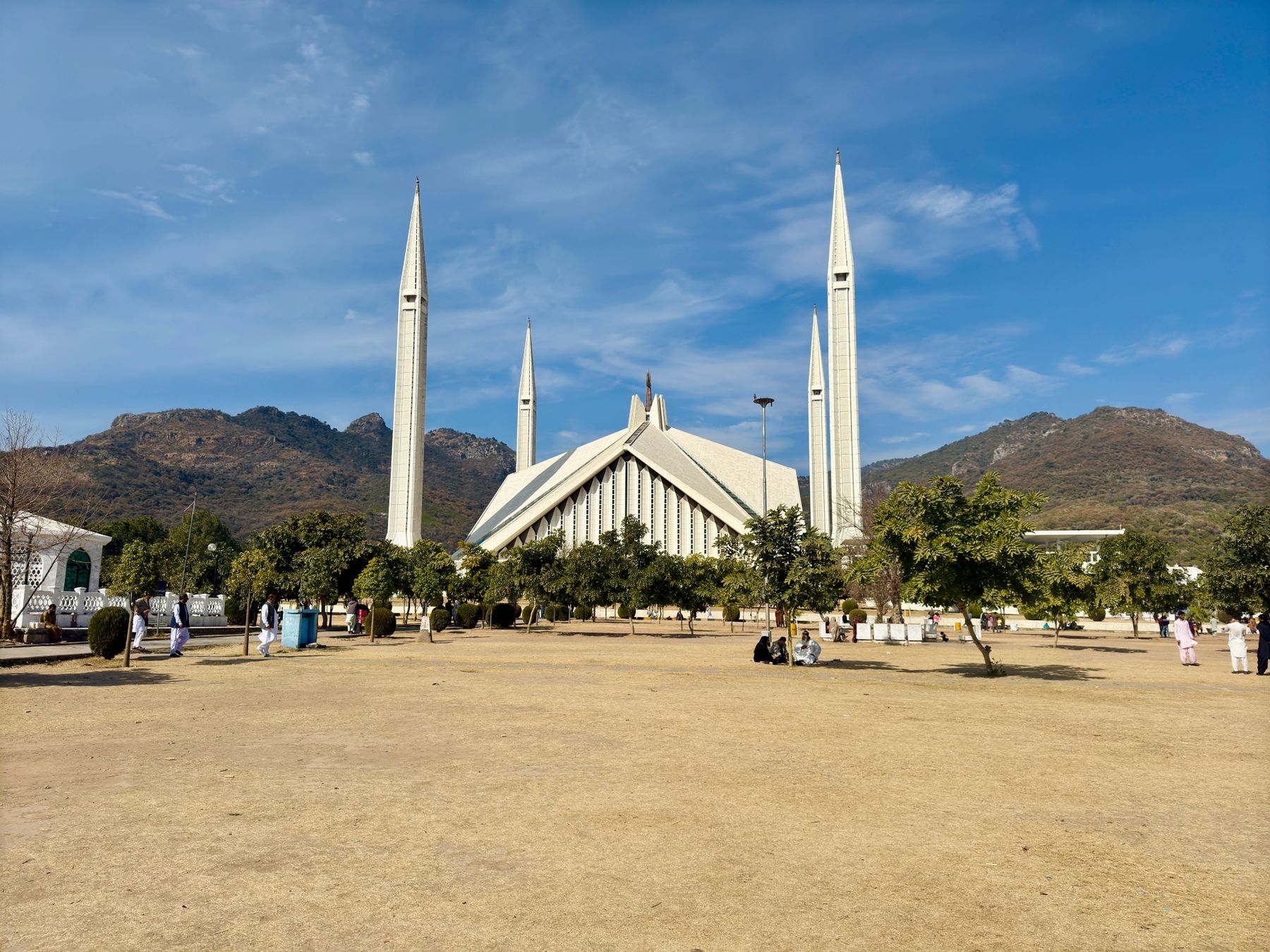
The Faisal Mosque sits at the northern edge of Islamabad, where the city grid meets the Margalla Hills. Its outline is unlike most mosques in Pakistan: no dome, no arches in the traditional Mughal manner, but a folded roof that reads as a desert tent. The building opened in 1986 and takes its name from King Faisal of Saudi Arabia, who supported its construction.
A tent in concrete
The design came from Vedat Dalokay, a Turkish architect. His winning entry in an international competition replaced the expected dome with a triangular prayer hall, its roof sloping down in eight folded planes. The shape refers to the tent of the desert, a simple shelter that also marks the Kaaba in Mecca. From the road below, the white mass rises against the brown hills.
Four minarets stand at the corners of the main hall. Each is slender and tall, rising well above the roofline, and they are placed so that the building reads as a single composition from every approach. The minarets are not attached to the prayer hall but stand clear, linked by walkways. The effect is of a tent held by four poles.
The main hall is a large open space, with a capacity that makes it one of the biggest mosques in the world. Light comes from high windows and from the underside of the folded roof. The floor is covered in prayer rugs, and the mihrab wall carries calligraphy and mosaic work. Visitors remove shoes before entering, and women cover their heads.
Inside the prayer hall
The interior is cooler than the outside, even in summer. The ceiling follows the folds of the roof, and the concrete is left exposed in places, giving a plain, modern feel. A large chandelier hangs in the centre, and the mihrab is set into the qibla wall with a mosaic design in blue and gold. The calligraphy around it is in a flowing script.
A separate section is reserved for women, screened from the main hall. The mosque is active, so visitors should avoid prayer times or wait quietly at the back. Non-Muslim visitors are generally welcome outside prayer times, but it is wise to check at the entrance. The building is a working place of worship, not a monument.
The acoustics are notable. A speaker at the mihrab can be heard through the hall without amplification, and the sound of the call to prayer carries across the grounds. The floor is cool underfoot, and the scale of the space is best understood by walking from the entrance to the mihrab wall.
مسجد کی شکلThe shape of the mosque. A phrase that captures how the Faisal Mosque is known for its tent-like form.
The courtyard and the hills
The mosque stands on a raised platform, with a wide courtyard on the south side. From here, the view takes in the Margalla Hills to the north and the city grid to the south. The courtyard is paved in light stone, and in the late afternoon it holds the heat. The four minarets frame the sky.
The grounds include gardens and walkways, with benches under trees. On Fridays and during Eid, the area fills with worshippers, and the roads around the mosque close to traffic. At other times, the site is quiet in the early morning. The hills behind turn green after the monsoon rains, usually from July to September.
The mosque is close to the Faisal Avenue and the Blue Area, the city's central business district. A short drive north leads to the Margalla Hills National Park, with trails such as Trail 5. South of the mosque, the Shakarparian hills hold the Pakistan Monument and a viewpoint over the city. These can be combined in a half day.
Getting there and timing
The mosque is in the F-6 sector of Islamabad, at the end of Faisal Avenue. It is easy to reach by car or taxi from anywhere in the city. Public transport is limited, but ride-hailing services operate in Islamabad. There is parking near the entrance, though it fills on Fridays and holidays.
Islamabad has hot summers, with temperatures above 40°C in June. The best months to visit are October to April, when days are mild. Winter mornings can be foggy, and the hills may be hazy. The mosque is open daily, but visiting hours are shorter in winter. A fee is not charged for entry, though donations are welcome.
Visitors should dress modestly, with legs and shoulders covered. Women should carry a scarf for the head. Photography is allowed in the courtyard, but avoid taking pictures of people at prayer. The mosque is a short stop, but the scale and the setting make it worth an hour or more.
Nearby in the city
The Blue Area, Islamabad's main commercial street, is a short drive south. It has banks, offices and a few bookshops. The Jinnah Super Market in F-7 is a popular area for cafes and restaurants, with both local and international food. Further east, the Rawalpindi bazaars offer a contrast to the planned city.
For a view of the mosque from above, the Margalla Hills trails offer vantage points. Trail 5 starts near the F-6 sector and climbs into the hills. The walk is steep in places, and the path is not always marked. Early morning is the best time, before the heat and the haze.
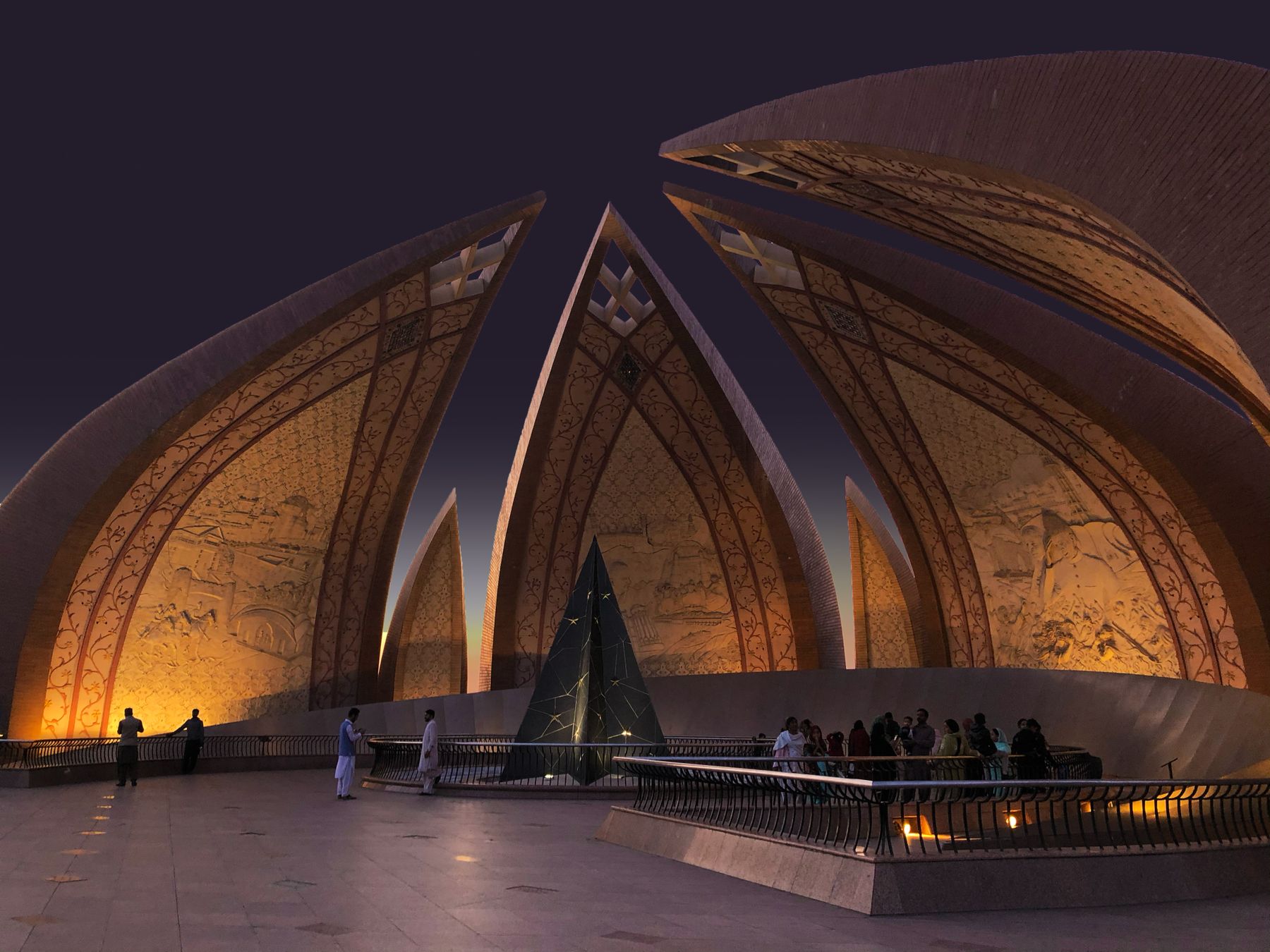
The Pakistan Monument on Shakarparian hill is a short drive south. Its granite petals form a shape that echoes the mosque's modern lines. The site includes a museum and a terrace with a view over the city. Together with the mosque, it makes a good introduction to Islamabad's architecture.
Where to find it
- Faisal MosqueAt the end of Faisal Avenue in F-6, at the foot of the Margalla Hills. The main entrance is on the south side.
- Blue AreaIslamabad's central business district, a short drive south. Banks, offices and bookshops line the main road.
- Jinnah Super MarketA market area in F-7 with cafes and restaurants. Popular for a meal after visiting the mosque.
- Pakistan MonumentOn Shakarparian hill, south of the mosque. A modern monument with a museum and a city viewpoint.
- Margalla HillsThe hills north of the city, with trails such as Trail 5. Green after the monsoon, from July to September.
Frequently asked questions
When was the Faisal Mosque in Islamabad built?
The mosque opened in 1986. It was designed by the Turkish architect Vedat Dalokay after an international competition. Construction took several years, and the building was named after King Faisal of Saudi Arabia, who supported the project. It stands at the end of Faisal Avenue in the F-6 sector.
Can non-Muslims visit the Faisal Mosque?
Non-Muslim visitors are generally welcome outside prayer times, but it is a working place of worship. Dress modestly, with legs and shoulders covered, and women should cover their heads. It is wise to check at the entrance, as access can change. Avoid Fridays and Eid, when the mosque is crowded.
What is the best time to visit the Faisal Mosque?
October to April brings mild days, though winter mornings can be foggy. Summers are hot, with temperatures above 40°C in June. Early morning is quiet and cool. The mosque is open daily, but hours are shorter in winter. The Margalla Hills turn green after the monsoon, from July to September.
Find a stay in Islamabad
Live prices and availability open in the IMPT app, in a new tab.