What is left at Mohenjo-daro
Brick streets, a Great Bath and a small museum of finds. A guide to what survives at the Indus city and how to see it.
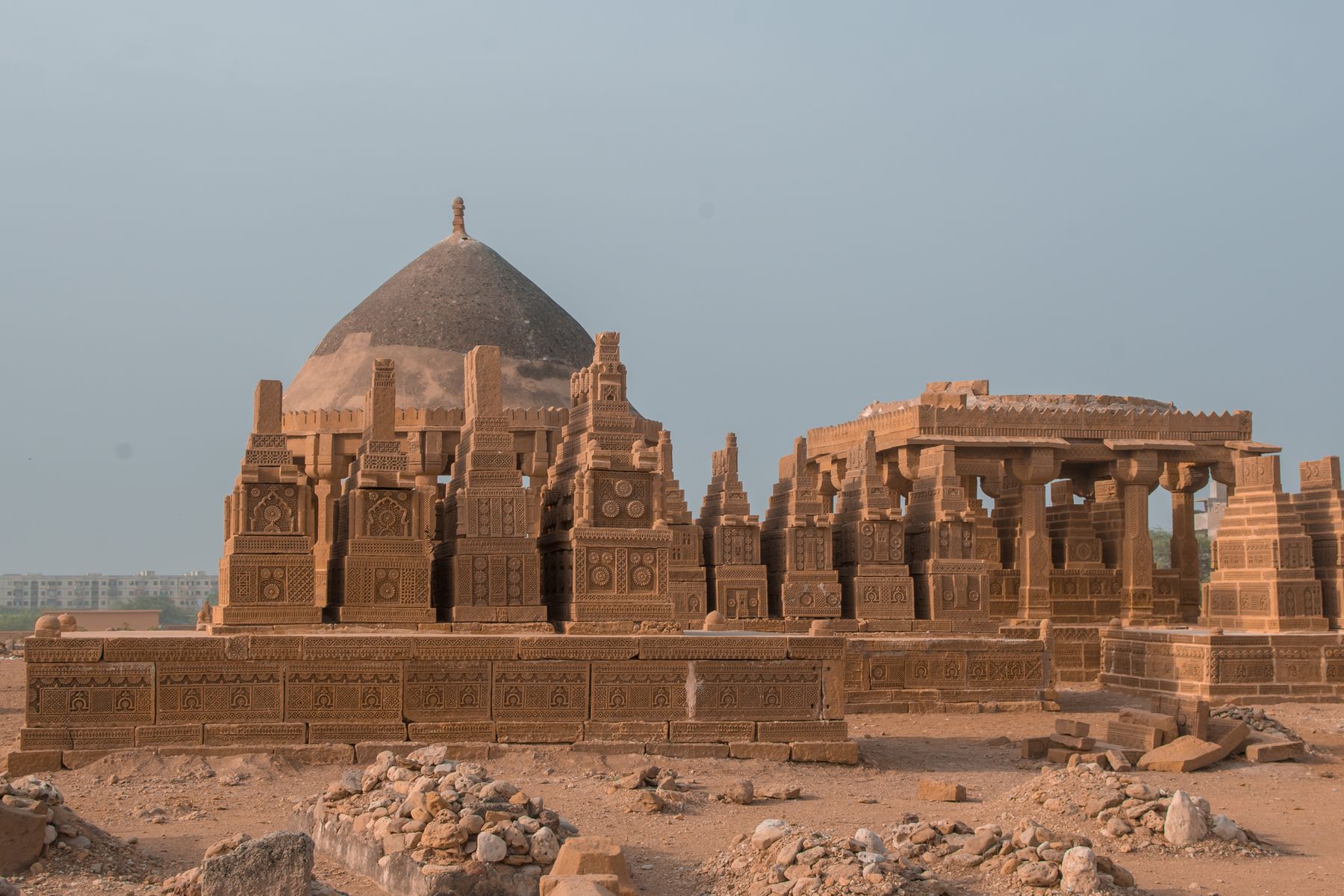
 Photo: Kafeel Ahmed / Pexels
Mohenjo-daro stands on the flat plain of Larkana district in Sindh, near the Indus. Built around 2500 BCE, the city was abandoned long before its ruins were excavated in the 1920s. Today the site is a UNESCO World Heritage property. Much has been lost to brick robbing, salt and water, but the street plan and several structures remain.
The city plan
The ruins are laid out on a grid. Streets run north to south and east to west, with lanes between blocks of houses. Most buildings were made of fired brick, which was valuable and later removed for reuse. What you see now is the lower courses of walls, doorways and drains. The layout is still easy to follow on the ground.
The citadel mound lies to the west, raised on a platform of mud brick. The lower town spreads east and south. A stupa stands on the citadel, built much later than the city, in the Kushan period. Around it are the remains of a monastery. From the top of the citadel you can see the whole site and the farmland beyond.
Covered drains run along the main streets, with inspection holes at intervals. Houses had bathrooms and wells. Some buildings have staircases to a second floor. The scale of the brickwork is modest, but the planning is clear. Walking the streets gives a sense of a working city rather than a monument.
The Great Bath
The Great Bath is the best-known structure. It is a rectangular tank set into the citadel, lined with bitumen and brick. Steps lead down at each end. The tank is about 12 metres by 7 metres and 2.4 metres deep. A well nearby supplied water, and a drain carried it away. The function is not certain, but it is often linked to ritual bathing.
Around the bath are rooms and a corridor. Some have small cells, perhaps for priests or attendants. The brickwork has been repaired in places to slow decay. A barrier keeps visitors from walking on the tank floor. The surrounding walls show how the complex was enclosed.
The Great Bath is the most photographed part of the site. It is also among the most vulnerable. Rising groundwater and salt have damaged the brick. Conservation work continues, and some areas may be closed for repair. Check with the site office on arrival.
یہاں کچھ نہیں بچا، پھر بھی سب کچھ ہےNothing is left here, yet everything is. A reflection on ruins that still speak.
Finds and the museum
Many objects from Mohenjo-daro are in museums in Karachi and Lahore, and in the National Museum in New Delhi. The site museum in Mohenjo-daro holds a smaller collection. It includes pottery, beads, weights, seals and figurines. Labels are in English and Urdu. The museum is a short walk from the ruins and is usually included in the entry ticket.
The most famous finds are the steatite seals with animal motifs and undeciphered script. A bronze figurine known as the Dancing Girl is in New Delhi. A bust of a bearded man, often called the Priest-King, is in Karachi. Replicas are sold in the bazaar in Larkana, but the originals are elsewhere.
The museum is modest but useful for understanding what was found where. It is worth an hour before or after walking the site. Photography rules vary, so ask at the desk. The museum may close at short notice for maintenance.
Decay and repair
Mohenjo-daro has suffered from several problems. Brick robbing began in the nineteenth century, before excavation. Since then, salt in the soil and water have eroded the brickwork. The site lies close to the Indus, and flooding has damaged it in the past. In the 1970s a major flood led to protective works.
Conservation has included draining the ground, replacing lost brick and capping walls. Some reconstructions are visible as smoother patches. The work is ongoing. Heavy rain can close parts of the site. The dry winter months are the best time to visit, when paths are firm and the heat is less severe.
There is a debate about how much to rebuild. Some argue for minimal intervention, others for more visible reconstruction to help visitors. The site remains a working archaeological zone. You may see trenches or covered areas during your visit.
Visiting the site
Mohenjo-daro is about 30 kilometres south of Larkana and about 80 kilometres from Sukkur. The drive from Larkana takes under an hour on a paved road. There is no railway station at the site. The nearest airport is in Moenjodaro, a short drive away, with limited flights. Most visitors come by road from Larkana or Sukkur.
The site is open daily, though hours change with the season. A fee is charged for entry, and guides are available at the gate. The best months are November to February, when days are cooler. Summer heat is severe. Bring water, a hat and sun protection. The ground is uneven, so wear sturdy shoes.
There are few facilities at the site. A small cafe near the museum serves tea and snacks. Larkana has a wider choice of food, including Sindhi dishes such as sai bhaji and palak. The site is not accessible for wheelchairs in most parts. Check current opening times and any restrictions before travelling.
Where to find it
- LarkanaThe nearest city, about 30 km north. A base for hotels and food, with a bazaar and transport connections.
- SukkurAbout 80 km north-east, with an airport and railway station. A common starting point for the drive to the site.
- Moenjodaro AirportA small airport near the site, with limited scheduled flights. Check current services before planning to fly.
- DokriA town on the route from Larkana, with basic shops and a hospital. The turn-off to the site is nearby.
Frequently asked questions
What is left to see at Mohenjo-daro?
The street grid, the Great Bath, the citadel mound with its stupa, and the lower town walls. A site museum holds pottery, seals and figurines. Many famous objects are in other museums. The ruins are extensive, though most walls are low.
How do you get to Mohenjo-daro?
By road from Larkana, about 30 km north, or from Sukkur, about 80 km north-east. The nearest airport is Moenjodaro, with limited flights. Most visitors hire a car or take a taxi. The drive from Larkana takes under an hour.
When is the best time to visit Mohenjo-daro?
November to February, when days are cooler. Summer heat is severe. The site is open daily, but hours change with the season. Check current opening times and any restrictions before travelling. A fee is charged for entry.
Find a stay in Mohenjo-daro
Live prices and availability open in the IMPT app, in a new tab.