 Photo:
Visiting Kund Malir
What Kund Malir is like
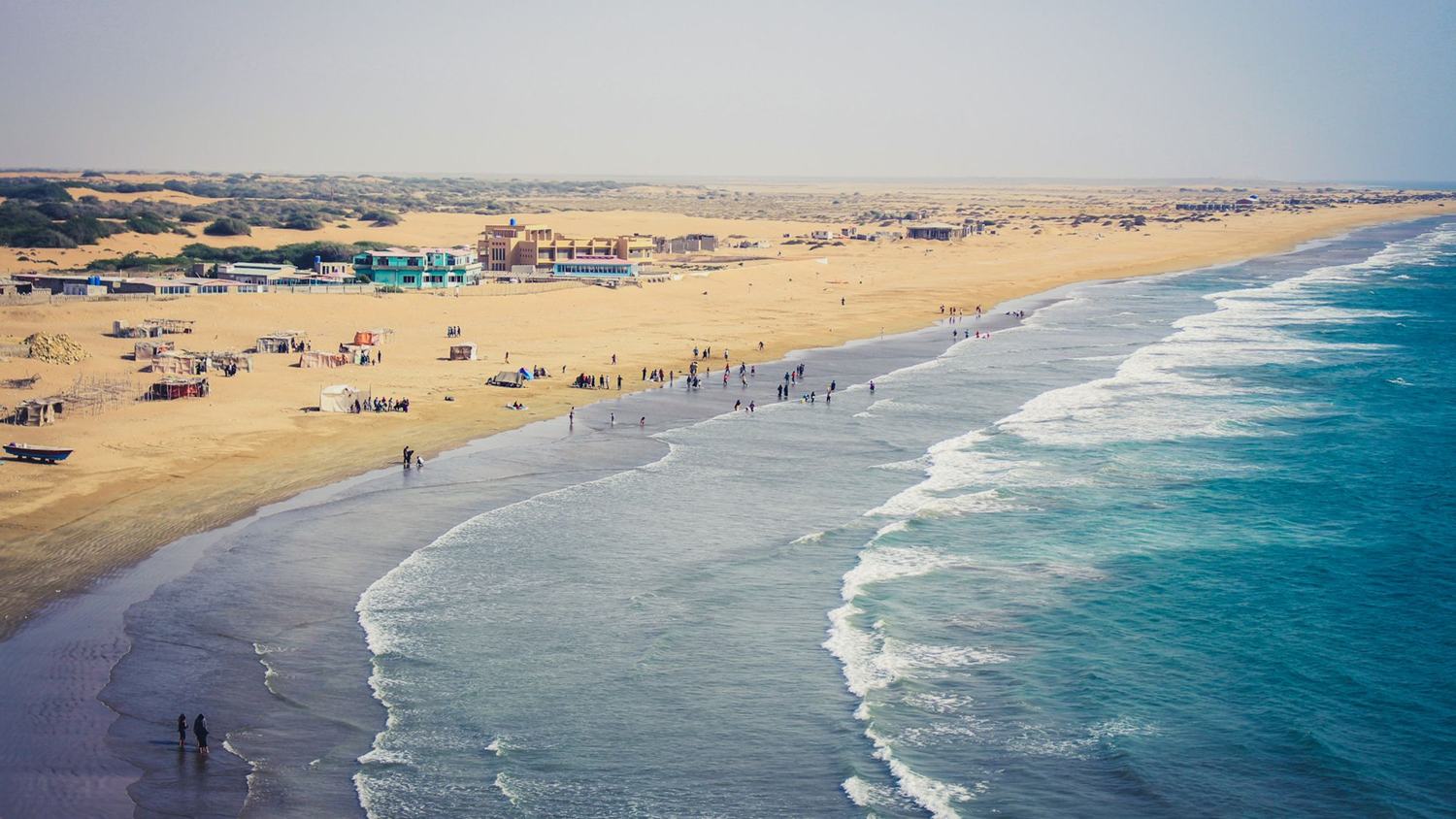
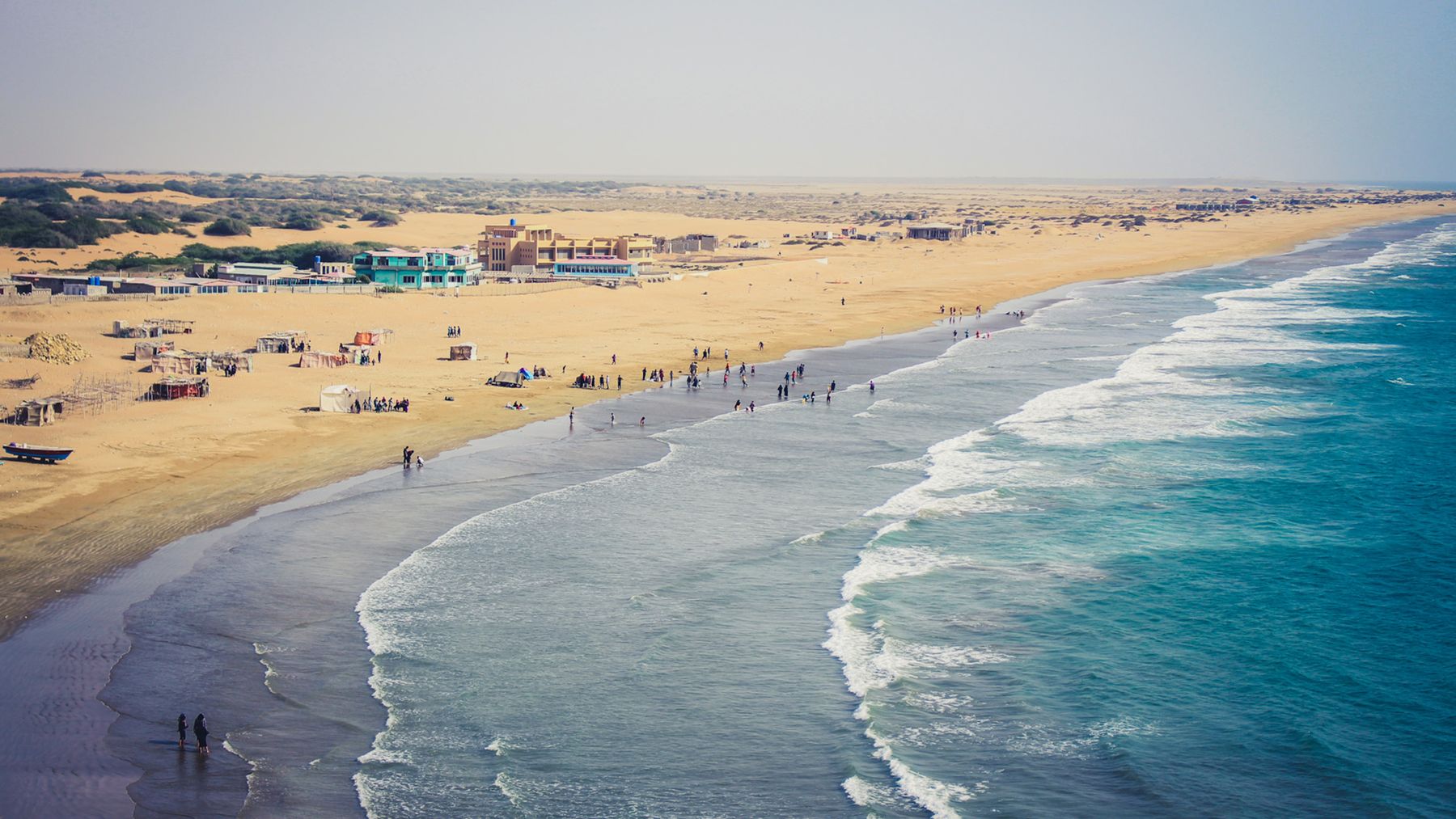
Kund Malir is a village of low, single-storey houses set back from the beach. The population is small and many residents work in fishing or in services along the highway. There is no town centre as such, just a cluster of buildings and a few roadside stalls. The beach is the focus. It runs for several kilometres, with sand that is firm near the water and softer further up. The sea is generally calm, though the wind can pick up in the afternoon.
Behind the beach, dry hills rise steeply. The landscape is rocky and sparsely covered with scrub. The Makran Coastal Highway runs parallel to the coast a short distance inland, and traffic is light outside holiday periods. The area feels remote, which is part of its appeal. Facilities are minimal, so bring what you need.
Climate and seasons
Summers are hot and humid, with temperatures often above 35°C from May to September. The cooler months from November to February are more comfortable, with daytime temperatures around 25°C and cooler nights. Rain is rare and usually falls in short bursts during the winter months. Coastal breezes are common in the afternoons.
What to see
The main sight is the beach itself. At low tide you can walk out a long way on wet sand. The water is clear and shallow near the shore. Behind the beach, the cliffs and rock formations are worth a look, especially in the soft light of early morning or late afternoon. Birdlife is present along the shore, and you may see fishing boats pulled up on the sand.
The surrounding area forms part of Hingol National Park. The park is known for its varied terrain, including mud volcanoes and rock formations further inland. The Hingol River, east of Kund Malir, is a focal point for wildlife. The park is large and much of it is not easily accessible without a vehicle and local knowledge.
Hingol National Park
Established in 1988, Hingol National Park covers around 6,100 square kilometres. It stretches from the coast into the interior hills. The park supports species such as the Sindh ibex and chinkara, and the Hingol River is home to marsh crocodiles in some sections. Visitors should keep a distance from wildlife and follow park rules.
A day or two there
A half-day stop is enough to see the beach and stretch your legs. Arrive in the morning, walk the sand, and continue along the coast. If you have more time, a full day allows for a visit to the Hingol River area and a slower pace. There is little else in the way of organised activities, so plan to spend time outdoors.
An overnight stay is possible but options are limited. Most travellers stay in Ormara or continue to Gwadar. If you do stay, the quiet evenings and early mornings are the best part. Bring a torch, water and food, as there are no shops of note in the village.
Practical stops
Fuel is available at Ormara and at a few points along the highway, but not at Kund Malir. Fill up before leaving the main towns. Mobile phone signal is patchy. The nearest medical facilities are in Ormara or further afield, so carry a basic first-aid kit.
Getting there and around
Kund Malir is reached by road on the Makran Coastal Highway, which runs from Karachi to Gwadar. The drive from Karachi takes around four to five hours, depending on traffic and stops. The road is paved and generally in good condition. There is no public transport directly to the village, so a private vehicle or a hired car is the usual way. Some buses run along the highway but do not stop at Kund Malir itself.
Once there, you can walk along the beach and to nearby viewpoints. A vehicle is needed to explore further, such as the Hingol River or Ormara. The highway is the only road, and turning off it onto sand or tracks should be done with care, as conditions vary.
Permits and advice
Parts of Balochistan, including some coastal districts, can require a No Objection Certificate (NOC) for travel. Rules change, so check current official advice before setting out. Travel advisories may apply to certain areas. It is wise to travel in daylight and to inform someone of your route.
Practical notes
There are no hotels or guest houses in Kund Malir itself. A few basic eateries may operate near the beach, but supplies are limited. Bring your own food and drinking water. The nearest accommodation and restaurants are in Ormara, about 120 km west, or in Karachi to the east. Camping is possible but requires self-sufficiency and care with tides and weather.
The area is conservative. Dress modestly, especially away from the beach. There are no ATMs, so carry enough cash for fuel and supplies. The sun is strong even in winter, so use sun protection. The beach is generally safe for swimming, but currents can be present, so take care.
Health and safety
Medical facilities are basic. The nearest hospital is in Ormara. Carry a first-aid kit and any personal medication. In summer, heat exhaustion is a risk. In winter, nights can be cool. There are no lifeguards on the beach, so supervise children near the water.
Frequently asked questions
Where is Kund Malir located?
Kund Malir is on the Arabian Sea coast of Balochistan, Pakistan, about 250 km west of Karachi along the Makran Coastal Highway. It lies within the wider area of Hingol National Park, near the Hingol River.
What is there to see at Kund Malir?
The main sight is the long beach with clear, shallow water and low cliffs behind. The surrounding area is part of Hingol National Park, which has varied terrain and wildlife. The Hingol River is a short drive east.
How do you get to Kund Malir?
Kund Malir is reached by road on the Makran Coastal Highway. The drive from Karachi takes around four to five hours. There is no direct public transport, so a private vehicle or hired car is needed. Fuel is available in Ormara and larger towns.
When is the best time to visit Kund Malir?
The cooler months from November to February are the most comfortable, with milder temperatures. Summers are hot and humid. Rain is rare. Coastal breezes are common in the afternoons, so a light jacket can be useful.