 Photo:
Visiting Ormara
What Ormara is like
Ormara is a town of a few thousand people, most of them connected to fishing or to the traffic that passes along the Makran Coastal Highway. The streets are sandy and dusty, with low concrete houses, a few small shops and several mosques. The bay curves in front of the town, and the hills of the Makran range rise behind it.
There is no large-scale tourism here. Visitors come mainly for the coast, the quiet and the drive along the N-10. The town has a relaxed feel, with fishing boats drawn up on the sand and nets drying in the sun. It is a place to break a journey rather than a destination in itself.
The fishing economy
Fishing is the main livelihood. Boats go out for several days at a time, returning with fish that is sold locally or sent to Karachi and Gwadar. The harbour is busiest in the early morning, when the catch is landed and ice is loaded.
What to see
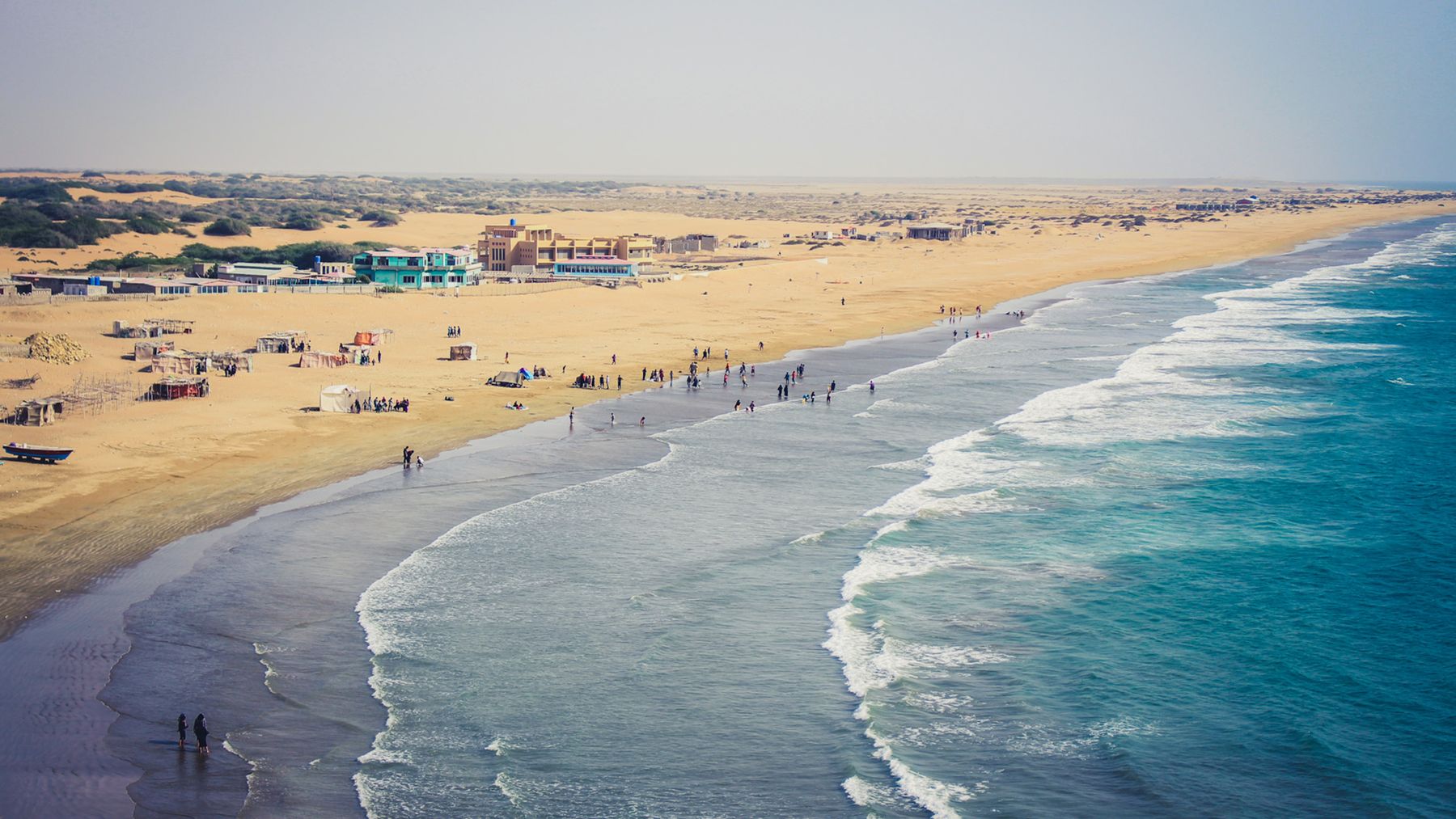
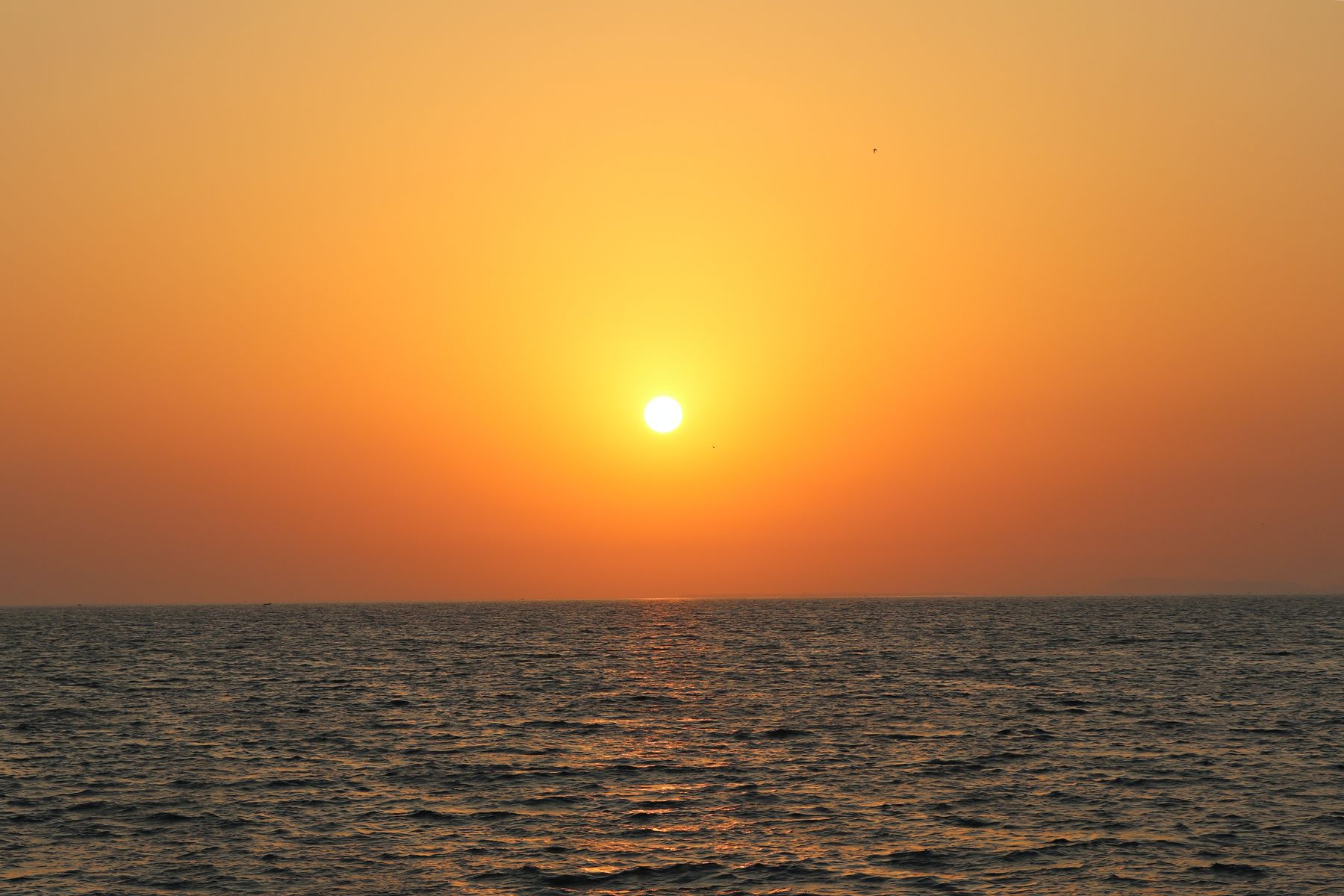
The main sights are natural. The beach runs for several kilometres along the bay, with shallow water and a gentle slope. It is clean in places but not maintained as a tourist beach. Local families come in the late afternoon, and the sunset over the sea is the main event.
West of town, a rocky headland known as Hammerhead gives wide views of the coast and is a common stopping point for photographs. Offshore lies the wreck of a ship, visible at low tide, which is sometimes cited as the SS Oria, though the identification is not certain.
The small bazaar is worth a walk for everyday supplies and to see town life. There is also a fish market near the harbour where the morning catch is sold.
Turtles on the beach
The beaches around Ormara are used by green turtles and olive ridley turtles for nesting, mainly between September and February. Night visits should be arranged with care and kept low-key so as not to disturb nesting females.
A day or two there
A full day is enough to see the town. Start early at the harbour to watch the boats unload, then walk through the bazaar and along the beach. In the afternoon, drive west to Hammerhead for the views and the wreck, and return for sunset on the beach.
With a second day, use Ormara as a base for the coast. The drive east towards Kund Malir and Hingol National Park passes some of the most dramatic coastal scenery in Pakistan. The round trip to Kund Malir and back is about 200 km and can be done in a day, though it makes a long one.
There is little nightlife. Evenings are for walking on the beach, eating at one of the small local restaurants and resting before an early start.
Getting there and around
Ormara lies on the Makran Coastal Highway (N-10), which runs from Karachi west to Gwadar. From Karachi the drive is about 240 km and takes four to five hours. From Gwadar it is about 230 km and takes a similar time. The road is paved and generally in good condition, though it is narrow in places and has sharp bends.
Buses and minibuses run between Karachi and Gwadar and will stop at Ormara if asked. There is no airport or railway station in town. The nearest airport is in Gwadar, about three hours away by road.
Within Ormara, most places are within walking distance of each other. For the beach and Hammerhead, a car or a hired local vehicle is useful. There is no public transport within the town.
Driving the N-10
The highway passes through desert and along cliffs, with few services between towns. Fuel is available in Ormara, but it is wise to fill up before leaving Karachi or Gwadar. The road can be affected by monsoon rain and flash floods in summer.
Practical notes
Ormara has a small selection of guest houses and rest houses, but no large hotels. Book ahead in winter, when traffic on the coast road increases. Eating options are limited to local restaurants serving fish, rice and curry. Alcohol is not available.
The town has a hospital and a few pharmacies, but for serious medical problems, treatment is better sought in Karachi or Gwadar. Mobile coverage is available but can be patchy outside town. Electricity supply can be interrupted.
The coast is hot from April to September, with temperatures often above 35°C and high humidity. Winters are mild, with daytime temperatures around 25°C. The sea is warm enough for swimming most of the year, but currents can be strong.
Permits and advice
Parts of Balochistan and areas near the coast can require a No Objection Certificate (NOC) for foreign travellers, and rules change. Check current official advice before travelling. The situation is generally calm in Ormara, but it is wise to confirm locally.
Frequently asked questions
Where is Ormara in Pakistan?
Ormara is a coastal town in Balochistan, on the Arabian Sea. It lies on the Makran Coastal Highway (N-10), about 240 km west of Karachi and 230 km east of Gwadar. The town sits on a shallow bay, with hills behind it.
What is the best time to visit Ormara?
November to February is the most comfortable period, with mild days and cool nights. The summer months from April to September are hot and humid, with temperatures often above 35°C. Travel along the coast road can also be affected by monsoon rain in July and August.
Do you need a permit to visit Ormara?
Permit rules for Balochistan can change, and some areas require a No Objection Certificate (NOC) for foreign visitors. Check current official advice before travelling. For Ormara itself, restrictions are usually light, but it is always best to confirm with local authorities.
What is there to see in Ormara?
The main sights are the harbour, the long beach and the rocky headland at Hammerhead, west of town. The bazaar and fish market give a sense of local life. The coast east towards Kund Malir and Hingol National Park is also worth a day trip.