 Photo:
Visiting Faisalabad
What the place is like
Faisalabad is a flat, dusty city on the Punjab plain. It grew quickly in the twentieth century around the textile trade, and the mills still shape the economy. The old city is dense and busy, with narrow streets and a constant flow of traffic. The newer areas to the south and west are more open, with wider roads and planned housing colonies.
The city was founded in the late nineteenth century as Lyallpur and renamed in 1979. The grid plan around the clock tower is a legacy of that early period. Outside the centre, the city spreads out in a mix of industrial estates, residential colonies and farmland. Summers are very hot, with temperatures often above 40°C in May and June. Winters are mild and dry.
Climate
The best time to visit is from November to March, when days are cool and comfortable. December and January can be cold at night. The monsoon brings rain in July and August, which breaks the heat but makes the streets humid. Dust storms can occur in the pre-monsoon months.
What to see
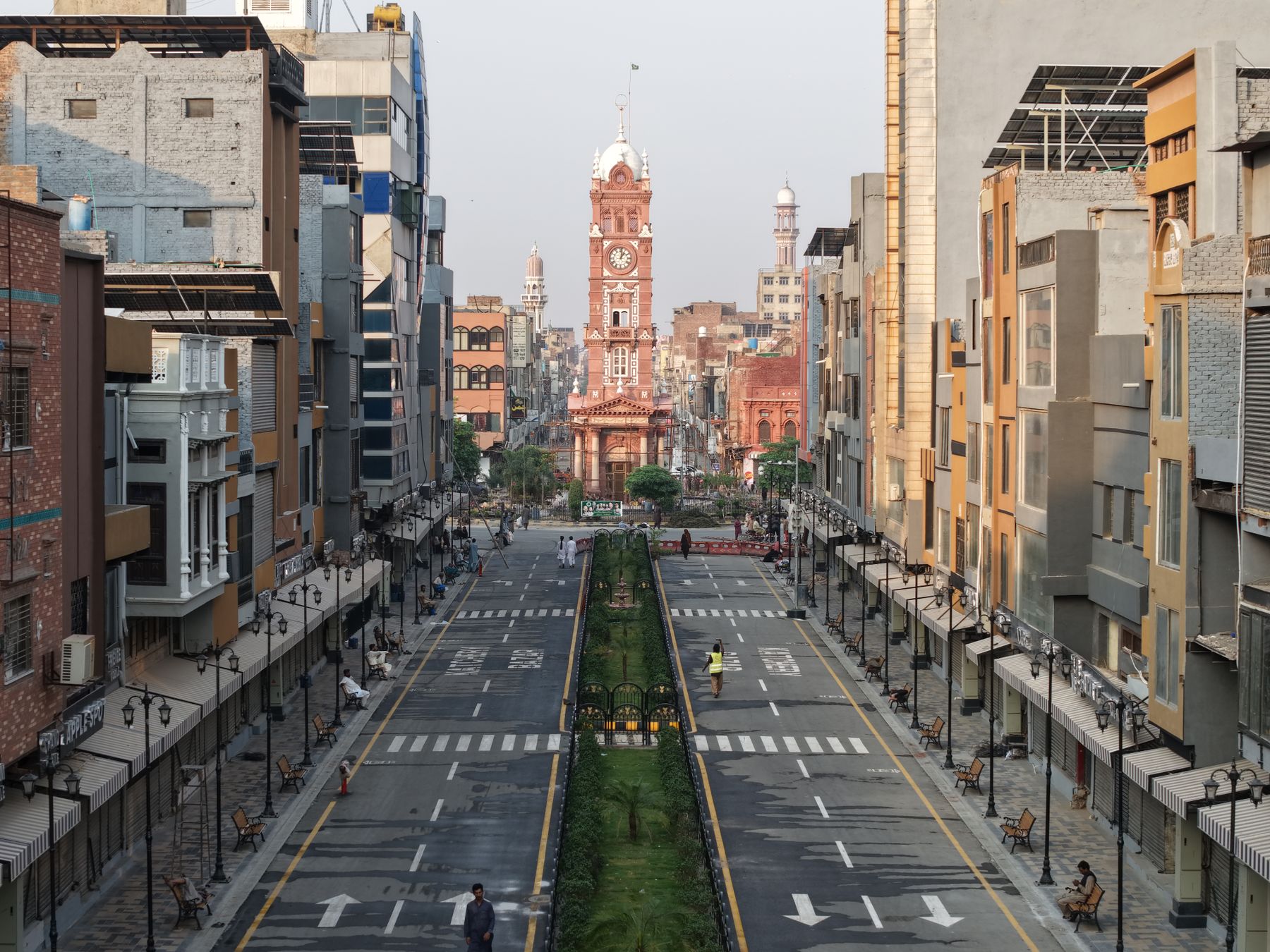
The clock tower is the obvious starting point. Built in 1903, it stands at the centre of the old city, and the eight bazaars that radiate from it are each known for a particular trade, such as cloth, jewellery or food. The area is busy throughout the day and is best explored on foot, though traffic is heavy.
The Lyallpur Museum, in a colonial-era building, gives context on the city's history and the textile industry. Jinnah Garden, also known as Company Bagh, is a large park in the centre with trees and walking paths. For a break from the city, the Chenab River lies a short drive to the south-west.
Bazaars
The eight bazaars around the clock tower are named for the trades that once dominated them, such as Katchery Bazaar and Rail Bazaar. They remain busy commercial streets. Cloth, shoes, jewellery and household goods are all sold here. Bargaining is normal.
A day or two there
One day is enough to see the main sights. Start at the clock tower in the morning, when the bazaars are busy but not yet at their hottest. Walk through two or three of the radiating streets, then visit the Lyallpur Museum. In the afternoon, take a walk in Jinnah Garden or explore the Gumti area for food and shopping.
With a second day, you can visit the Chenab River or take a drive through the newer parts of the city. The textile mills are not generally open to visitors, but the city's industrial character is visible everywhere. A second day also allows time for the D Ground area, which has shops and cafes.
Where to stay
Hotels are concentrated in the city centre and in the newer areas to the south. The old city has fewer options. Book ahead if you are travelling during a trade fair or public holiday.
Getting there and around
Faisalabad is well connected by road. The M4 motorway links the city to Lahore and Multan, cutting journey times. Buses and coaches run frequently from Lahore, Islamabad and Multan. The city also has an airport with domestic flights.
Within the city, taxis and rickshaws are the main way to get around. Traffic is heavy in the old city, so walking is often faster for short distances. Ride-hailing apps operate in Faisalabad. For the Chenab River and outlying areas, hire a car or take a taxi.
By road
The drive from Lahore takes about two hours on the motorway. From Multan, the journey is around three hours. The motorway exits are well signposted. There are regular bus services from all major cities in Punjab.
Practical notes
Faisalabad is a conservative city. Dress modestly, especially when visiting bazaars and public buildings. English is understood in hotels and business areas, but Urdu and Punjabi are the main languages. The city is generally safe for visitors, but take the usual precautions with valuables in crowded markets.
Summers are very hot, with temperatures often above 40°C in May and June. Avoid midday sun and drink plenty of water. Winters are mild, but mornings can be foggy in December and January, which may affect road travel. Check the weather before setting out.
Health
Tap water is not safe to drink. Bottled water is widely available. Mosquitoes can be a nuisance in the monsoon season, so carry repellent. Pharmacies are common in the city centre.
Frequently asked questions
What is Faisalabad known for?
Faisalabad is known as a major textile centre in Punjab. Its old city is built around a clock tower from 1903, with eight bazaars radiating from it. The city is also an important agricultural and industrial hub, and it has a museum and several large parks.
How do you get to Faisalabad?
Faisalabad is about 130 km west of Lahore and is connected by the M4 motorway. Buses and coaches run frequently from Lahore, Islamabad and Multan. The city also has an airport with domestic flights. Within the city, taxis and rickshaws are the main transport.
When is the best time to visit Faisalabad?
The best months are from November to March, when the weather is cool and dry. Summers are very hot, with temperatures often above 40°C in May and June. The monsoon brings rain in July and August. Winters can be foggy in the mornings.
What are the main sights in Faisalabad?
The main sights are the clock tower and the surrounding bazaars, the Lyallpur Museum, and Jinnah Garden. The Gumti area is busy for shopping and food. The Chenab River is a short drive from the city. Most sights can be seen in a day.