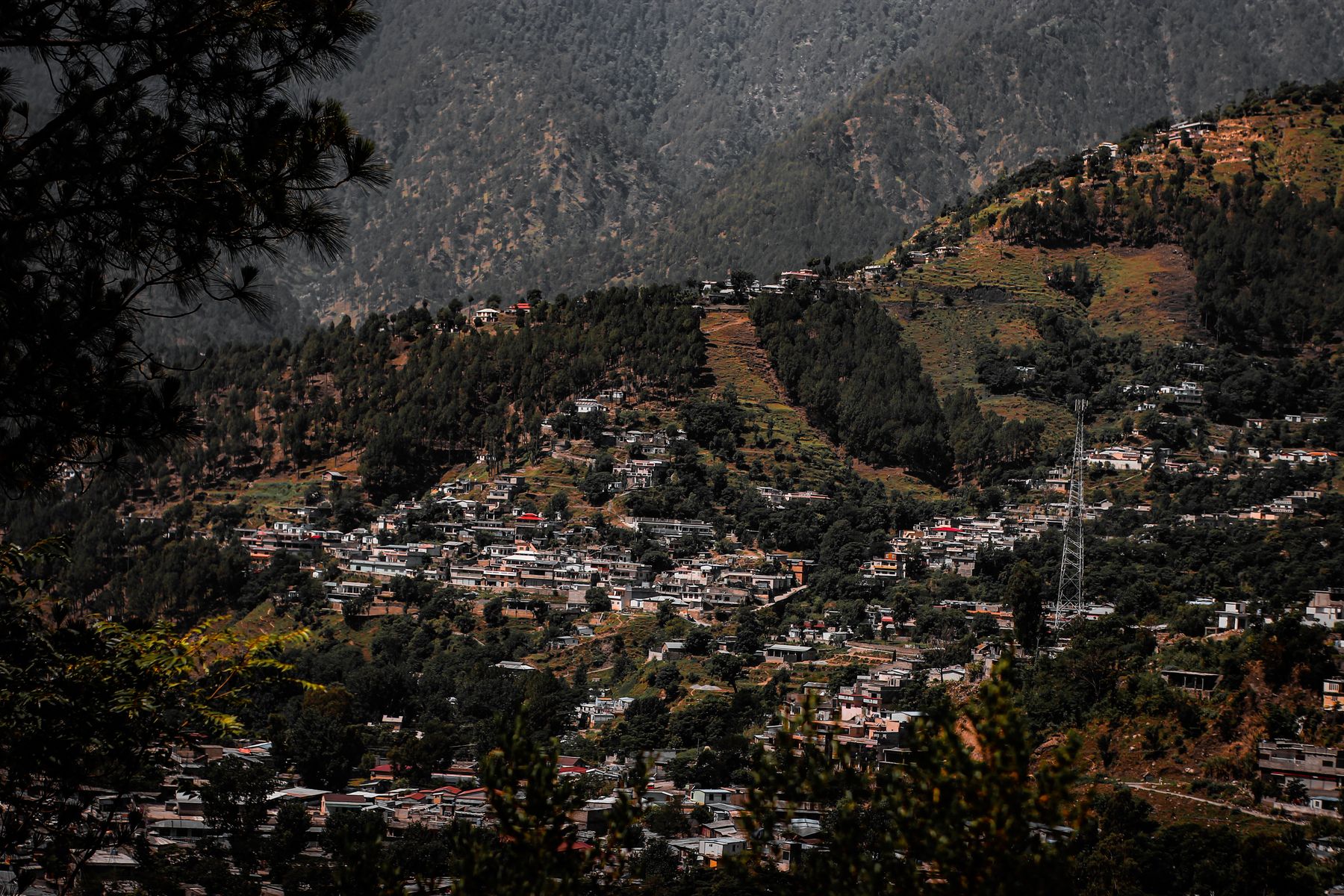
 Photo:
Visiting Murree
What Murree is like
Murree sits on a ridge in the outer Himalaya, north-east of Islamabad. The town spreads along the crest and down both sides, so many streets are steep and some are stepped. The Mall is the spine: a narrow road lined with shops, food stalls and small hotels. Side lanes lead to viewpoints, wooded slopes and older stone buildings from the colonial period.
The altitude is about 2,291 m. Summer days are mild and nights cool, while winter brings cold rain and sometimes snow. The monsoon from July to August can bring heavy rain and mist, and landslides are possible on the approach roads. Spring and autumn are the most settled seasons for walking and views.
Weather and seasons
April to June is warm by day and cool at night, with clear views before the monsoon cloud builds. September and October are drier and cooler. December to February can be cold and wet, with occasional snow that may close side roads for short periods.
What to see
The main sights are viewpoints and short walks rather than monuments. Kashmir Point and Pindi Point look out over the hills and the plains towards Rawalpindi. The Mall is the place to wander in the evening, and the older lanes near the post office hold stone buildings and a church from the 19th century.
A short drive or walk north-east leads to Bhurban, where the roads are quieter and the forest thicker. Patriata, further out, is reached by road or by a chairlift that runs over the wooded slope. Each of these can be visited in half a day from the town centre.
Walks from the Mall
Several paths leave the Mall for the ridge and the wooded slopes below. They are not always signposted, so ask locally or follow the main roads. The walk to Pindi Point is short and mostly on road, with a chairlift as an alternative.
A day or two there
A single day covers the Mall, Kashmir Point and Pindi Point, with time for a meal and a walk. With two days, add a morning at Bhurban or Patriata and a longer walk on the ridge. The town is small enough to cross on foot, though the hills make some walks tiring.
If you stay overnight, mornings are quieter and clearer than afternoons. Weekends and public holidays bring many day visitors from Islamabad and Rawalpindi, so roads and viewpoints can be busy. Book accommodation ahead for those periods.
Getting there and around
Murree is reached by road from Islamabad and Rawalpindi, a climb of about two to three hours depending on traffic. The route passes through foothill towns and then climbs through pine forest. Buses and vans run from Rawalpindi, and taxis can be hired for the day. The nearest airport is in Islamabad.
Within Murree, the centre is walkable but steep. Local taxis and vans cover the short runs to Bhurban and Patriata. The chairlift to Patriata is a separate option. Roads can be narrow and congested in summer, and winter snow may require chains or close some routes for a time.
Road conditions
The approach road is paved but can be affected by rain and landslides during the monsoon. In winter, check conditions before setting out. Local advice at the time is more reliable than any fixed schedule.
Practical notes
Murree is in Punjab province and does not normally require a permit for visitors. Some areas towards the Kashmir border may have restrictions, and rules can change. Check current official advice before travelling beyond the town. The town has banks, a hospital and a post office, but services are limited in the surrounding villages.
Accommodation ranges from small guest houses to larger hotels, and a fee is charged for some viewpoints and the chairlift. The climate is cooler than the plains, so bring a layer even in summer. In winter, warm and waterproof clothing is needed. Mobile coverage is generally available in the town.
Frequently asked questions
How high is Murree?
Murree stands at about 2,291 m above sea level on a ridge in the outer Himalaya. The altitude gives it cooler summers than Islamabad and Rawalpindi, and cold winters with occasional snow. The town spreads along the ridge, so some streets climb steeply from the centre.
When is the best time to visit Murree?
April to June and September to October are the most settled months, with mild days and clearer views. July and August bring monsoon rain and mist, and December to February can be cold and wet with occasional snow. Weekends are busier than weekdays throughout the year.
How do you get to Murree from Islamabad?
Murree is reached by road from Islamabad and Rawalpindi, a climb of about two to three hours depending on traffic. Buses and vans run from Rawalpindi, and taxis can be hired. The nearest airport is in Islamabad. The road climbs through foothill towns and pine forest.
What is there to see in Murree?
The main sights are the Mall, Kashmir Point and Pindi Point, all on or near the ridge. Short trips reach Bhurban and Patriata, the latter by road or chairlift. The older lanes near the post office hold stone buildings and a 19th-century church. Most visits are built around walks and viewpoints.