 Photo:
Visiting Hunza
What the place is like
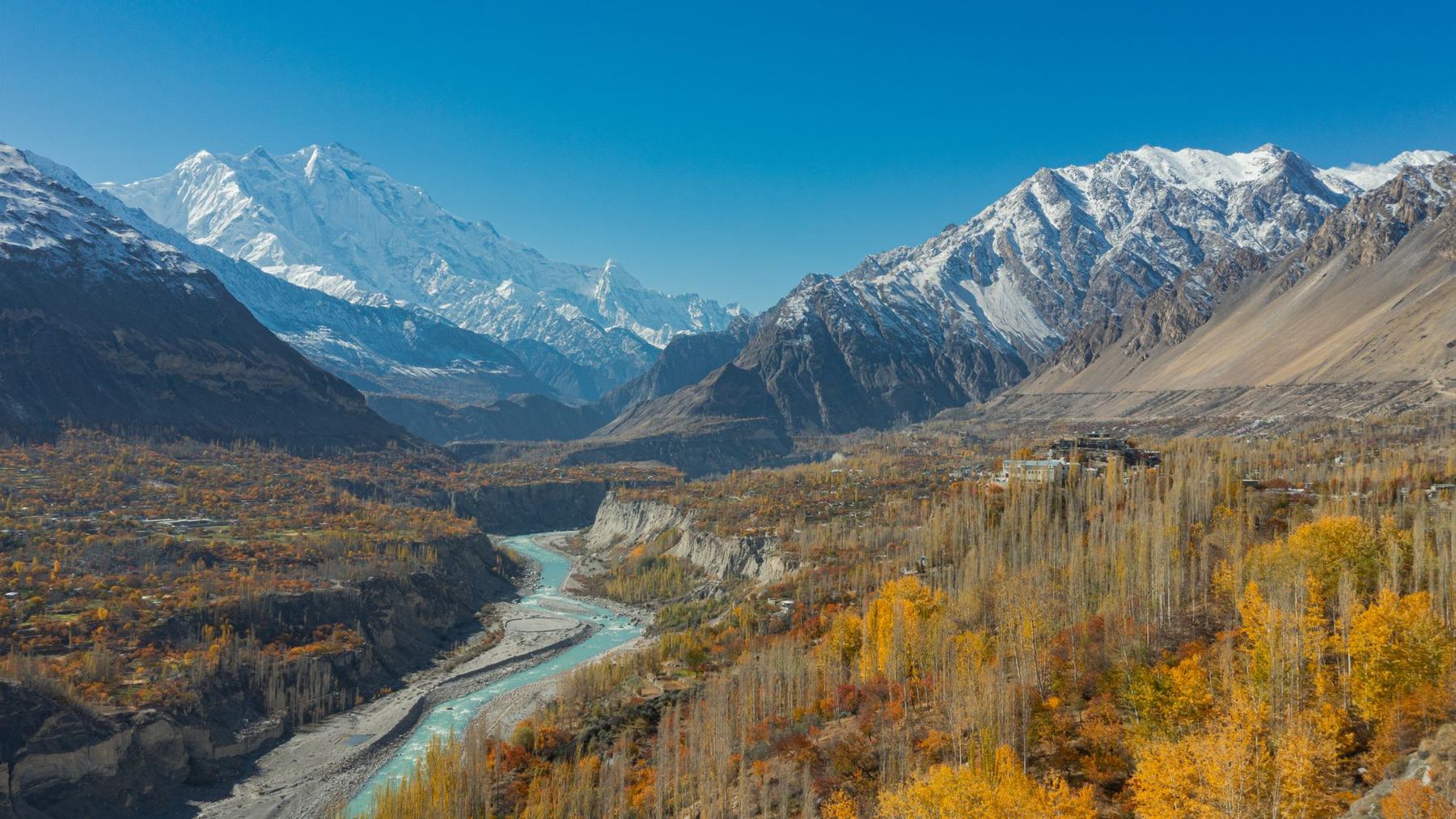
Hunza is a long, narrow valley in Gilgit-Baltistan, running roughly north from the Rakaposhi viewpoint towards Passu and the Chinese border. The Karakoram Highway follows the valley floor for about 60 km. Side roads and tracks climb to villages on the terraces above the river, where apricot, cherry and apple trees grow around stone houses.
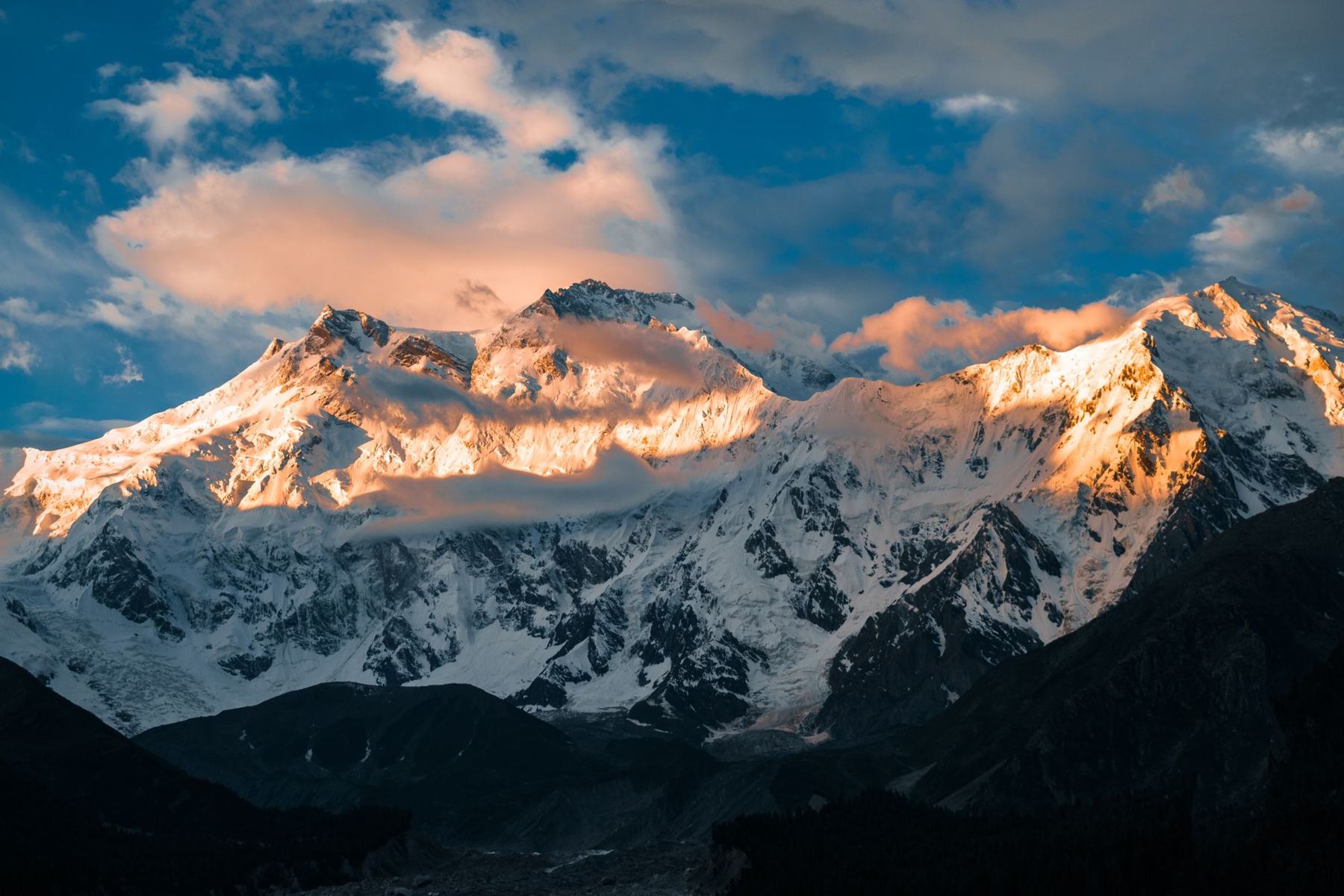
Karimabad, the old capital, is the main base. It sits at about 2,438 m on a shelf above the Hunza River, with Baltit Fort on the ridge above and Altit Fort on the older settlement below. Shops and small hotels line the main bazaar. Across the valley, Rakaposhi, 7,788 m, rises above the river and is visible from many terraces.
The valley has a dry, high-mountain climate. Spring blossom and autumn colour are the busiest seasons. Winter is quiet and very cold, with snow on the upper slopes, and many guest houses close from December to February.
Blossom and autumn
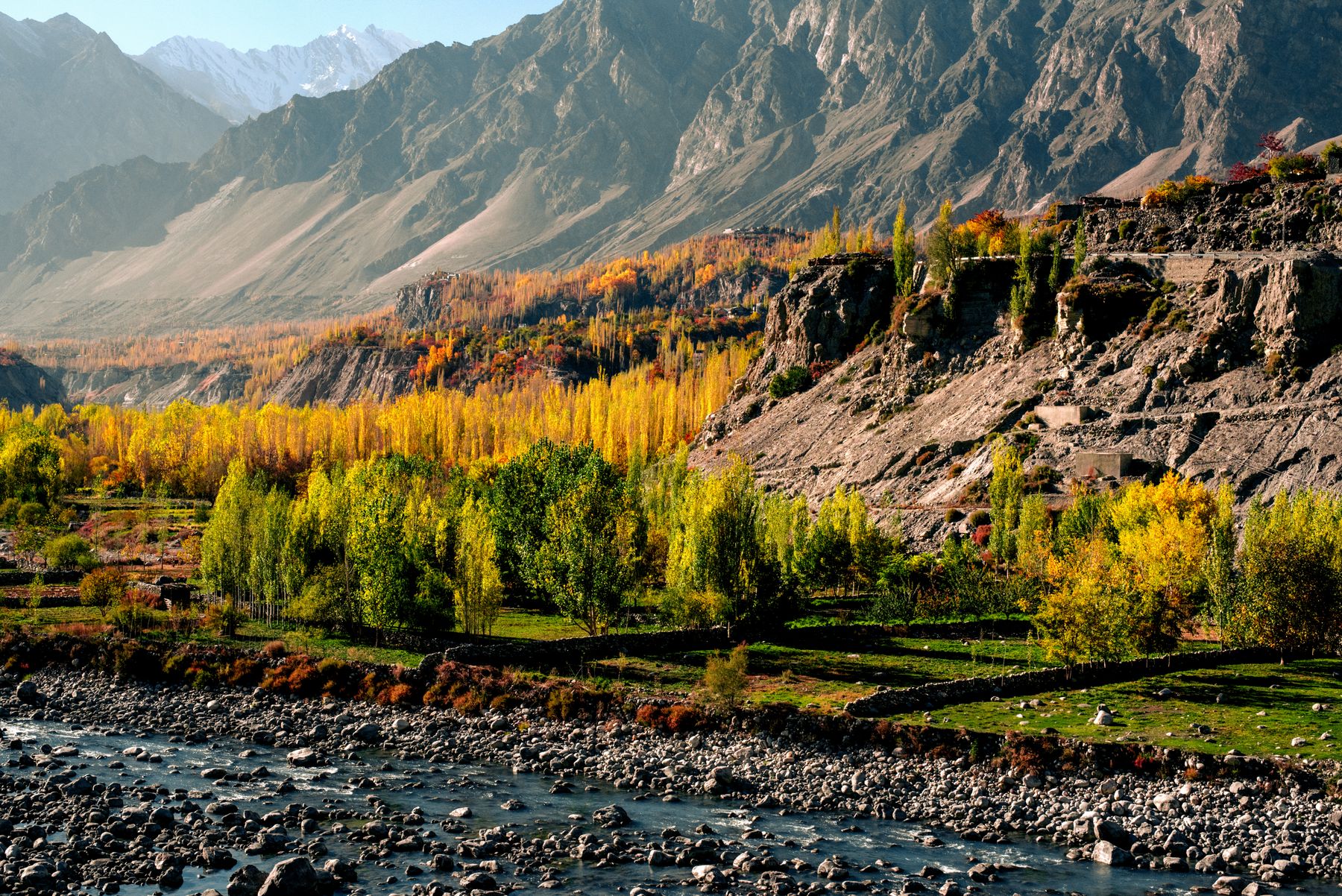
Apricot and cherry trees flower in Hunza from late March to mid-April, depending on altitude. Days are mild and nights cold. Late October brings golden poplars and clear views. High passes such as Khunjerab may be closed or only just opening outside the summer months.
What to see
Baltit Fort and Altit Fort are the main historic sights. Baltit Fort, restored in recent decades, stands above Karimabad and has displays on the region's history. Altit Fort is older and sits on the lower settlement, with a small museum and traditional houses nearby. A fee is charged at both.
The bazaars of Karimabad sell dried fruit, apricot products, handicrafts and woollen goods. The terraced fields and irrigation channels around the villages are part of the landscape. Short walks lead between Karimabad, Altit and Duikar, a hamlet on the slope above with views across to Rakaposhi.
A day or two there
A first day can cover Karimabad bazaar, Baltit Fort and the walk down to Altit Fort, with time on a terrace looking across to Rakaposhi. A second day allows the climb or drive to Duikar for a wider view, and a short walk through the orchards and channels around the villages.
With more time, the highway continues north towards Passu and Attabad Lake, both within a day's drive of Karimabad. Passu sits below the Passu Cones, and the lake, formed by a landslide in 2010, is now crossed by the road. The Khunjerab Pass and the Chinese border lie beyond, subject to current border rules.
Getting there and around
Most visitors fly to Gilgit and continue by road, a drive of about two hours to Karimabad. Flights are weather-dependent and are often cancelled. The alternative is a long road journey from Islamabad along the Karakoram Highway, which takes two days with an overnight stop.
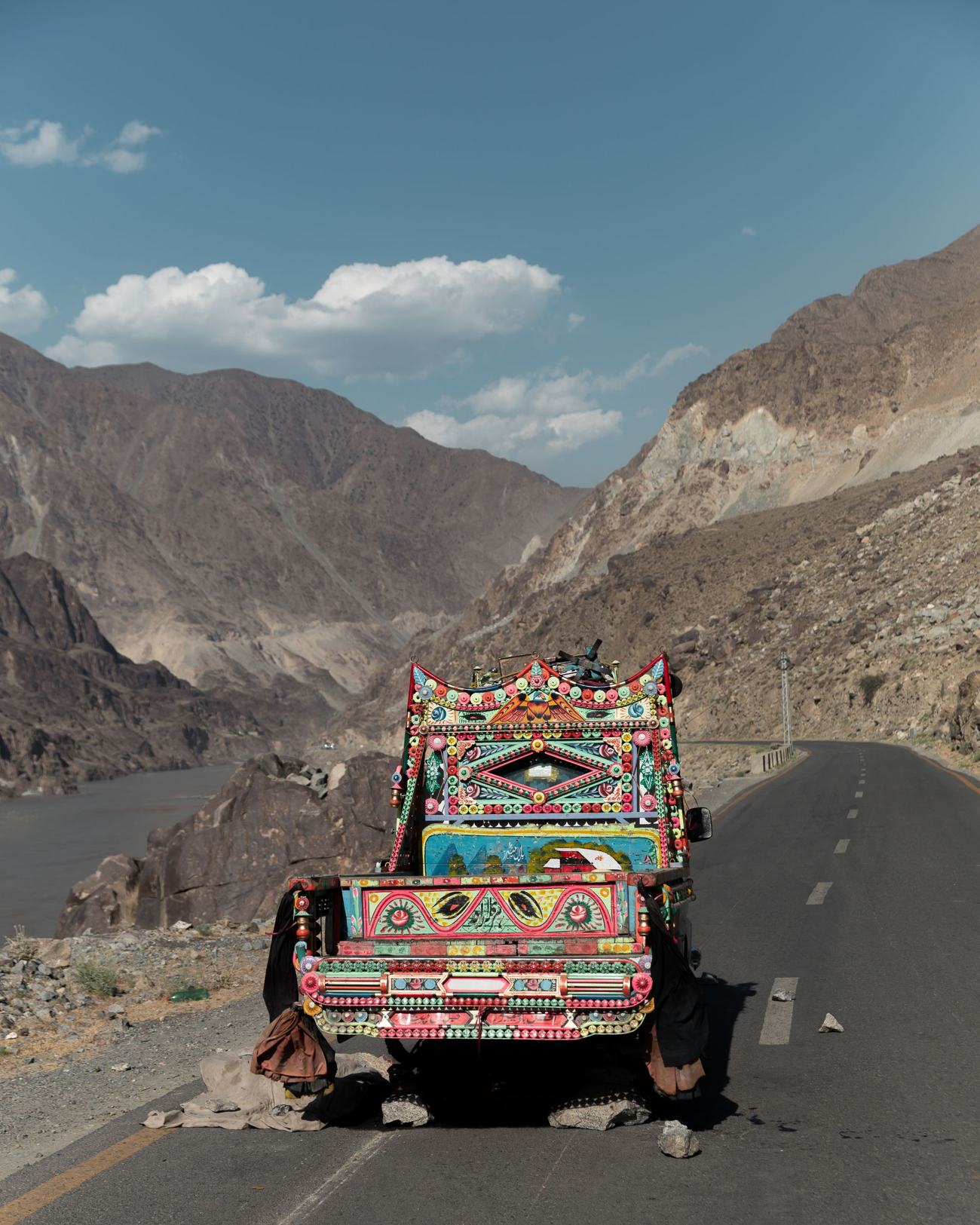
Within the valley, local transport and shared vehicles run along the highway between Karimabad, Aliabad, Passu and beyond. Taxis and private vehicles can be arranged in Karimabad. Roads to side villages such as Duikar are rough and may need a local vehicle.
Permits and access
Hunza itself is generally open to visitors. Areas near the Line of Control in Azad Kashmir, parts of Balochistan and some border districts can need a No Objection Certificate (NOC) or have travel advisories. Rules change, so check current official advice before going. The Khunjerab Pass towards China is subject to border arrangements.
Practical notes
Hunza is at high altitude, and Karimabad sits at about 2,438 m. Take the first day slowly and drink plenty of water. Nights are cold even in summer. Spring and autumn days are mild, but a jacket is needed after sunset.
Mobile coverage and internet are available in Karimabad and Aliabad but can be weak in side valleys. Cash is useful, as card payment is limited outside the main hotels. A fee is charged at the forts and some other sights. Many guest houses close in winter, so check before travelling between December and February.
Frequently asked questions
When is the best time to visit Hunza?
April to October is the main season. April brings apricot and cherry blossom, and late October turns the poplars gold. July and August are warmest and busiest. Winter is quiet and very cold, and many guest houses close from December to February.
How do you get to Hunza?
Most visitors fly to Gilgit and drive about two hours to Karimabad. Flights are weather-dependent and often cancelled. The other option is a two-day road journey from Islamabad along the Karakoram Highway, with an overnight stop on the way.
What is there to see in Hunza?
The main sights are Baltit Fort and Altit Fort above and below Karimabad, the bazaars of Karimabad, and the views of Rakaposhi, 7,788 m, across the valley. Further north on the highway are Passu and Attabad Lake, both within a day's drive.
Do you need a permit for Hunza?
Hunza is generally open to visitors and does not normally require a No Objection Certificate. Some border districts and parts of Balochistan and Azad Kashmir can need one. Rules change, so check current official advice before travelling.